Neonatal to Toddler: Weeks 1-8
A newborn puppy enters the world essentially helpless - eyes sealed, ears closed, and entirely dependent on the mother for warmth, nutrition, and stimulation to eliminate. This neonatal stage (weeks 1-2) is characterized by sleep and feeding. Neurological development accelerates rapidly.
Around week 3, the transitional period begins. Eyes open, ears unseal, and puppies take their first wobbly steps. Teeth start emerging and they begin interacting with littermates - early play biting teaches inhibition of bite force, a lesson that carries forward for life.
By weeks 4-7, the socialization period with littermates is in full swing. Puppies learn canine communication signals - growls, play bows, submission postures. Reputable breeders begin gentle human handling during this window, which research suggests reduces fearfulness in adult dogs. Weaning from mother's milk typically completes around week 7-8.
Neonatal stage
The first two weeks of a puppy's life, when they are born deaf and blind and rely entirely on their mother for survival and warmth.
Socialization period
A developmentally sensitive window (roughly weeks 3-16) during which positive exposure to new experiences shapes a puppy's long-term behavior and emotional responses.
Bite inhibition
A dog's learned ability to control the force of its bite, typically developed through play interactions with littermates during early puppyhood.
Secondary fear period
A temporary phase during puppyhood - often occurring around 8-14 weeks and again near 6-14 months - when pups may show increased wariness toward unfamiliar people or situations.
Growth plates
Soft areas of developing cartilage near the ends of long bones in young dogs; they close and harden as the dog matures, and can be vulnerable to injury from high-impact activity before that point.
Core vaccines
Vaccinations recommended for all dogs regardless of lifestyle, covering diseases like distemper, parvovirus, adenovirus, and rabies.
Most puppies join their new homes at 8 weeks, a point when they're developmentally ready for human family life while still being highly receptive to new experiences.
The Socialization Window: Weeks 8-16
This is arguably the most consequential developmental stretch of a dog's entire life. The primary socialization period - roughly weeks 3 through 16 - represents a window of neural plasticity during which positive exposure to people, sounds, surfaces, animals, and environments shapes long-term emotional responses.
The goal isn't to flood a puppy with experiences but to create positive associations through gradual, reward-based exposure. Common targets include:
- Different types of people (children, people wearing hats or sunglasses, people using mobility aids)
- Household sounds (vacuum cleaners, doorbells, traffic)
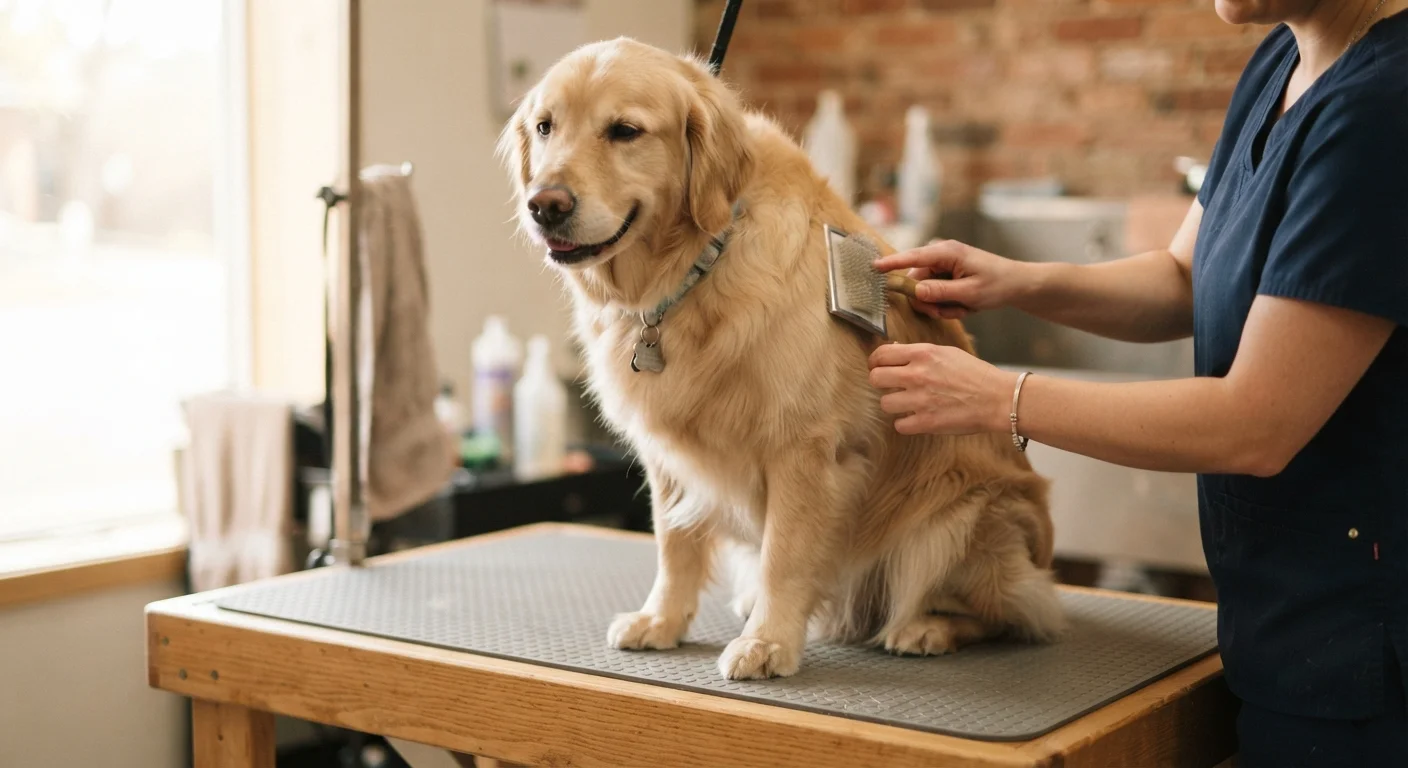
- Handling - ears, paws, mouths - to prepare for veterinary and grooming care
- Novel surfaces and environments appropriate to your lifestyle
Make Every New Experience Count
During the socialization window, quality matters more than quantity. A single frightening experience can leave a stronger impression than dozens of neutral ones. Let your puppy approach new things at their own pace, pair exposures with high-value treats, and watch body language closely for signs of stress. If your puppy is shutting down or freezing, slow down - don't push through.
Breed matters here. Herding breeds, guardian breeds, and Nordic breeds may respond differently to socialization stimuli than retrievers. High-prey-drive breeds may need especially careful management around small animals from the start. Talk with your breeder or a certified trainer about breed-specific tendencies to watch for.
For context on how this compares to socializing a dog you adopt later in life, see our article on socializing an adult dog.
Juvenile Growth Phase: Months 4-6
After the socialization window narrows, puppies enter the juvenile period - physically growing fast, testing limits, and refining motor skills. Teething intensifies, driving a strong urge to chew. This is not misbehavior; it's biology. Rotating appropriate chew toys and managing access to off-limits items is more effective than correction alone.
Fearfulness can resurface temporarily during this phase. Many puppies experience a secondary fear period somewhere between 8-14 weeks and again around 6-14 months - brief windows when novel stimuli may trigger more caution than expected. Avoid forcing interaction during these periods; patient, positive exposure is far more productive.
Basic training begun in this phase pays dividends. Short sessions (5 minutes, several times daily) with reward-based methods build a foundation for more complex cues later. Consistency in house rules among all household members is critical - puppies find loopholes quickly when rules are applied unevenly.
Adolescence: Months 6-12
Adolescence is where many owners feel most challenged. Hormonal changes, increased confidence, and heightened interest in the environment can make an otherwise progressing puppy seem to regress. Selective hearing returns. Leash manners tested just weeks ago may feel distant. This is developmentally normal.
The behavioral changes are partly tied to hormonal fluctuation and partly to the ongoing maturation of the prefrontal-equivalent regions of the canine brain, which govern impulse control. Giant breeds like Great Danes or Newfoundlands may remain in this adolescent phase well into their second year.
Key strategies for this period:
- Increase exercise appropriately - but be cautious with high-impact activity in large breeds whose growth plates may still be open. Consult your vet before starting high-repetition jogging or stair work.
- Rebuild engagement through training games - make coming back to you more rewarding than whatever the distraction is.
- Maintain structure - predictable routines support emotional regulation in dogs of all ages.
Looking ahead, the care needs that follow a puppy's first year are substantial. Our guide to caring for a senior dog illustrates how decisions made early - from nutrition to preventive care - shape the adult and older dog your puppy will become.
Veterinary Milestones Throughout the First Year
Routine veterinary care is the backbone of healthy puppy development. A typical first-year schedule includes multiple visits covering core vaccines, parasite screening and prevention, physical exams, and a conversation about spay or neuter timing.
Core vaccines are given in a series - usually starting around 6-8 weeks and continuing every 3-4 weeks until 16 weeks of age - because maternal antibodies can interfere with earlier immune responses. Rabies vaccination is typically given at 12-16 weeks depending on state law and product label.
Heartworm Prevention Starts Early
Most veterinarians recommend starting heartworm preventives at 8 weeks of age - well before a puppy could test positive on a heartworm antigen test. Because heartworm disease is transmitted by mosquitoes and is present in all 50 US states, early prevention is considered standard care rather than an optional add-on. Ask your veterinarian which product is appropriate for your puppy's age and weight.
Puppies also need protection against intestinal parasites and heartworm from an early age. Many veterinarians start puppies on monthly heartworm prevention at the first visit, since heartworm is transmitted by mosquitoes across most of the continental US.
For a thorough overview of the full spectrum of preventive care your dog will need throughout life, see our guide on preventive vet care every dog owner should know about.
Dental health is another first-year priority often overlooked. Introducing tooth brushing early - before the adult teeth are fully in - builds tolerance for a habit that meaningfully supports long-term health.
This article provides general educational information about puppy development and is not a substitute for advice from a licensed veterinarian. Always consult your vet regarding your puppy's specific health, vaccination, and care needs.