What Each Method Actually Involves
Establishing a new lawn - or restarting a damaged one - comes down to a foundational question: grow it from seed or roll out sod? Both deliver the same end result, but through very different paths.
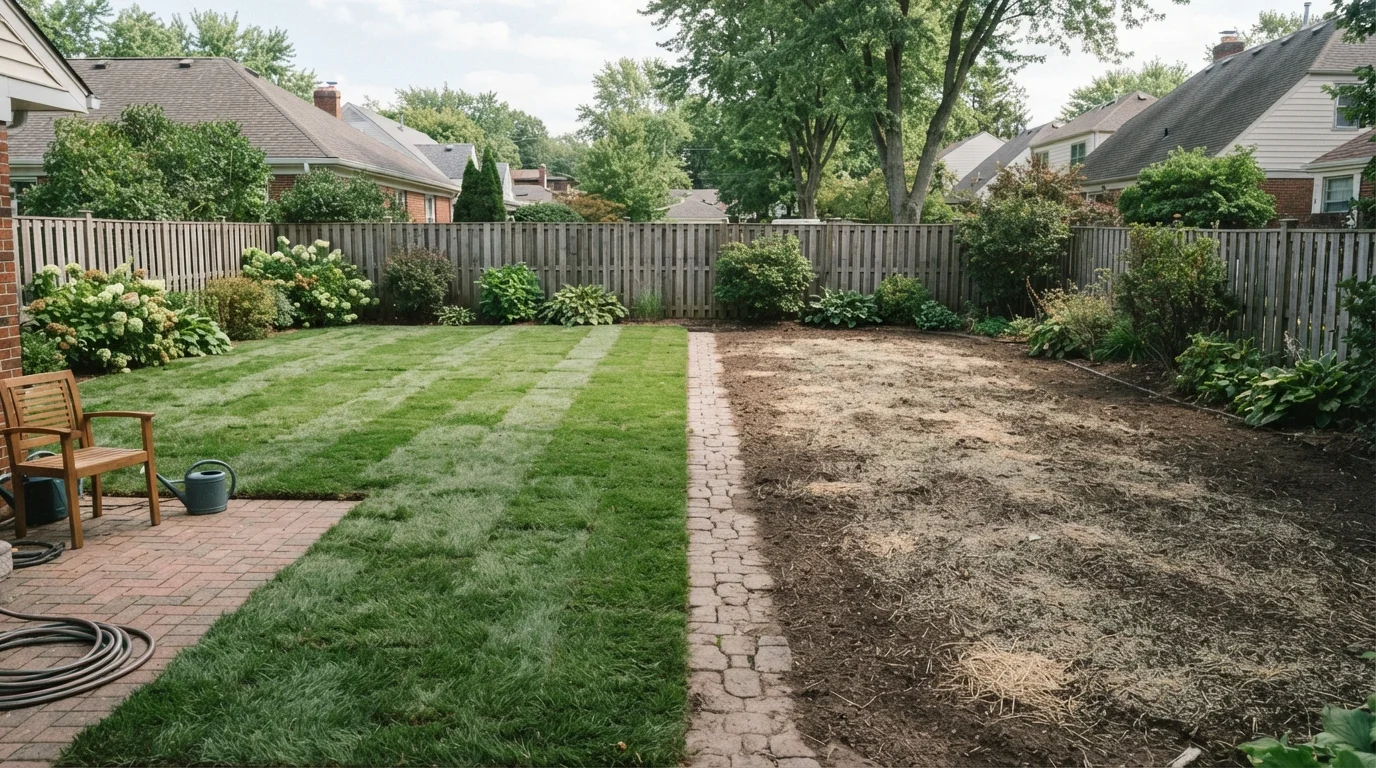
Grass seed is dormant seed sown directly onto prepared soil. After sowing, germination begins within days to a few weeks depending on the species and conditions. The lawn develops gradually: first thin sprouts, then thickening turf over several months. During that period the lawn is fragile, requiring consistent moisture and protection from heavy use.
Sod is pre-grown turf harvested from a farm in rolls or slabs, with roots and soil intact. Installers lay it directly onto prepared ground where it begins knitting into the underlying soil. The visual result is immediate, though the lawn still needs time to fully root - typically two to six weeks before it can tolerate regular use.
In both cases, soil preparation is non-negotiable. Grading, loosening compacted earth, and correcting pH or nutrient deficiencies should happen before either seed or sod goes down. Skipping this step is one of the most common reasons new lawns fail regardless of method.
Cost, Timing, and Establishment Differences
The cost gap between seed and sod is substantial. On a per-square-foot basis, sod typically runs several times more expensive than comparable grass seed, and that figure doesn't account for professional installation labor if you hire it out. For large areas, that difference adds up quickly.
| Criterion | Grass Seed | Sod |
|---|---|---|
| Upfront cost | Lower (seed + soil prep) | Higher (sod + labor) |
| Time to usable lawn | 3-4+ months | 2-6 weeks |
| Variety selection | Wide range available | Limited to farm stock |
| Erosion control | Poor until established | Immediate soil coverage |
| Installation difficulty | Moderate (spreading, watering) | Labor-intensive (heavy rolls) |
| Seasonal timing flexibility | Narrower window | Broader installation range |
Timing also shapes the decision. Grass seed has narrower optimal windows - cool-season grasses (like fescue and bluegrass) germinate best when soil temperatures sit between roughly 50°F and 65°F, while warm-season grasses (like bermuda and zoysia) prefer soil above 65°F. Sowing outside those windows slows germination and raises failure risk. Sod can be installed across a wider range of conditions, though extreme heat and drought still stress newly laid turf.
Establishment time favors sod for speed. A seeded lawn may take three to four months before it's dense enough for regular use; a sodded lawn can reach that point in weeks. However, sod sourced locally and matched to your climate will root more reliably than sod trucked long distances or stored improperly. Always ask suppliers about how fresh the sod is before purchasing.
For a complete picture of when to seed, fertilize, and aerate throughout the year, see our seasonal lawn care calendar guide - timing each task to your region makes a meaningful difference in outcomes.
Ongoing Care After Installation
The work doesn't stop once seed is spread or sod is laid. Both methods demand attentive watering during establishment. Newly seeded areas need frequent, light irrigation to keep the seed bed moist without washing seeds away. Sod needs deep, consistent watering to encourage roots to penetrate the soil beneath, not just stay in the harvested layer.
Watering Is the Most Common Failure Point
Underwatering is the leading cause of failed seedings and sod die-off. During the first two weeks after installation, both seed and sod typically need daily moisture checks - and more frequent irrigation in hot or windy conditions. Automated timers can help maintain consistency. Once the lawn is established, you can transition to a deeper, less frequent watering schedule that encourages deeper root growth.
Once established, both lawn types transition into standard maintenance: mowing, fertilizing, and periodic aeration as needed. The grass variety you've grown - whether from seed or sod - will drive those ongoing requirements more than the installation method itself.
If you're deciding on a watering setup at the same time, our comparison of drip irrigation vs. sprinkler systems covers how each approach suits different lawn configurations. And when it's time to feed your new turf, organic vs. synthetic fertilizer options can help you pick an approach that matches your goals.