How Each Generator Type Works
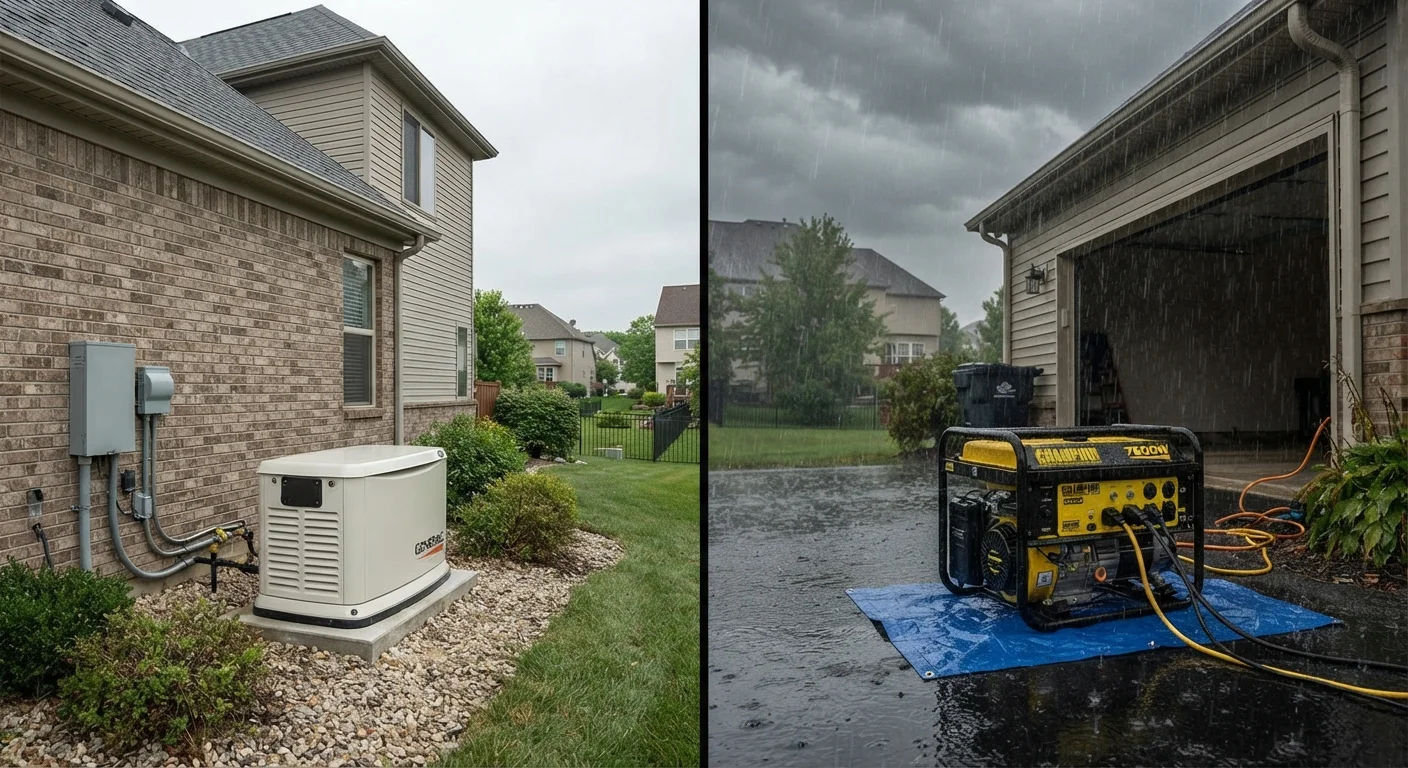
A whole-house standby generator (also called a standby or stationary generator) is permanently installed outside the home, connected directly to the electrical panel and fueled by a natural gas line or a large propane tank. When the utility power fails, an automatic transfer switch detects the outage and starts the generator within seconds - no action required from the homeowner.
A portable generator is a movable, engine-powered unit that runs on gasoline (or, in some models, propane or dual fuel). It must be manually started and positioned outdoors, then connected to appliances via extension cords or, in some setups, through a transfer switch installed at the panel. Portable units are stored when not in use and brought out as needed.
Understanding this fundamental operational difference sets the stage for every other trade-off in this comparison. For a broader look at how home systems age and interact, see major home system lifespans as a helpful reference.
Power Capacity and What Each Can Run
Standby generators are sized in kilowatts (kW) and typically range from around 10 kW for partial-home coverage up to 20 kW or more for whole-house loads. At the higher end, they can simultaneously support HVAC systems, refrigerators, sump pumps, lighting, and other large appliances without prioritization.
Portable generators generally range from 3,500 to 12,000 watts. A mid-range portable unit can power a refrigerator, window AC unit, several lights, and phone chargers - but not all at once without careful load management. Running a central air conditioning system or electric dryer typically exceeds what most portable models can safely handle.
| Whole-House Standby | Portable Generator | |
|---|---|---|
| Typical power output | 10-20+ kW | 3.5-12 kW |
| Activation method | Automatic (within seconds) | Manual startup required |
| Fuel source | Natural gas or propane | Gasoline (or dual-fuel) |
| Upfront cost range | High (unit + installation) | Low to moderate |
| Professional installation required | Yes - licensed trades needed | Partial (transfer switch recommended) |
| Permit typically required | Yes | For transfer switch work, usually yes |
| CO safety risk level | Lower (fixed, inspected siting) | Higher (requires careful placement) |
| Fuel storage needed | No (piped supply) | Yes (gasoline degrades over time) |
Calculating your home's essential load - the combined wattage of the appliances you need during an outage - is a practical first step before shopping either category.
Installation, Permits, and Ongoing Maintenance
Standby generators require professional installation. A licensed electrician must install the automatic transfer switch and connect the unit to the panel; a licensed plumber or gas technician connects the fuel supply. Most municipalities require permits for this work, and inspections are common. Installation costs can range considerably depending on panel complexity, fuel-line distance, and local labor rates - this is a major component of the total investment.
Portable generators have a far simpler setup, but using one safely with household circuits still requires either heavy-duty extension cords or a properly installed manual transfer switch or interlock kit - work that also warrants a licensed electrician. Plugging a portable generator directly into a wall outlet (called backfeeding) is extremely dangerous and illegal in most jurisdictions.
On the maintenance side, standby units typically require annual servicing - oil changes, filter checks, and load tests - often performed by a technician. Portable generators need similar engine maintenance, plus attention to fuel stabilization if stored for extended periods. See seasonal home maintenance checklists for guidance on building generator care into your regular schedule.
Never Backfeed Power Into Your Home's Wiring
Connecting a portable generator directly to a wall outlet - a practice called backfeeding - creates an electrocution risk for utility workers and neighbors on the same circuit, and can destroy appliances when power is restored. It is illegal in most jurisdictions. Always use a properly installed transfer switch or interlock kit, installed by a licensed electrician, to safely connect a portable generator to home circuits.
Cost Comparison: Upfront and Over Time
Portable generators represent a significantly lower upfront cost - typically a few hundred to around two thousand dollars depending on output and features. Standby generators carry a much higher price tag: the unit itself, plus installation, can represent a multi-thousand-dollar investment.
Over time, the calculation shifts. Standby units run on piped natural gas, which eliminates the need to store or source fuel during an extended outage. Portable generators rely on gasoline, which can be difficult to obtain during widespread emergencies when stations are closed or lines are long, and which degrades in storage over several months without a fuel stabilizer additive.
Homeowners with questions about how generator investments interact with home insurance coverage should consult a licensed insurance agent, as policies vary significantly. Common home system assumptions that lead to costly surprises covers related misconceptions worth reviewing.
Safety Considerations That Cannot Be Overlooked
Carbon monoxide (CO) poisoning is the most serious risk associated with portable generator use. Generators produce CO - a colorless, odorless gas - and must always be operated at least 20 feet from doors, windows, and vents, in open air. The U.S. Consumer Product Safety Commission has documented numerous CO-related fatalities linked to generators operated in garages, basements, or near home openings. Install battery-operated CO detectors on every level of the home if you own a portable generator.
Standby generators also produce exhaust and must be positioned according to manufacturer clearance guidelines and local codes. However, because they're permanently sited and inspected during installation, the day-of operational risk is generally lower.
Both generator types involve electrical hazards. Never connect a generator to the home's wiring without a proper transfer switch or interlock - doing so can energize utility lines and endanger workers restoring power. Always follow manufacturer instructions and local electrical codes.
Test Your Generator Before You Need It
Run your generator under load at least once before storm season begins. For standby units, many models have a self-test feature - confirm it's active and review the test log. For portable units, start the engine, let it warm up, and briefly connect a load to verify the unit functions properly. Discovering a maintenance issue during a test is far less stressful than discovering it mid-outage.