What an Electrical Panel Actually Does
Your electrical panel - sometimes called a breaker box or load center - is the point where electricity from your utility provider enters your home and gets divided into individual circuits. Think of it as a traffic hub: one large incoming feed splits into smaller dedicated pathways, each supplying power to a specific area or appliance.
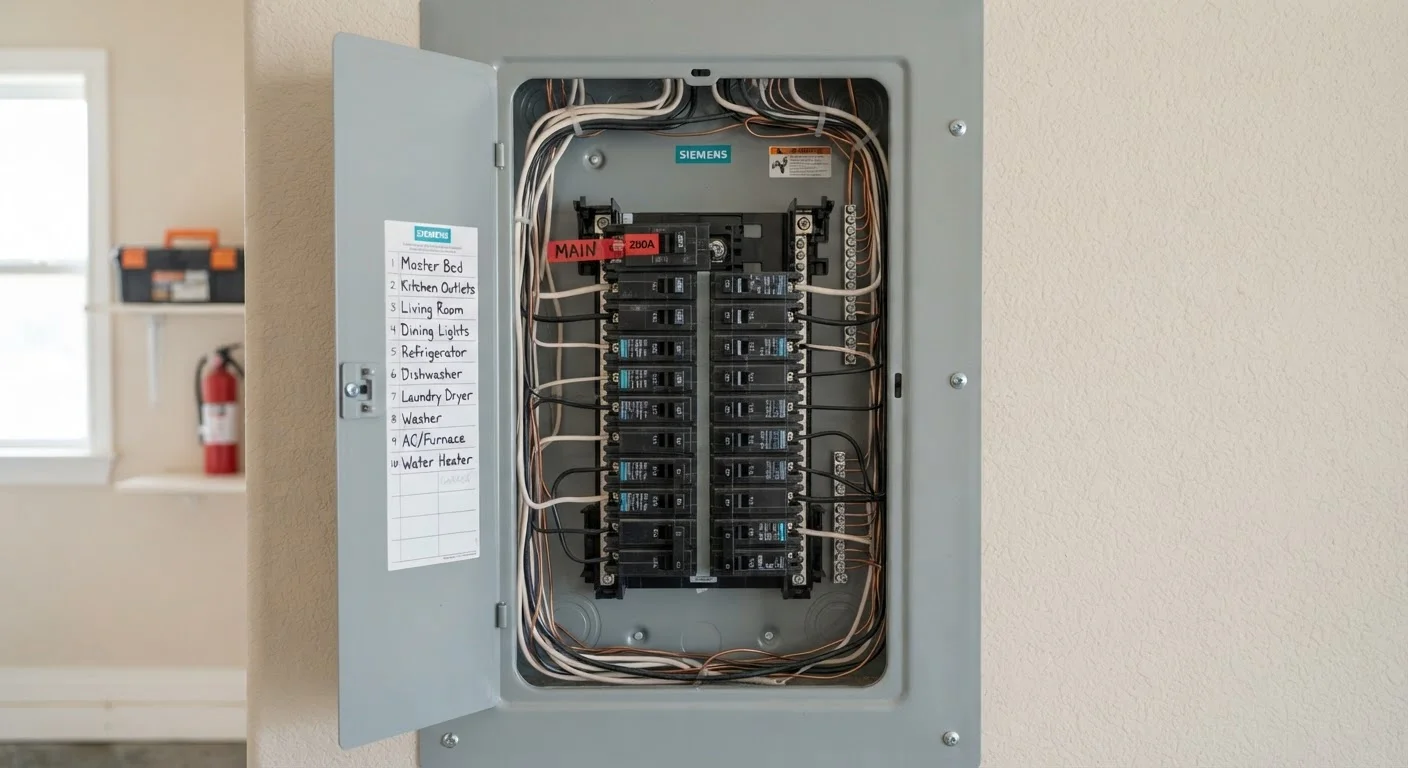
The panel is typically a metal enclosure mounted in a garage, basement, utility room, or hallway. Inside, you'll find a main breaker that controls all power to the home, and a series of smaller breakers, each protecting an individual circuit. Understanding this layout is the foundation for making sense of your home's electrical system - and it connects directly to the broader picture of how home systems work together, which is explored in a homeowner's map of core house systems.
Electrical panel
The metal box, usually wall-mounted, where your home's main power supply is divided into individual circuits. Also called a breaker box or load center.
Circuit breaker
A reusable safety switch inside the panel that automatically cuts power to a circuit if it detects excess electrical current, protecting wiring from overheating.
Amperage (amps)
A measure of how much electrical current a circuit or panel can safely carry. Higher amperage means the capacity to power more or larger devices.
Main breaker
The large single breaker at the top of the panel that controls power to the entire home. It can shut off all circuits at once but does not de-energize the incoming utility feed.
Short circuit
An unintended low-resistance path for electrical current, often caused by damaged wiring making contact. It causes a sudden surge of current that trips the breaker.
Service capacity
The total maximum amperage your electrical panel and utility connection are rated to supply to your home, typically expressed as 100, 150, or 200 amps.
How Circuit Breakers Work
A circuit breaker is an automatic switch designed to stop the flow of electricity when something goes wrong on that circuit. When too many appliances draw power simultaneously - or when a fault like a short circuit occurs - the breaker detects the excess current and trips, cutting power before wiring can overheat.
Physically, a tripped breaker sits in a middle position between 'on' and 'off.' To reset it, push it fully to 'off' first, then back to 'on.' If it trips again immediately, the underlying problem hasn't been resolved - do not keep resetting it. Each breaker is rated in amps (typically 15 or 20 amps for household circuits), which tells you the maximum current that circuit is designed to carry safely.
Label Your Panel While It's Working
Don't wait for an outage or emergency to learn which breaker controls which area. Walk through your home with a helper and test each breaker systematically, marking the directory clearly. A well-labeled panel saves time and reduces confusion when you or an electrician need to act quickly.
Reading Your Panel: Labels, Amps, and Capacity
Most panels have a directory - a small chart, often printed on the inside of the door - listing which breaker corresponds to which area of the home. If yours is blank or inaccurate, systematically testing and labeling each breaker is a straightforward task any homeowner can do safely with a helper and a lamp or radio.
The panel's total capacity is shown on the main breaker, typically 100, 150, or 200 amps. Older homes may have only 60-amp service, which can struggle to meet the demands of modern HVAC systems, electric dryers, and home offices. Upgrading service capacity is a significant project requiring a licensed electrician and, in virtually all US jurisdictions, a permit - see an overview of permits, inspections, and codes for what that process typically entails.
Warning Signs That Require a Licensed Electrician
Certain observations around your electrical panel should prompt a call to a licensed electrician rather than a wait-and-see approach. These include:
- Breakers that trip frequently - especially the same breaker repeatedly - which may indicate an overloaded circuit or a failing breaker.
- A burning smell or scorch marks near the panel, outlets, or switches, which can signal heat buildup or arcing.
- Flickering or dimming lights across multiple rooms, pointing to a potential loose connection or supply issue.
- A buzzing or sizzling sound from the panel itself.
- Rust, moisture, or visible corrosion inside the enclosure.
- A panel older than 25-30 years that has never been inspected or updated.
These are not DIY diagnostic situations. Misassumptions about electrical systems are among the more costly homeowner mistakes - common home system assumptions that lead to expensive surprises covers why that gap between assumption and reality matters.
Never Work Inside an Energized Panel
Even when the main breaker is switched off, the incoming utility lines inside the panel remain live and dangerous. Only a licensed electrician with proper protective equipment should open and work inside the panel enclosure. This is not a task where caution alone is sufficient - the hazard is genuine and immediate.
What Homeowners Can-and Cannot-Do Themselves
Homeowners can safely handle a small number of panel-related tasks: resetting a tripped breaker, labeling circuits, and keeping the area around the panel clear of obstructions. These require no tools and no contact with wiring.
Everything else - replacing a breaker, adding a new circuit, upgrading service amperage, or troubleshooting persistent electrical problems - falls into the category of licensed-electrician work. The interior of an electrical panel contains live wiring that remains energized even when the main breaker is off, because the utility feed itself is still active. Working inside a panel without proper training and equipment carries a genuine risk of electrocution and fire.
Knowing where the line is between a manageable homeowner task and professional territory is a recurring theme in home maintenance. The broader principle applies across systems: understanding what's actually within a homeowner's safe scope helps avoid both unnecessary repair bills and unnecessary risk.
This article is for general informational and educational purposes only. Electrical work involves serious safety hazards. Always consult a licensed electrician for any panel inspection, repair, or upgrade, and verify permit requirements with your local building department before beginning any electrical project.