Why Dogs Pull: The Behavioral Science
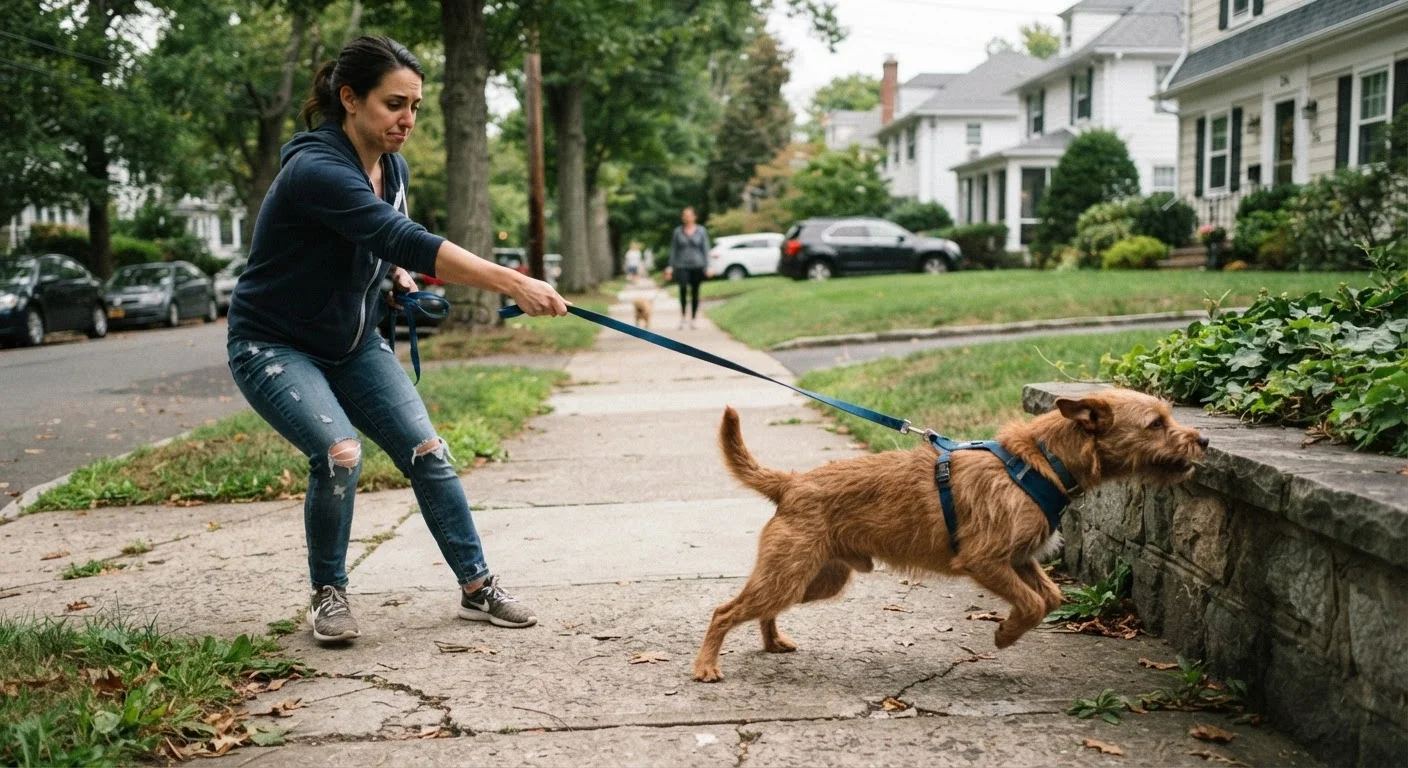
Leash pulling isn't a character flaw or a sign of a dog trying to dominate its owner. It's a classically conditioned behavior with a simple internal logic: the dog pulls, the dog moves forward, and forward movement is reinforcing. Every walk that proceeds while the leash is taut teaches the dog that pulling is the correct strategy.
Dogs experience the world primarily through smell, and the outdoors is an overwhelmingly rich environment. The motivation to reach the next scent, squirrel, or patch of grass is powerful and immediate. The leash represents friction between that drive and its fulfillment - and most dogs discover quickly that more force produces more progress.
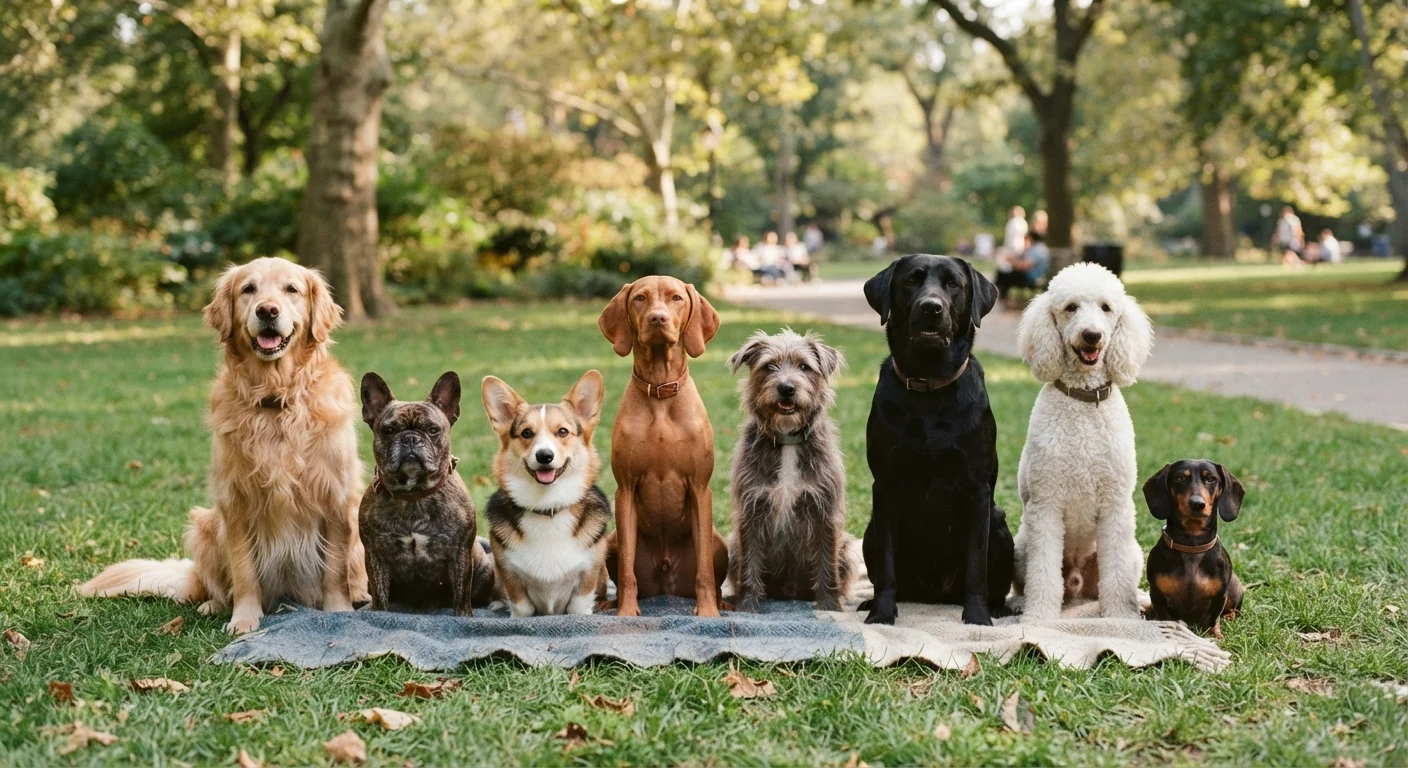
Breed influences this significantly. Dogs with high prey drive - such as terriers, hounds, and many working breeds - are wired to chase and investigate with intensity. Herding breeds may fixate and surge toward movement. Understanding what your dog was bred to do provides important context. See our guide to breed-specific behavioral traits for a deeper look at how instinct shapes everyday behavior.
Don't Assume Pulling Is a Dominance Issue
The dominance-based framing of leash pulling - that the dog is 'trying to be the boss' - has been largely rejected by modern veterinary behaviorists. Treating pulling as a power struggle can lead owners to use unnecessarily forceful corrections, which may worsen behavior. Understanding the actual cause leads to far more effective solutions.
Common Mistakes That Keep Pulling Entrenched
Most leash-pulling problems persist not because the dog is untrainable, but because the human side of the equation is inadvertently reinforcing the wrong behavior. The errors below are extremely common - and highly correctable once identified.
Letting the walk continue while the dog is pulling, which teaches the dog that pulling works.
Why it happens: Owners are often in a hurry or simply want the dog to get exercise, so they allow forward progress despite the tension on the leash.
Being inconsistent across different walks, people, or environments.
Why it happens: One family member enforces loose-leash rules while another doesn't, or owners apply the rules at home but give up in distracting public spaces.
Skipping low-distraction practice before attempting busy environments.
Why it happens: Owners often start practicing in the same high-stimulation places - busy parks, sidewalks with traffic - where pulling is hardest to manage.
Relying solely on equipment rather than training the behavior.
Why it happens: No-pull harnesses and head halters genuinely reduce pulling force, leading owners to believe the problem is solved without building the underlying skill.
Expecting quick results and abandoning training before the behavior changes.
Why it happens: Leash pulling is a well-practiced habit for most dogs, and owners underestimate how long consistent reinforcement needs to run before the new behavior becomes reliable.
Aversive Tools Carry Real Risks
Prong collars, choke chains, and electronic collars may reduce pulling in the short term, but research in applied animal behavior suggests they can increase anxiety, reactivity, and even aggression in some dogs. These tools suppress the symptom without addressing the underlying motivation. Consult a certified professional dog trainer before using any aversive equipment.
Techniques That Actually Work
The foundation of effective leash training is teaching the dog that a loose leash - not a tight one - produces movement and rewards. Several evidence-supported approaches make this achievable for everyday owners.
- Stop-and-wait: The moment tension appears, stop completely. Wait for the dog to release pressure and orient back toward you, then mark the moment (with a clicker or a verbal cue like "yes") and move forward as the reward.
- Direction changes: When pulling begins, calmly turn and walk in a new direction before the dog reaches what it was pulling toward. This keeps the dog's attention on you as the navigator rather than the destination.
- Reinforcing check-ins: Reward your dog generously whenever it glances back at you voluntarily during a walk. This builds the habit of checking in rather than charging ahead.
- Structured sniff breaks: Rather than trying to prevent sniffing entirely, designate moments when sniffing is permitted on cue. This satisfies the dog's exploratory drive without making every step a negotiation.
Reading your dog's body language during walks also helps you anticipate pulling before it starts. Our article on what dog body language actually means can sharpen this skill considerably.
#1
Most reported dog behavior complaint
Leash pulling consistently ranks as the top behavior issue reported by dog owners in surveys conducted by veterinary behavior associations.
~68%
US households with at least one dog
According to the American Pet Products Association's National Pet Owners Survey, roughly 68% of US households own a pet, with dogs being the most common.
Setting Up for Long-Term Success
Loose-leash walking is a skill, and like any skill it requires graduated practice. Start in low-distraction environments, build duration before adding difficulty, and involve everyone in the household so the dog receives consistent signals regardless of who holds the leash.
Physical exercise also plays a role: a dog that hasn't met its daily movement needs will be harder to focus on any walk. For owners working with limited outdoor access, indoor and outdoor exercise strategies can help ensure energy needs are met before training sessions begin.
If pulling is accompanied by lunging, reactivity, or signs of distress, it may point to something beyond simple habit - such as anxiety or an underlying physical discomfort. Sudden changes in walking behavior, in particular, are worth a veterinary check. Our overview of signs your dog may be in pain explains what to watch for. For complex cases, a certified professional dog trainer or veterinary behaviorist can provide personalized guidance that goes well beyond what any general article can offer.