Why Body Language Is Your Dog's Primary Language
Dogs are remarkably expressive, but their communication runs almost entirely through physical signals rather than vocalizations. Barks, whines, and growls play a role, but posture, facial expression, tail position, and movement do the heavy lifting. Most miscommunications between dogs and their owners happen not from bad intentions, but from misread signals.
Understanding canine body language is especially important because dogs typically offer a sequence of increasingly clear signals before reacting defensively. Missing the early, subtle cues - a quick lip-lick, a slight weight shift backward - can mean arriving at the situation only when the dog is already past its threshold. Owners who learn to read those earlier signals can intervene calmly and prevent stress for everyone involved.
Dogs and Humans Communicate Differently
Dogs naturally avert their gaze as a calming signal, while humans often interpret direct eye contact as a sign of trust and confidence. This mismatch means that prolonged eye contact from a human - which feels friendly to us - can register as a challenge or pressure to a dog. Meeting a new dog with a slight side angle and avoiding a hard stare is generally a more readable, comfortable approach for the dog.
The Four Body Zones to Watch
No single signal tells the whole story. Skilled dog readers watch four zones simultaneously:
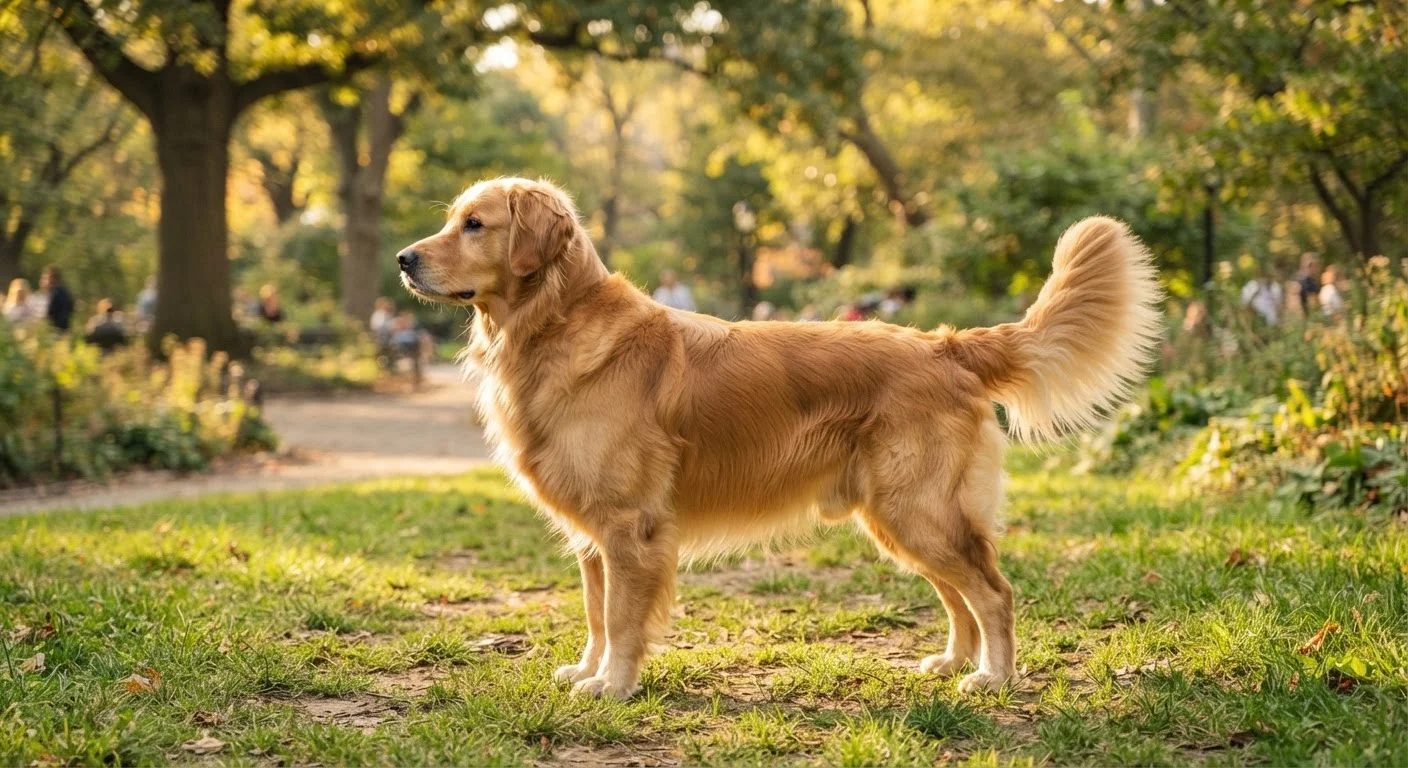
- Tail: Height indicates arousal level - a tail held above the spine line suggests high alertness or dominance, while a tucked tail signals fear. Speed matters too: a fast, loose wag paired with a relaxed body reads differently than a stiff, rapid wag on a tense dog. Research has also found that wag direction - slightly more to the right versus left - may correlate with positive versus uncertain emotional states.
- Ears: Ears rotated forward typically signal attention or interest. Ears pinned flat against the skull suggest fear or submission. Note that breeds with naturally floppy ears, like Basset Hounds or Cocker Spaniels, have a narrower range of visible motion, so pay closer attention to other zones.
- Eyes and face: Soft, relaxed eyes with a slightly squinted appearance indicate comfort. Hard, wide eyes - particularly with visible whites (whale eye) - signal stress. A relaxed mouth, slightly open with a loose tongue, contrasts sharply with a tightly closed mouth, which can indicate tension.
- Overall posture: A dog leaning forward with weight distributed over the front legs is oriented toward something, possibly with interest or assertiveness. A dog with weight shifted back is uncertain or trying to create distance. A loose, wiggly body posture generally reflects genuine relaxed friendliness.
77%
Dog bites involving familiar dogs
According to the American Veterinary Medical Association, the majority of dog bites occur with dogs known to the victim, often in contexts where warning signals were present but not recognized.
~4.5M
Dog bites per year in the US
The CDC estimates approximately 4.5 million dog bites occur annually in the United States, underscoring the practical importance of accurate signal reading for safety.
Early signals
Missed before most bite incidents
Behavioral experts widely note that most dogs display a sequence of escalating stress signals before biting - signals that are frequently overlooked by both owners and bystanders.
Common Signals That Are Frequently Misread
Several signals consistently trip up even experienced dog owners:
Yawning and lip-licking
When a dog yawns in a non-drowsy context - say, during a greeting with a new person or while being hugged - it is typically a calming or stress signal, not boredom. Similarly, a quick tongue flick across the lips in a tense moment communicates discomfort, not hunger. These low-level signals are the dog's earliest request for a change in situation.
The play bow
Elbows on the ground, hindquarters elevated - this posture is an unmistakable invitation to play and one of the more reliably positive signals in a dog's repertoire. It resets interaction and signals non-threatening intent even mid-rough-play.
Stiff stillness
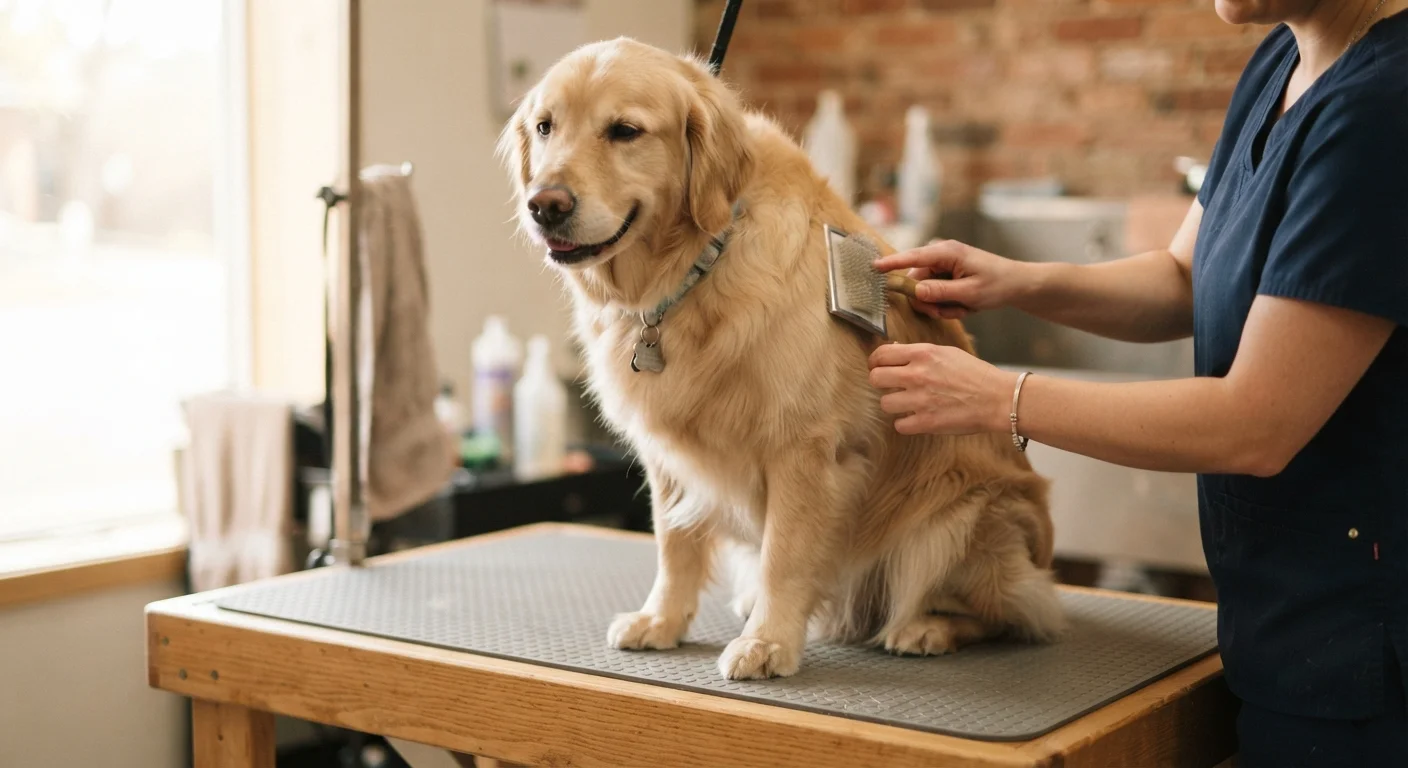
A dog that suddenly freezes - especially if it was previously in motion - is not being obedient. Stiff stillness is often a warning signal that the dog is highly stressed and processing a perceived threat. This frequently precedes a snap or lunge if the trigger is not removed. Understanding this context is relevant to grooming situations as well; see building a grooming routine your dog will tolerate for how to recognize and manage stress during handling.
Breed Anatomy Shapes How Signals Appear
Breed structure genuinely changes what you can see. A Siberian Husky's erect ears and high-set tail offer rich information. A Pug's flat face limits the visible range of mouth and eye expressions. A Rottweiler with a naturally short tail communicates tail position within a much narrower range than a Labrador Retriever.
This is not a flaw in the dog - it is context you need as the reader. Dogs with limited physical expression tend to communicate more through body weight shifts and subtle muscle tension. For a deeper look at how breeding history shapes day-to-day behavior patterns, the article on breed-specific traits that shape everyday behavior provides useful grounding.
“The dog is always talking to you. The question is whether you know how to listen. A dog that bites without warning is rare - more commonly, the warning was given but not understood.”
— Patricia McConnell, Certified Applied Animal Behaviorist and author of works on canine communication
When Body Language Points to Pain
Some behavioral signals that look like fear or aggression are actually pain responses. A dog that suddenly snaps when touched in a specific area, becomes reluctant to be handled, or shifts posture to protect a body part may be communicating physical discomfort rather than a temperament problem. Changes in activity level, gait, or willingness to engage in play can all be early signals worth noting. Because dogs instinctively mask discomfort, these behavioral cues are often the first indicators an owner has. For a more detailed look at how pain presents behaviorally, see signs your dog may be in pain and why they hide it.
This article is for general informational purposes only and is not a substitute for guidance from a qualified veterinarian or certified animal behaviorist. If your dog is showing sudden or significant changes in behavior, consult a veterinary professional.