How Each System Actually Works
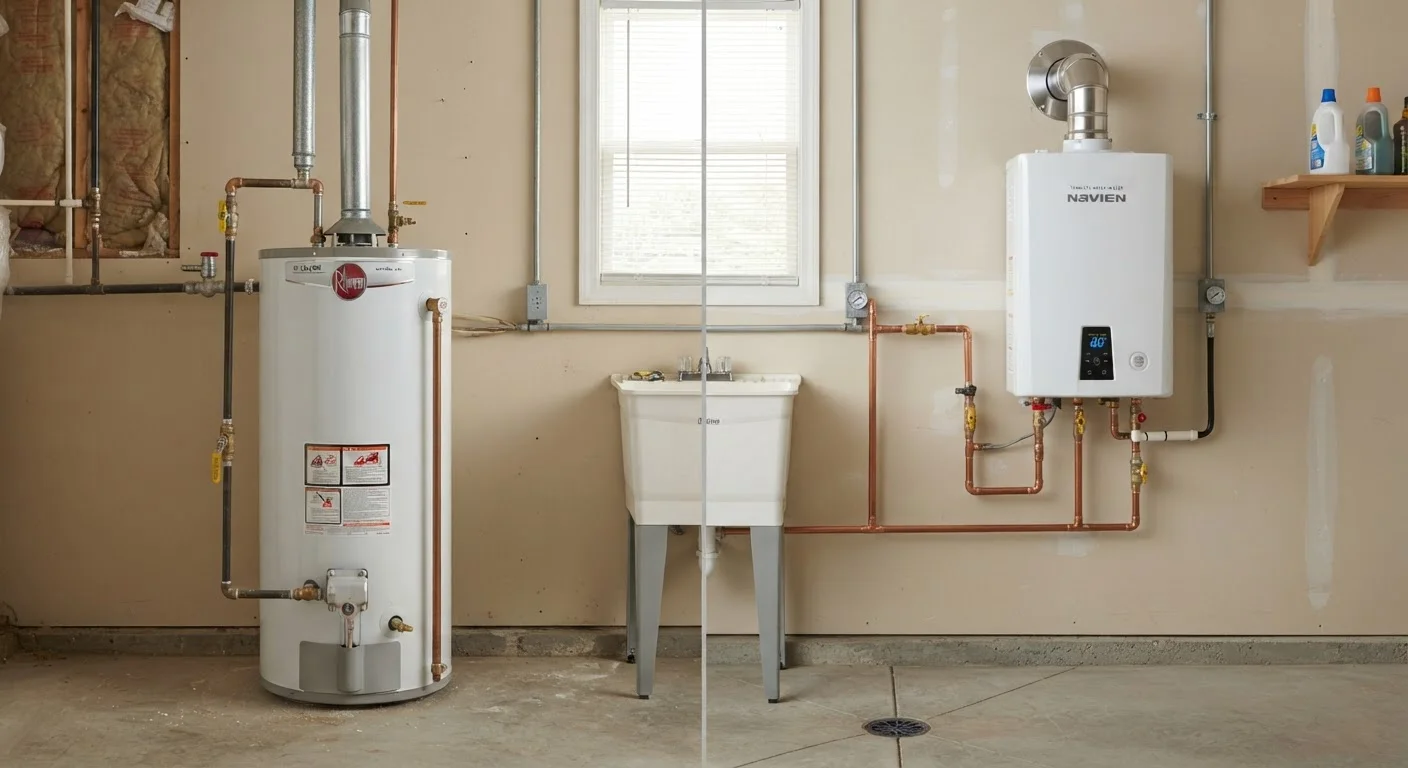
A storage tank water heater maintains a reservoir - commonly 30 to 80 gallons - at a set temperature around the clock. Whether or not anyone is using hot water, the unit fires periodically to offset heat that naturally escapes through the tank walls. This is called standby heat loss, and it represents energy consumed without any active demand.
A tankless water heater (also called an on-demand or instantaneous heater) contains no storage reservoir. When a tap opens, cold water passes through a heat exchanger - powered by gas burners or electric elements - and exits at the target temperature within a few seconds. When demand stops, the unit shuts off entirely.
This operational difference is the root cause of nearly every practical distinction between the two systems, from monthly energy costs to the experience of running out of hot water mid-shower.
| Criterion | Storage Tank | Tankless |
|---|---|---|
| Typical upfront cost | Lower purchase + install | Higher purchase + install |
| Energy consumption | Continuous (standby loss) | On-demand only |
| Average service life | 10-15 years | 20+ years |
| Space required | Large floor footprint | Wall-mounted, compact |
| Hot-water supply limit | Tank capacity (gallons) | Flow rate (GPM) |
| Installation complexity | Generally straightforward | May need gas/electrical upgrade |
| Performance in high simultaneous demand | Strong (from stored reserve) | Can be stretched by peak loads |
Energy Use and Operating Costs
Because tank heaters run continuously, they consume energy even during overnight hours or vacations. The U.S. Department of Energy has noted that water heating typically accounts for roughly 14-18% of a home's energy use, and standby losses are a meaningful share of that figure.
Tankless heaters sidestep standby loss entirely - they only consume energy during active flow. For homes with average or moderate hot-water use, this can translate to lower monthly energy bills over time, though actual savings vary by household size, usage patterns, fuel type, and local utility rates.
14-18%
Share of home energy used for water heating
The U.S. Department of Energy attributes roughly this portion of residential energy consumption to water heating, making it one of the larger household energy loads.
20+ years
Typical tankless heater service life
Industry estimates suggest properly maintained tankless units can last more than 20 years, compared to a 10-15 year average for storage tank models.
2-3×
Approximate upfront cost premium for tankless
Installation cost differences vary widely, but switching from a tank to a tankless system commonly involves significantly higher combined equipment and labour costs.
It is worth noting that gas tankless heaters maintain a small pilot flame (on non-electronic-ignition models) and electric tankless units draw significant amperage during operation, which can affect electrical panel capacity. Neither system is universally cheaper to operate without accounting for your home's specific setup.
Installation, Space, and Infrastructure
Replacing a tank heater with another tank heater is generally straightforward - the infrastructure is already in place. Switching to a tankless system is more involved. Gas tankless units typically require a larger-diameter gas supply line and dedicated venting that differs from a conventional flue. Electric tankless units often need a panel upgrade to support the high amperage draw.
These installation differences mean the upfront cost of going tankless is commonly two to three times higher than a like-for-like tank replacement, though this varies considerably by home and installer. The compact wall-mounted form factor does reclaim floor space, which matters in tight utility closets or finished basements.
For context on how water heater lifespan fits into broader home planning, see our guide to the lifespan of major home systems. Similar infrastructure considerations arise when evaluating other whole-home systems - the trade-offs between whole-house and portable generators follow a comparable pattern of upfront investment versus long-term operational fit.
Hot-Water Availability and Household Demand
A tank heater's limitation is finite capacity: once the stored volume is depleted, recovery time (typically 30-60 minutes depending on fuel type and tank size) must pass before full hot water returns. Large households or back-to-back showers can exhaust the supply.
A tankless unit's limitation is flow rate, measured in gallons per minute (GPM). A single unit has a maximum simultaneous output. If two showers, a dishwasher, and a washing machine all draw hot water at the same moment, a single tankless unit may not deliver adequate temperature to all points. Installers sometimes address this by adding a second unit or dedicating a smaller tankless heater to a high-demand zone.
Neither system is inherently superior - the right match depends on your household's peak simultaneous demand and daily usage rhythm rather than a single universal recommendation.
Hybrid and Heat-Pump Options
A third category - heat-pump water heaters (also called hybrid electric heaters) - uses ambient air to heat water rather than direct electrical resistance, offering efficiency closer to tankless performance in a tank-style form factor. These units require adequate surrounding air volume and a temperate installation space to operate efficiently. If your home has a large utility room or garage, they may be worth investigating alongside the two primary options covered here.