What a Vehicle History Report Actually Contains
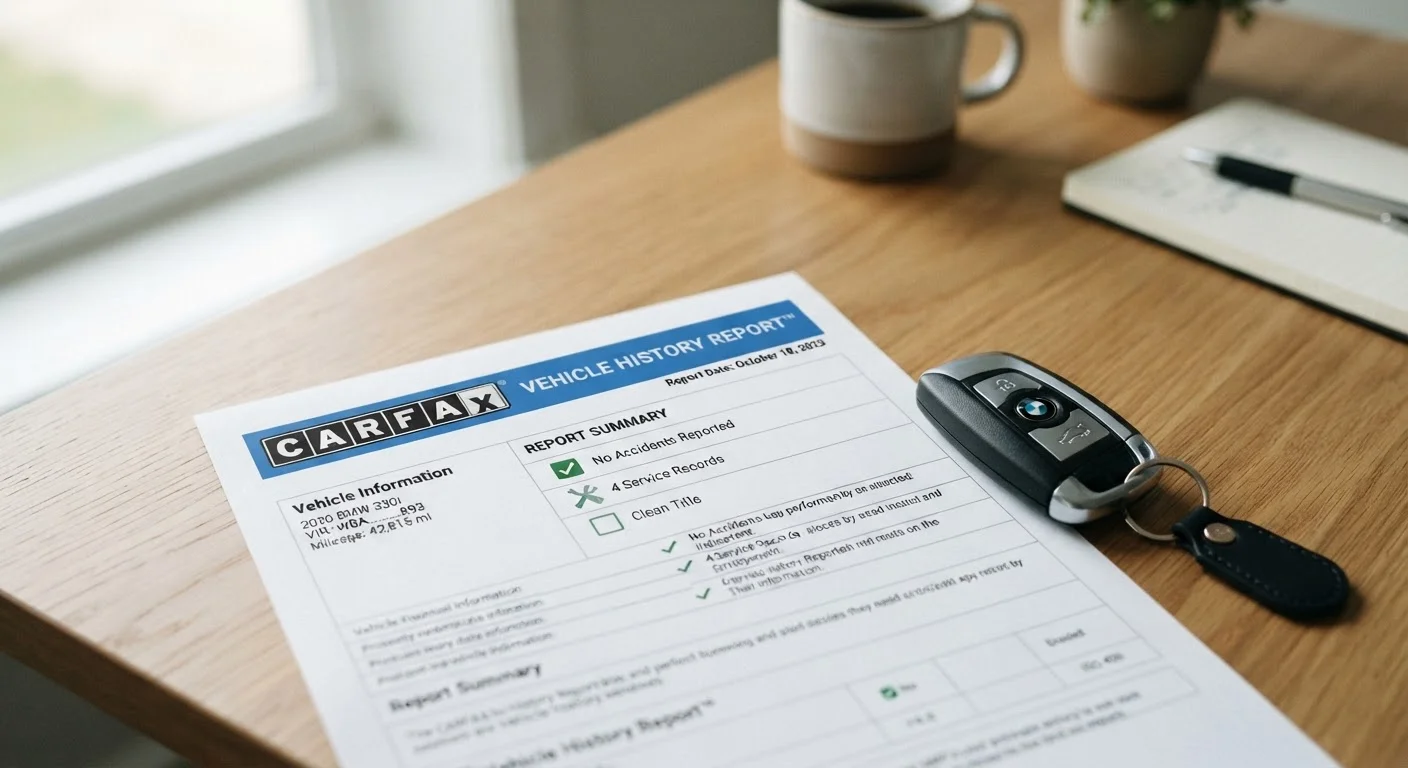
A vehicle history report aggregates public records and industry data tied to a car's VIN - a unique 17-character identifier assigned to every vehicle. These reports draw from state DMV records, insurance claims databases, salvage auctions, and odometer disclosure filings, then compile them into a single document.
Most reports are divided into several major sections: title history, accident and damage records, odometer readings, ownership history, and service or recall records. Each section tells a different part of the story, and none should be read in isolation.
This type of report is a key tool in the car-buying process, but it has real limitations - reports only reflect what has been officially recorded. Unreported accidents, private repairs, and cash sales may leave no trace.
| Primary data sources | State DMV records, insurance claims, auction data, odometer disclosures |
| VIN length | 17 characters, unique to each vehicle (Federal standard since 1981) |
| Common title brands | Salvage, rebuilt, flood damage, lemon law buyback, junk |
| Odometer fraud trigger | Any recorded mileage lower than a prior disclosure |
| Use-type flags to review | Rental, fleet, taxi, commercial |
| Key report limitation | Unreported incidents and private repairs may not appear |
Title History: The Most Critical Section
A vehicle's title is its legal proof of ownership, and the title history section reveals any brands or designations attached to it over time. This is where buyers most often discover serious red flags.
VIN
A Vehicle Identification Number is a unique 17-character code assigned to every motor vehicle. It serves as the key linking all history records to a specific car.
Salvage title
A designation applied when an insurer declares a vehicle a total loss because estimated repair costs exceeded a set threshold relative to the car's value. This brand stays with the vehicle permanently.
Rebuilt title
Issued when a previously salvaged vehicle has been repaired and passed a state-required inspection. The underlying salvage history remains on the title record indefinitely.
Title washing
A fraudulent practice in which a vehicle with a branded title is registered in a different state where that brand may not transfer, effectively hiding its history from buyers.
Odometer rollback
The illegal alteration of a vehicle's odometer to display fewer miles than actually driven, artificially inflating the car's apparent value.
Fleet vehicle
A vehicle owned and operated by a business or organization rather than a private individual. Fleet vehicles are often driven more intensively and may carry higher accumulated mileage.
Salvage titles are issued when an insurer declares a vehicle a total loss - typically when repair costs exceed a defined percentage of the car's market value. A rebuilt or reconstructed title means that salvage vehicle was later repaired and passed a state inspection, but the salvage history stays on record permanently.
Other title brands to watch for include flood damage, lemon law buyback, and junk designations. Title washing - when a vehicle is registered across state lines to obscure a branded title - is a known fraud tactic, so reviewing the full state-by-state ownership chain is worthwhile.
Accident Records and Odometer Flags
Accident records are sourced primarily from insurance claims and police reports. An entry typically includes the date, reporting state, and sometimes a damage severity indicator. The absence of an accident entry, however, does not mean a vehicle was never in a collision - only that no claim or official report tied to that VIN was filed.
For a more complete picture of structural or mechanical damage that may not appear on the report, pair it with a pre-purchase inspection from a qualified mechanic.
Odometer rollback fraud is another area these reports address. Federal law requires odometer disclosure at each ownership transfer, so the report can flag discrepancies - such as a recorded mileage that is lower than a prior entry. Even without outright fraud, large mileage gaps in service records warrant closer questioning.
17 characters
Standard VIN length for all US vehicles
The 17-digit VIN format has been standardized across North American vehicles since 1981, established under federal regulation.
Permanent
Duration a salvage title brand stays on a vehicle record
Once a salvage designation is applied by an insurer and recorded by a state DMV, it remains attached to the VIN for the life of the vehicle.
Ownership History and Use Types
The number of previous owners and how the vehicle was used can significantly affect long-term reliability. A report showing multiple short-term owners - each holding the vehicle only a few months - may suggest recurring problems that prompted repeated resales.
Use-type designations matter too. Vehicles previously registered as rental, fleet, taxi, or commercial have typically accumulated miles faster and under more demanding conditions than privately owned vehicles. That context should factor into your evaluation alongside the maintenance history.
Service records within the report - where available - show dealer visits and some independent shop entries. Consistent, documented maintenance is a positive signal. Gaps around manufacturer-recommended intervals are worth raising with the seller before you head to the test drive.
This article is for general informational purposes only. Vehicle history reports vary by provider and data source; always verify findings independently and consult a qualified automotive professional before making a purchase decision.