
Why Travel Format Changes What You Need to Research
Most destination research guides treat the process as universal-look into safety, cost, climate, and attractions. That's a reasonable starting point, but it skips a critical variable: who is going. The questions a solo traveler needs answered about a destination are meaningfully different from those a group of four or six would ask.
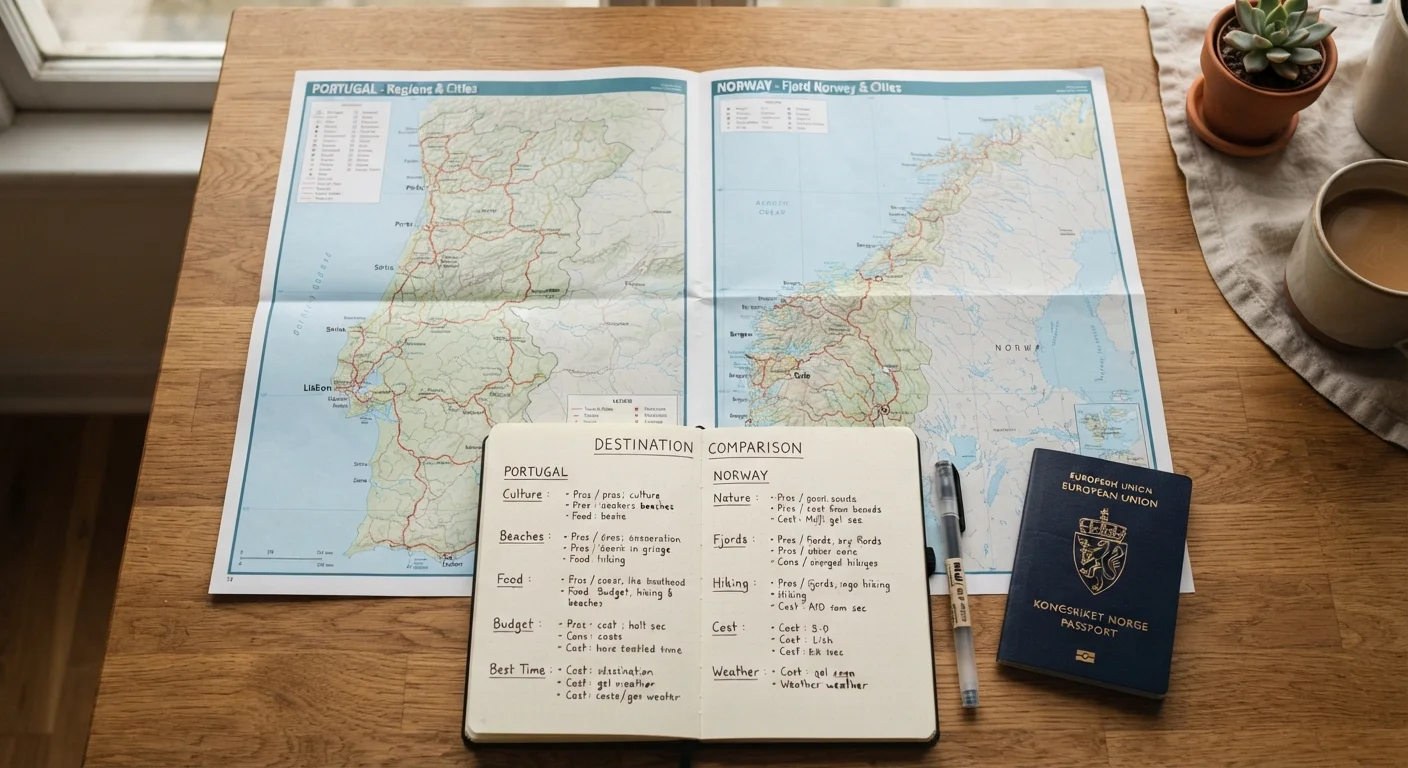
A solo traveler researching Lisbon wants to know whether neighborhoods are walkable at night alone, whether single-occupancy accommodation options are widely available, and whether public transit is reliable enough to navigate independently. A group of six planning the same city needs to know whether large apartments or multi-room rentals are available at reasonable per-person cost, whether restaurants can seat parties without reservations, and whether group transit passes exist.
Same destination, different research priorities. See our complete guide to destination research for a full breakdown of all research dimensions-what follows focuses specifically on where solo and group approaches diverge.
The Solo Traveler's Research Priorities
When you're traveling alone, certain research questions carry more weight because there's no one to split decisions-or risks-with.
Safety and Support Infrastructure
Solo travelers, particularly those new to independent travel, should give extra attention to destination-level safety conditions. This means checking your government's official travel advisory page (such as travel.state.gov for US citizens) and cross-referencing with traveler reports on reputable forums. Look specifically for information about:
- Petty crime rates in tourist areas
- Reliability and safety of local transportation options
- Whether solo travelers-of your demographic-commonly report issues or not
These aren't reasons to avoid a destination, but they shape what precautions and logistics you'll plan around. For a broader foundation, destination research from scratch covers how to build this baseline efficiently.
Accommodation Suitability
Solo travelers often face a structural pricing disadvantage-many hotels and rentals charge per-room rather than per-person, effectively penalizing single occupancy. Research whether the destination has a robust hostel scene, boutique guesthouses with single rooms, or solo-traveler-friendly pricing structures. This is also where flexibility in accommodation type pays off.
Independent Mobility
Can you get around this destination without a car or a group to share ride costs? Research public transit coverage, walkability scores, and the practical availability of taxis or ride-hailing services. A destination that requires a rental vehicle to access key sites is significantly more expensive and logistically complex for a solo traveler than for a group splitting those costs.
Build a Solo-Specific Research Checklist
Before committing to a destination as a solo traveler, create a short checklist with four items: safety advisory status, single-occupancy accommodation availability, public transit coverage, and traveler community reports (forums, recent reviews). Answering these four questions early filters out poor-fit destinations before you've invested significant time in planning.
The Group Traveler's Research Priorities
Group travel research shifts the challenge from individual risk management to collective logistics and preference alignment. The more people involved, the more carefully you need to evaluate a destination's capacity to accommodate varied needs.
Lodging at Scale
Groups need to research whether a destination has appropriate accommodation options for their size-vacation rentals, multi-room suites, adjacent hotel rooms, or hostel dorms. Destinations with limited large-scale lodging options can drive up per-person costs or require splitting the group across different properties, which complicates logistics.
Activity Range and Group-Friendliness
A destination that's ideal for couples or solo explorers may be poorly suited to a group with mixed interests or fitness levels. Research whether a destination offers a range of activity types-cultural, outdoor, culinary, nightlife-so that different members of the group can pursue different itineraries on the same day, or find activities that work for everyone together.
Cost Splitting and Shared Expenses
Group travel budgeting introduces friction that solo travelers never encounter. Research the destination's pricing structure for group admissions, shared transport, and multi-person accommodations early. For detailed guidance on managing shared expenses, see our article on splitting costs when traveling as a group.
Also research tipping culture, tax structures on group bookings, and whether service charges are automatically added for large parties-these hidden costs add up quickly and aren't always disclosed upfront.
| Research Dimension | Solo Traveler Focus | Group Traveler Focus | |
|---|---|---|---|
| Safety Research | Solo mobility and individual risk | Group visibility and shared risk management | |
| Accommodation | Single-occupancy availability and pricing | Multi-room or rental options at group scale | |
| Transportation | Public transit reliability and walkability | Group transport costs and vehicle capacity | |
| Budget Planning | Single person cost structure | Per-person cost with shared expenses | |
| Activity Research | Self-directed, flexible itinerary options | Range of options for mixed interests | |
| Flexibility | High - decisions made unilaterally | Lower - requires group consensus |
Shared Research Steps That Apply to Both
Despite their differences, solo and group travelers share several research obligations that shouldn't be skipped regardless of format.
- Entry requirements: Verify current visa, passport validity, and vaccination requirements through official sources. These change and vary by nationality.
- Travel insurance: Research what coverage is appropriate for your trip type-solo travelers may prioritize emergency evacuation coverage, while groups may need policies that cover trip cancellation if one member has to withdraw.
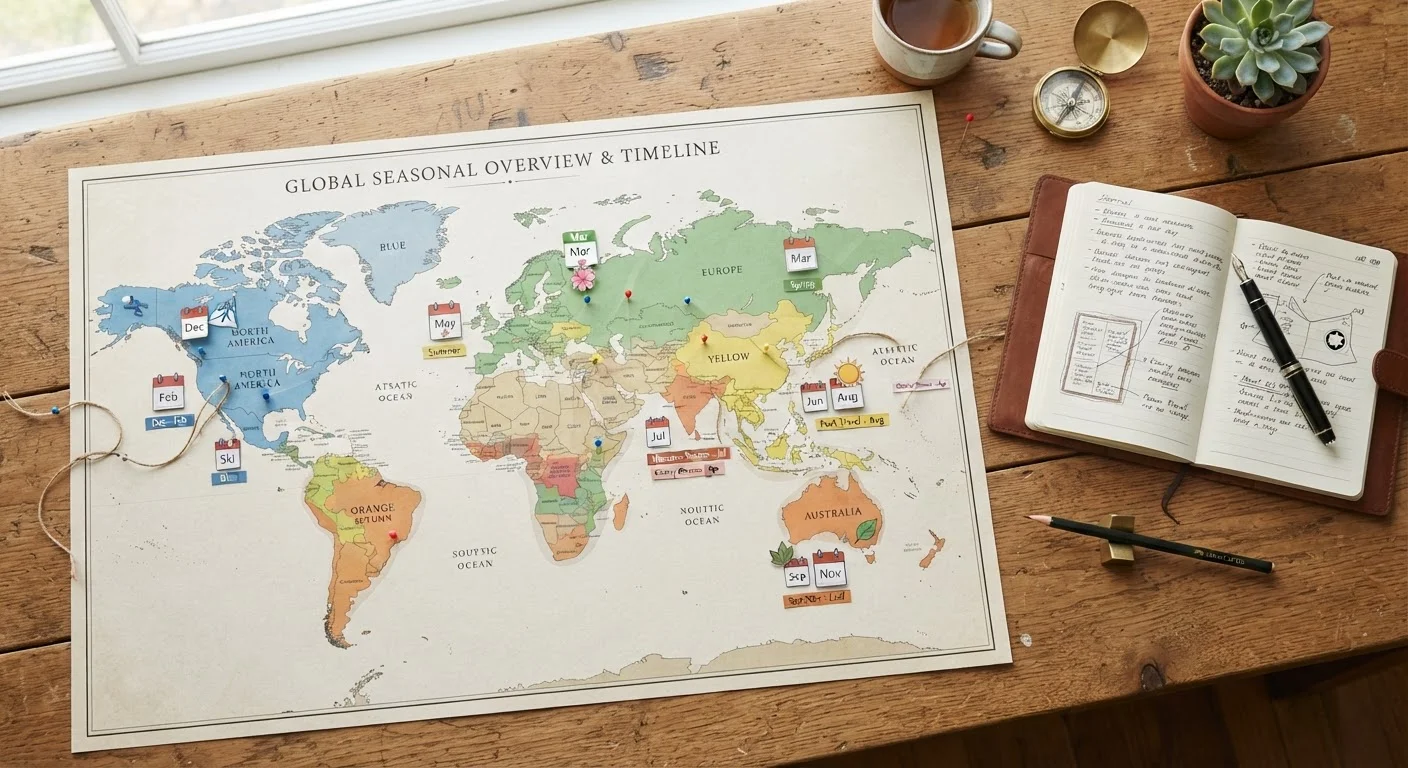
- Climate and seasonality: Both formats need to understand when a destination is most or least suitable to visit, and how weather affects key activities.
- Cultural norms: Respectful travel requires understanding local customs around dress, photography, and behavior in public and sacred spaces.
If you're also evaluating the type of environment-city versus remote-rather than just the logistics, the urban vs. remote destination comparison offers a useful parallel framework.
For a deeper look at how solo and group trips diverge once the destination is selected and planning begins, see solo travel logistics vs. group trip planning.
This article provides general travel planning information. Always verify entry requirements, safety conditions, and travel advisories through official government sources before booking or departing.