What Each Environment Actually Delivers
Before choosing a destination, it helps to understand what each environment type structurally offers - and where each one creates friction.
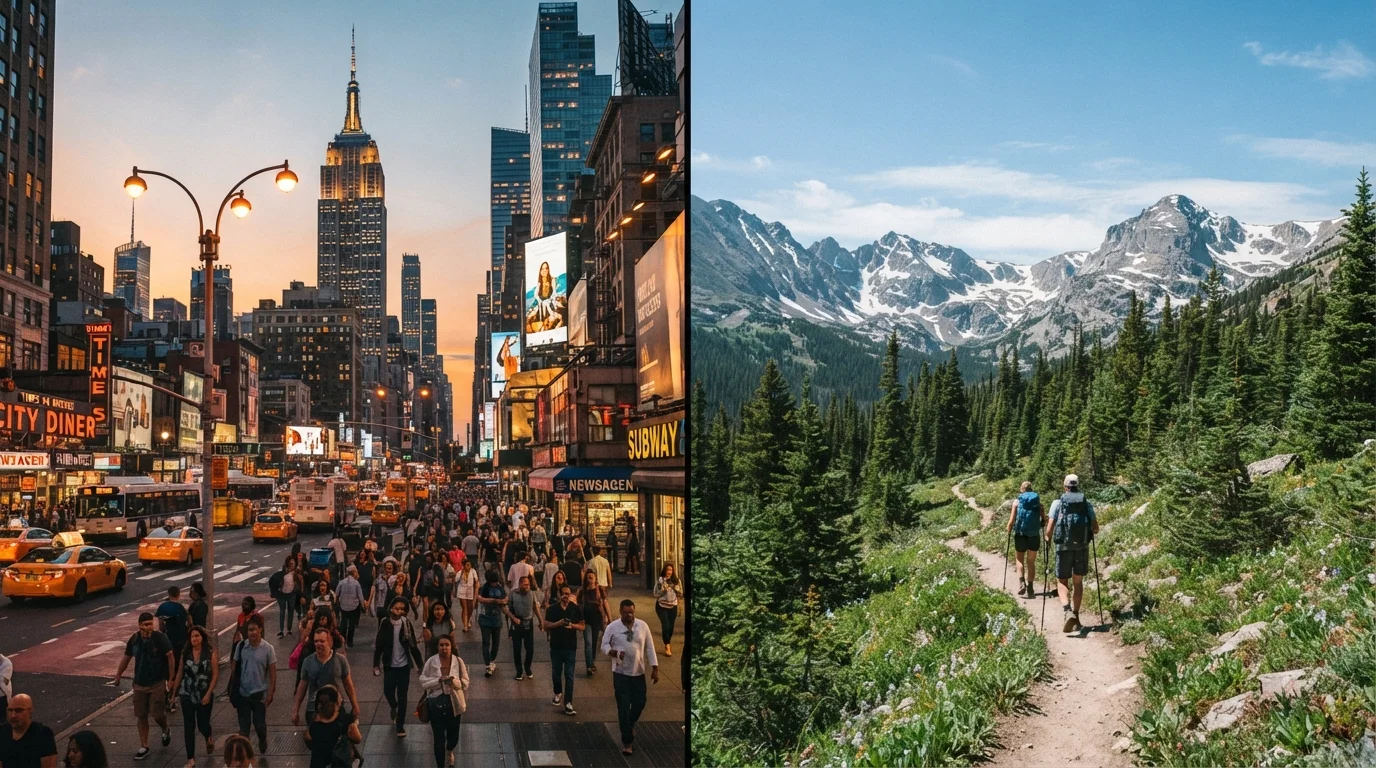
Urban escapes are built on density. A city like New Orleans, Chicago, or Portland concentrates cultural institutions, dining, transit systems, and accommodation options into navigable zones. That density lowers the effort required to fill a day and makes spontaneous plan changes relatively easy. It also means reliable access to healthcare, communication networks, and tourist infrastructure.
Remote retreats - national park regions, rural mountain towns, coastal wilderness areas - operate on a different logic. Access often requires a car or significant overland travel. Services are sparse by definition. The payoff is proportional: genuine solitude, direct access to natural landscapes, and the kind of quiet that urban environments cannot produce. See our full destination evaluation framework for a structured way to assess either environment type before booking.
| Criterion | Urban Escapes | Remote Retreats |
|---|---|---|
| Logistics complexity | Lower - transit, services abundant | Higher - requires advance planning |
| Primary cost driver | Accommodation and dining | Transport, gear, and access |
| Healthcare access | Generally close and accessible | Often limited or distant |
| Crowd levels | High in tourist zones | Low to very low |
| Itinerary flexibility | High - many alternatives nearby | Lower - fewer fallback options |
| Natural landscape access | Limited to parks and greenways | Extensive and direct |
| Communication coverage | Reliable throughout | Patchy or absent in some areas |
| Ideal trip length | 2-5 days for most city visits | 4-10+ days to justify travel time |
Budget Structure: Where Each Environment Concentrates Costs
The cost profiles of urban and remote travel differ in ways that aren't always obvious at first glance.
In cities, accommodation is typically the largest expense. Urban lodging - especially in major metro areas - commands a premium, and that cost compounds quickly over a multi-night stay. Food, entertainment, and transit spending is more flexible; you can control it by choosing neighborhood eateries over tourist-zone restaurants or using public transportation instead of rideshares.
Remote travel often front-loads costs differently. The accommodation itself - a cabin rental, campsite, or small-town inn - may be less expensive per night. But transportation to reach a remote area (flights to regional airports, car rentals, fuel for long drives) can represent a significant share of total trip cost. Gear, permits, and provisioning for areas without grocery access also add up. For a structured look at how transport choices affect overall trip budgets, see our guide on choosing the right way to get there.
52%
US travelers prioritizing nature on next trip
A 2023 Destination Analysts survey found roughly half of US leisure travelers planned to prioritize natural landscapes in their upcoming trips.
2-3×
Urban vs. rural accommodation cost multiplier
Average nightly rates in major US metro areas are often two to three times higher than comparable accommodation in rural or small-town destinations, according to lodging industry data.
Neither environment is categorically more affordable - the budget difference depends heavily on destination, season, and group size. What matters is understanding where each type of trip concentrates its costs so you can plan realistically.
Logistics, Safety, and Contingency Planning
One of the most underweighted factors in destination choice is how much logistical overhead each environment type requires.
Urban travel is generally self-correcting: if a restaurant is closed, another is nearby; if a train is delayed, alternatives exist. Medical care, pharmacies, and emergency services are typically accessible within minutes. This built-in redundancy makes urban trips more forgiving of light preparation.
Remote travel requires deliberate contingency planning. Communication coverage may be limited or absent. Weather can change access conditions. Medical facilities may be hours away. None of this should discourage remote travel - but it does mean that responsible preparation is not optional. Before a remote trip, travelers should verify emergency contact protocols, carry appropriate first-aid supplies, share itineraries with someone not traveling, and check official sources for any current advisories or permit requirements. Always verify entry conditions, road closures, and safety advisories with official government and land management agency sources before departing, as conditions can change between when you plan and when you travel.
If you're weighing how group composition affects these logistics, our article on solo vs. group destination research walks through how planning needs shift depending on party size and dynamic.
Matching Environment to Travel Style
The most reliable way to choose between an urban and remote environment is to assess your own travel style honestly - before you fall in love with a particular destination's aesthetics.
Ask yourself: Do you recharge through stimulation and social engagement, or through quiet and open space? Are you comfortable with uncertainty and improvisation, or do you travel better with structured itineraries and known fallbacks? How does your group - in terms of age, mobility, and experience - actually function on the road?
Travelers who answer the first option in each pair tend to get more from urban environments. Those who lean toward the second often find remote destinations more genuinely restorative. Neither preference is better; the mismatch between environment and temperament is what produces disappointing trips.
Once you've identified your environment type, the next step is narrowing to a specific destination. Our guide to building a destination shortlist offers practical methods for moving from a general environment preference to a concrete, researchable list of candidates. You can also use a side-by-side destination comparison framework once you've narrowed to two finalists.
Your choice of accommodation will also look different depending on environment - cities offer hotels and short-term rentals in abundance, while remote areas may involve vacation rentals, campgrounds, or small inns. See our breakdown of accommodation types by trip style for more detail.