Why the Nitrogen Cycle Matters for Every Fish Owner
New fish owners are often surprised to learn that the water in a tank does far more than keep fish wet. Water chemistry - specifically the presence of toxic waste compounds - is one of the leading reasons fish become sick or die in captivity, particularly in the first few weeks after a tank is set up.
Fish continuously excrete ammonia through their gills and waste. In an open body of water, that ammonia disperses harmlessly. In a closed aquarium, it accumulates rapidly and reaches lethal concentrations within days. The nitrogen cycle is the natural mechanism that prevents this - but only once the beneficial bacteria that drive it have had time to establish themselves.
Understanding this process is especially important for owners of goldfish, bettas, and other popular beginner species. Many fish deaths attributed to mysterious illness or bad luck are actually the result of "new tank syndrome" - toxic ammonia and nitrite levels in an aquarium that hasn't completed its cycle. Common goldfish misconceptions, such as the idea that they thrive in small bowls, are directly connected to this overlooked biological reality.
The Three Stages: Ammonia, Nitrite, and Nitrate
The nitrogen cycle moves through three distinct stages, each involving different bacterial activity and each measurable with an aquarium water test kit.
0 ppm
Safe ammonia level in an established tank
Even trace amounts of ammonia (above 0.25 ppm) can cause gill damage and stress in most freshwater fish species.
4-8 weeks
Typical time to fully cycle a new aquarium
Water temperature, tank size, and seeding methods all influence how quickly beneficial bacteria colonies establish themselves.
40 ppm
Nitrate threshold considered stressful for most freshwater fish
Routine partial water changes are the standard method for keeping nitrate within a safe range in home aquariums.
Stage 1 - Ammonia
Ammonia (NH₃) is produced whenever fish excrete waste, uneaten food decays, or organic material breaks down in the tank. It is highly toxic even at low concentrations and will stress or kill fish quickly. A new tank with no beneficial bacteria has no way to process ammonia, causing levels to climb.
Stage 2 - Nitrite
As ammonia builds up, bacteria from the genus Nitrosomonas begin to colonize the tank. These bacteria consume ammonia and convert it to nitrite (NO₂⁻). While nitrite is less immediately lethal than ammonia, it is still very harmful - it interferes with fish blood's ability to carry oxygen, a condition sometimes called brown blood disease.
Stage 3 - Nitrate
A second bacterial group, Nitrobacter, then converts nitrite into nitrate (NO₃⁻). Nitrate is far less toxic and can be tolerated by most fish at moderate levels. It accumulates over time and is managed primarily through regular partial water changes - typically replacing 20-30% of tank water weekly.
How to Establish and Monitor the Cycle
Cycling a new aquarium before adding fish is the single most protective step a new owner can take. The process involves building up bacterial colonies in the filter and substrate before the tank is stocked.
Speed Up Cycling With Filter Seeding
One of the fastest ways to establish a new tank's nitrogen cycle is to add a handful of established filter media - gravel, a sponge, or a cartridge - from a healthy, disease-free aquarium. The beneficial bacteria living in that media will quickly colonize your new tank, cutting cycling time from weeks to days in some cases. Ask a local aquarium store or fish-keeping club if they can provide some seasoned media.
There are two main approaches. Fishless cycling involves adding a small amount of ammonia to the tank (either pure ammonia solution or by placing a small piece of raw shrimp in the water) to give bacteria a food source without risking fish lives. Fish-in cycling involves stocking a very small number of hardy fish while performing frequent water changes to keep ammonia and nitrite from reaching dangerous levels. Most aquarists and veterinary guidance favors fishless cycling for beginner setups.
During cycling, test your water every two to three days using a liquid test kit - strips tend to be less reliable. You're looking for ammonia and nitrite to first rise and then fall back to zero, while nitrate climbs. When both ammonia and nitrite consistently read zero and nitrate is detectable, your cycle is complete.
Protecting the Cycle Long-Term
Once established, the nitrogen cycle is self-sustaining - but it can be disrupted. The most common mistakes that crash a biological filter include cleaning the filter cartridge under tap water (which kills bacteria with chlorine), replacing all filter media at once, overfeeding, and adding too many fish too quickly.
To protect the bacterial colonies you've built, rinse filter media only in tank water removed during a water change. Replace only part of the filter media at a time if replacement is necessary. Keep feeding moderate - a general guideline is to offer only what fish can consume in two to three minutes, once or twice daily.
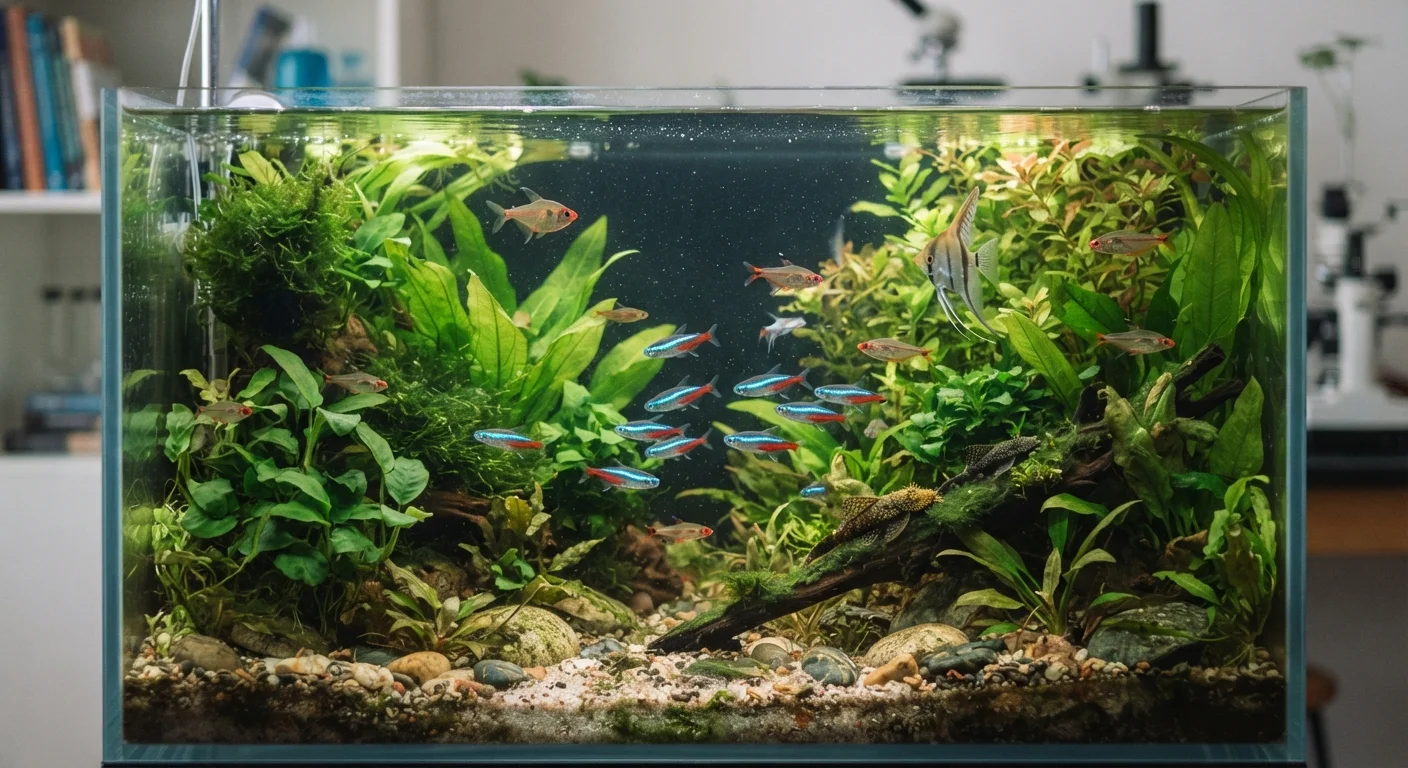
Live aquatic plants are a helpful supporting element. They absorb ammonia and nitrate directly as nutrients, reducing the overall chemical load in the tank. While they don't replace proper filtration, a well-planted aquarium is often more stable than a bare one.
If you ever notice fish gasping at the surface, clamped fins, or unusual lethargy, test your water immediately. Early detection of ammonia or nitrite spikes gives you the best chance to intervene before fish are seriously harmed. When in doubt, consult an aquatic veterinarian or experienced aquarist for guidance specific to your setup.