How Each Method Works
Before choosing a budgeting framework, it helps to understand the mechanics of each one. If you're building your very first budget, start with the core concepts before diving into method comparisons.
The 50/30/20 Rule
Popularized by Senator Elizabeth Warren and her daughter Amelia Warren Tyagi in their 2005 book All Your Worth, the 50/30/20 rule divides your after-tax income into three buckets:
- 50% to needs: Housing, utilities, groceries, minimum debt payments, insurance - expenses you cannot reasonably avoid.
- 30% to wants: Dining out, streaming subscriptions, travel, hobbies - spending that improves quality of life but isn't essential.
- 20% to savings and debt repayment: Emergency fund contributions, retirement accounts, and extra debt payments beyond the minimum.
The appeal is simplicity. You categorize broad spending totals once and check periodically that you're staying within each band.
Zero-Based Budgeting
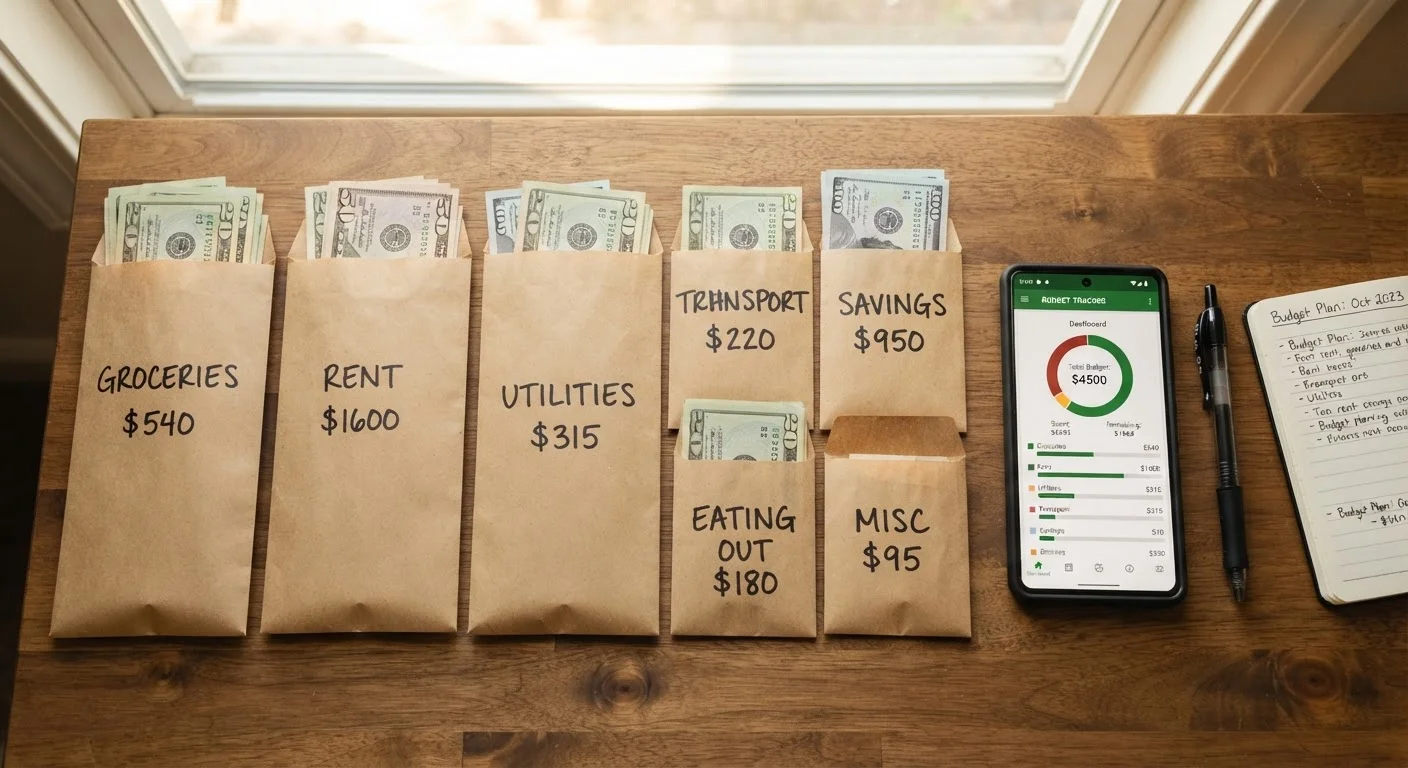
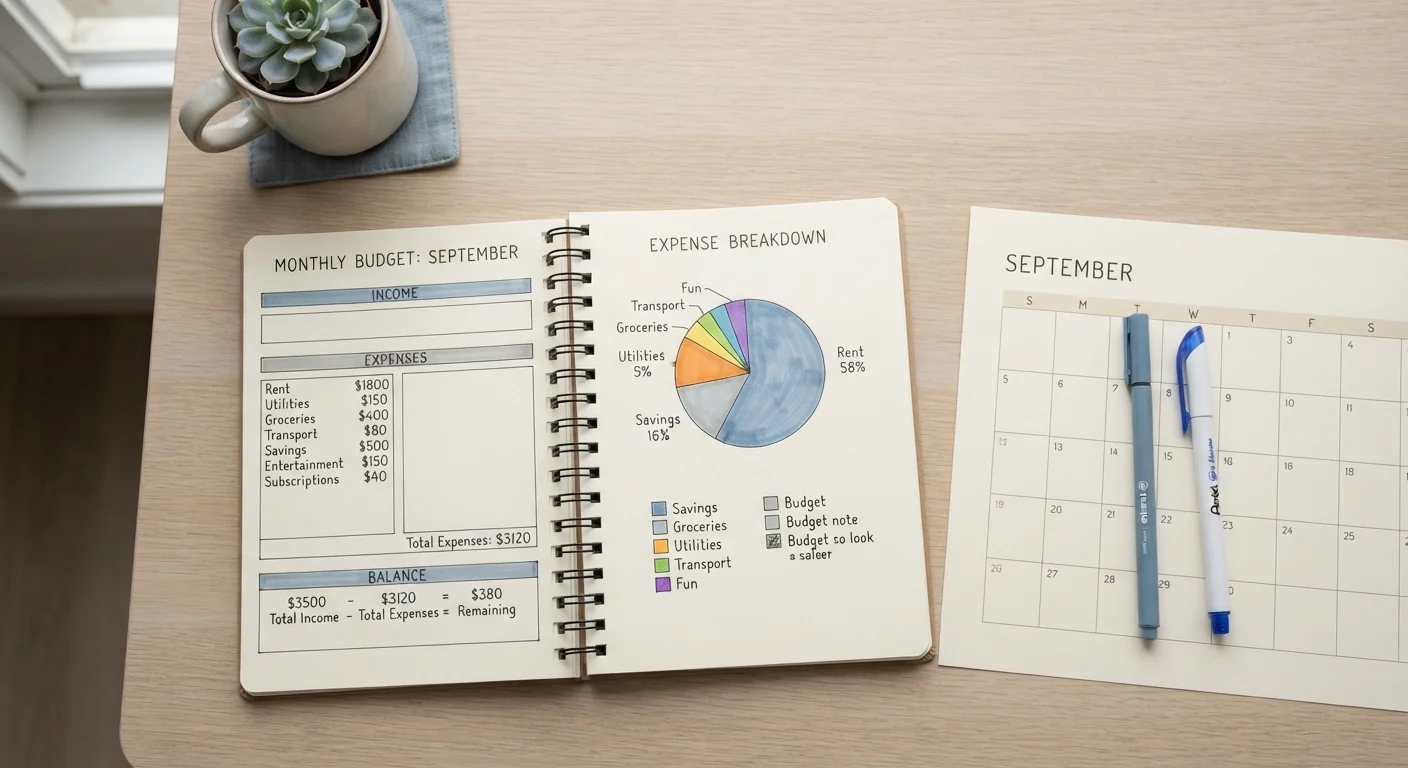
Zero-based budgeting (ZBB) operates on a different principle: income minus expenses must equal zero before the month begins. Every dollar of income is assigned to a specific line item - rent, groceries, car insurance, eating out, savings - so nothing is left unallocated and nothing is spent by default.
This doesn't mean spending everything you earn. A dollar assigned to savings is still assigned - it just goes to a savings category rather than a discretionary one. The goal is intentionality, not austerity.
ZBB requires you to build a detailed monthly budget before each new month starts, then track actual spending against those assignments throughout the month.
| Criterion | 50/30/20 Rule | Zero-Based Budgeting |
|---|---|---|
| Core principle | Split income by fixed percentages | Assign every dollar a purpose |
| Monthly setup time | Low (minutes) | Moderate to high (30-60 min) |
| Ongoing tracking effort | Light - broad category check | Active - line-by-line reconciliation |
| Spending visibility | Broad category level | Granular, per-line-item |
| Flexibility for variable income | Less adaptable month-to-month | Rebuilds around actual income each month |
| Ease for beginners | High - simple three-bucket system | Lower - requires detailed planning |
| Best budget control | Good overall balance | Precise, intentional allocation |
Trade-Offs: Time, Flexibility, and Control
The right method often comes down to how much time you're willing to invest and how much spending detail you actually need.
~39%
US adults without a monthly budget
According to a 2023 Debt.com survey, roughly 39% of Americans reported not following a budget, highlighting how many people are still searching for an approach that fits their life.
78%
Workers living paycheck to paycheck
A 2023 LendingClub report found that approximately 78% of US consumers were living paycheck to paycheck at some point during the year, underscoring the need for intentional spending frameworks.
Time commitment
The 50/30/20 rule can be reviewed in minutes - tally your needs, wants, and savings spending once a month and compare to the target percentages. Zero-based budgeting typically requires 30-60 minutes of setup before each month begins and ongoing check-ins to keep categories accurate as transactions arrive.
Flexibility
The 50/30/20 rule's broad categories absorb month-to-month variation naturally. If your grocery bill rises one month, it still sits within the needs bucket alongside housing and utilities. ZBB, by contrast, requires you to reallocate dollars between line items when life changes - which is more work but also forces a conscious decision about where that extra spending is coming from.
Visibility into spending patterns
ZBB tends to surface surprises that percentage budgets can miss. When you assign a specific dollar amount to, say, takeout food or subscriptions, you often discover that category is larger than expected. The 50/30/20 rule may mask those details within the 30% wants bucket. For a deeper look at how these compare to other frameworks, see a broader comparison of budgeting methods.
Handling irregular income
Freelancers, gig workers, and anyone with variable monthly earnings often find ZBB more useful. Rebuilding the budget each month around actual income - rather than applying fixed percentages to an estimated figure - reduces the risk of overspending during low-income months.
This article is for general informational and educational purposes only. It does not constitute personalized financial advice. Consider consulting a qualified financial professional regarding your specific circumstances.
Choosing - or Combining - Your Approach
Neither the 50/30/20 rule nor zero-based budgeting is objectively superior. Each has a natural fit depending on your financial situation, personality, and goals.
No Single Method Works for Everyone
Personal finance research consistently shows that adherence - actually following the budget - matters more than the specific system chosen. A simpler method you maintain consistently will outperform a sophisticated one you abandon after two weeks. Start with whichever approach feels most manageable, and adjust as your financial confidence grows.
Some households find success with a hybrid approach: use the 50/30/20 percentages as guardrails for overall balance, then apply zero-based detail within the wants category to rein in the spending most likely to drift. This preserves the simplicity of proportional budgeting while adding targeted control where it's actually needed.
If previous budget attempts have failed quickly, consider reading about why budgets collapse in the first 60 days before committing to either system. The method matters less than the habits that support it. For a comprehensive overview of budgeting principles, the complete guide to personal budgeting is a useful next step.
If managing debt alongside savings is your primary concern, the 50/30/20 rule applied to saving and debt simultaneously explains how the framework handles competing financial priorities. You can also explore the broader Saving & Debt hub for related guidance.