How a Circuit Breaker Actually Works
A circuit breaker is a safety switch designed to cut power automatically when the electrical current flowing through a circuit exceeds a safe level. It protects your wiring - and your home - from overheating. Understanding this basic function helps clarify why a tripping breaker is doing its job, not failing at it.
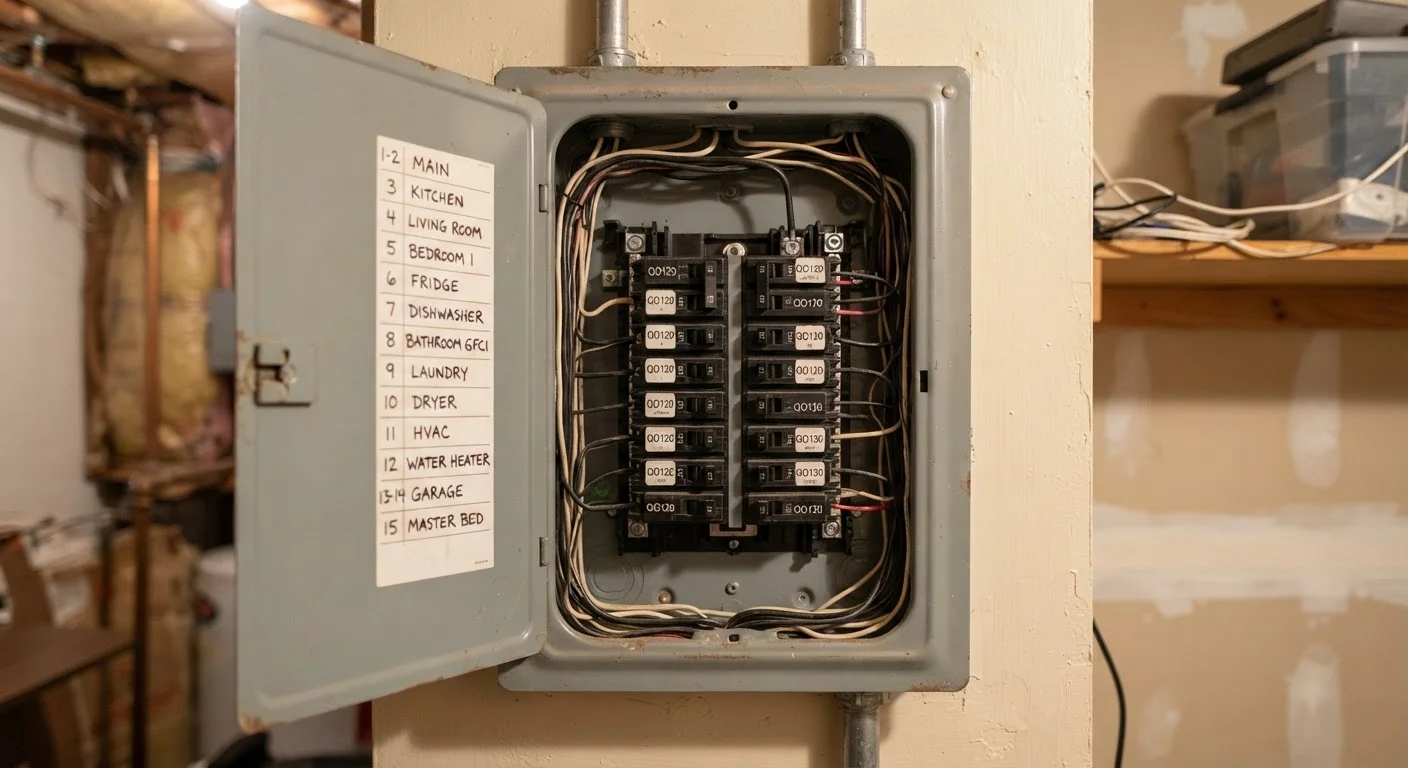
Each breaker in your panel is rated for a specific amperage, commonly 15 or 20 amps for household circuits. When current exceeds that rating - whether from too many devices, a wiring fault, or a damaged appliance - the breaker trips and breaks the circuit. For a broader understanding of how your panel is organized and what each breaker controls, see our guide to home electrical panel basics.
There are three core causes of breaker trips:
- Overloaded circuit: More current is being drawn than the circuit is rated for.
- Short circuit: A hot wire contacts a neutral wire, creating a sudden surge of current.
- Ground fault: A hot wire contacts a grounded surface, such as a metal box or a wet floor.
Each cause has different implications for how you respond - and whether you can safely address it yourself.
Mistakes Homeowners Make When Breakers Trip
The instinct to reset and move on is understandable, but it bypasses the diagnostic step that actually makes your home safer. Below are the most common errors homeowners make when dealing with a tripping breaker - and how to handle each situation correctly.
Assuming the breaker itself is faulty and replacing it without investigating the circuit.
Why it happens: Breakers are mechanical devices, so it seems logical to blame the hardware. Homeowners may replace the breaker hoping to solve repeated trips.
Plugging too many high-draw appliances into the same circuit.
Why it happens: Modern kitchens and home offices concentrate energy-hungry devices - microwaves, space heaters, coffee makers - in one area, often served by a single circuit.
Ignoring warning signs of a short circuit, such as a burning smell or scorch marks near an outlet.
Why it happens: Homeowners may chalk up a single trip to a coincidental overload and reset the breaker without inspecting the outlet or wiring.
Overlooking aging or damaged appliance cords as a source of ground faults.
Why it happens: Cord damage is gradual and easy to miss, especially when appliances are pushed against walls or tucked under furniture.
Assuming a panel upgrade is unnecessary because the breakers still function.
Why it happens: If breakers trip and can be reset, homeowners may conclude the system is working as intended - without recognizing that chronic tripping signals the panel's capacity is mismatched with current demand.
Never Ignore a Repeatedly Tripping Breaker
A breaker that trips again and again after being reset is signaling an underlying problem that hasn't been resolved. Continuing to reset it without diagnosing the cause can mask a serious hazard, including wiring faults that may lead to electrical fires. If a breaker trips more than once for the same circuit without an obvious explanation, consult a licensed electrician before using that circuit again.
When to Call a Licensed Electrician
Not every breaker issue is something a homeowner should troubleshoot independently. Recognizing the boundary between a manageable load adjustment and a hazard requiring professional assessment is essential.
Do Not Tape or Bypass a Breaker
Some homeowners mistakenly tape a breaker in the ON position or use other workarounds to keep a circuit running. This disables a critical safety device and creates a serious fire risk. No appliance or convenience is worth bypassing your home's built-in electrical protection.
Contact a licensed electrician if you experience any of the following:
- A breaker trips immediately after being reset with no load on the circuit
- You detect burning smells, warm outlet covers, or visible scorch marks
- Multiple circuits trip at the same time or in quick succession
- Your panel is older than 25 years or uses a brand flagged for safety concerns
- You are adding new circuits, a subpanel, or a high-draw appliance such as an EV charger
Electrical work beyond simple load management - including any repair inside the panel, wiring replacement, or service upgrades - typically requires permits and inspections under local building codes. A licensed electrician will know what your jurisdiction requires and ensure the work meets current safety standards.
~51,000
Home electrical fires per year in the U.S.
According to the U.S. Fire Administration, electrical fires cause thousands of injuries and billions in property damage annually, underscoring why electrical faults deserve prompt attention.
15-20 yrs
Typical lifespan of a circuit breaker
The Consumer Product Safety Commission notes that breakers, like all mechanical components, degrade over time and may fail to trip reliably once past their service life.
A tripping breaker is your home's electrical system communicating with you. Taking the time to understand that message - rather than silencing it with a reset - is the most effective thing you can do for your home's long-term safety.