Why Paint Finish Matters as Much as Color
When homeowners select interior paint, color typically gets all the attention - but the finish (also called sheen) determines how a surface holds up over time, how it reflects light, and how easy it is to clean. A flat finish that looks elegant in a living room can become a maintenance problem in a kitchen. Understanding the practical role each sheen plays helps you match the right finish to the right room, every time.
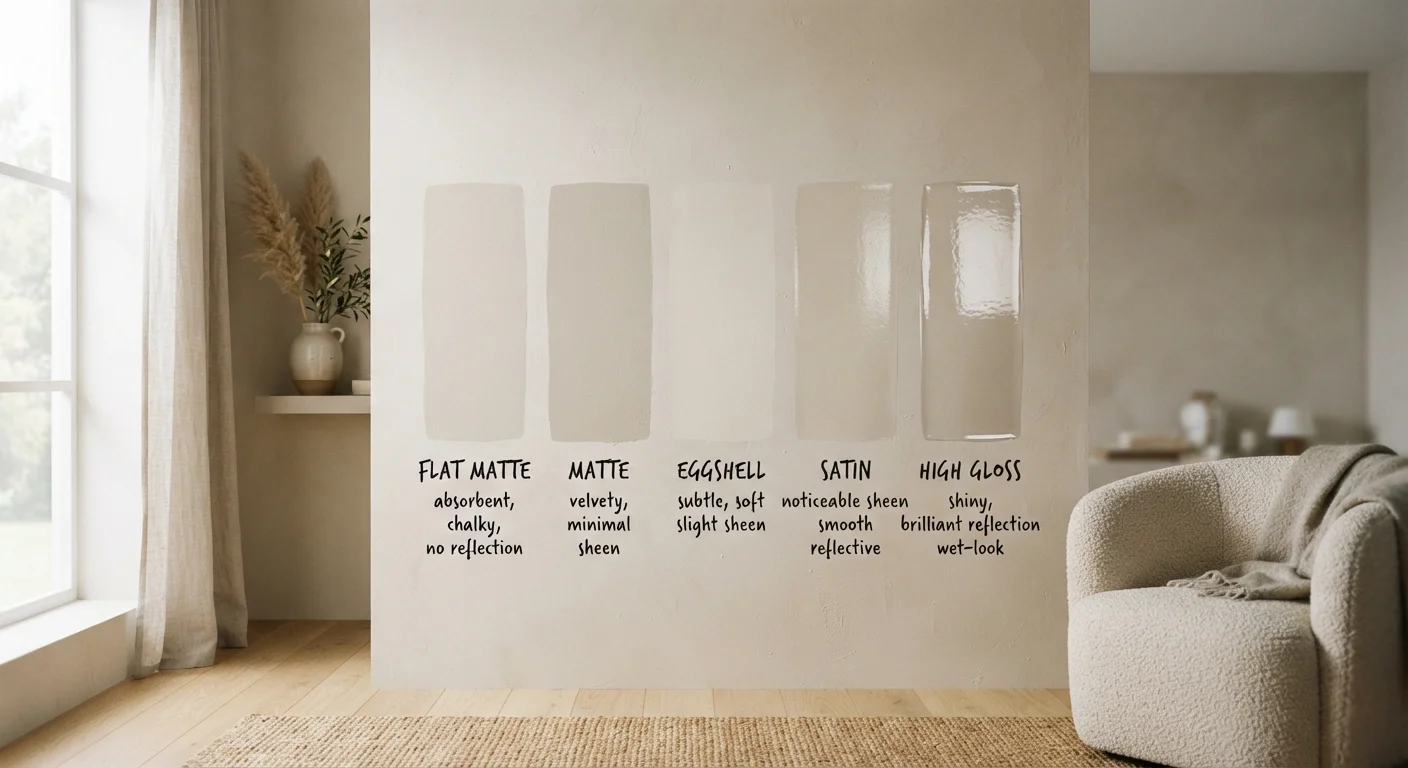
Paint sheens are categorized by the percentage of light they reflect. Higher sheen means more light bounces back, which makes surfaces look brighter and more washable - but also makes surface imperfections more visible. Lower sheen hides flaws but offers less resistance to moisture and scrubbing.
The Five Main Finishes and Where They Belong
Sheen
The degree of light reflectivity in a dried paint surface. Sheen levels range from flat (no reflectivity) to high-gloss (maximum reflectivity) and affect both appearance and durability.
Matte finish
A paint finish with little to no light reflection. It effectively hides surface imperfections but is less resistant to moisture and scrubbing than higher-sheen finishes.
Eggshell finish
A low-luster finish with a slight sheen resembling the surface of an eggshell. It is more washable than flat paint and is commonly used in moderate-traffic living spaces.
Satin finish
A mid-range sheen with a smooth, pearl-like appearance. Satin balances aesthetics and cleanability, making it a versatile choice for family-oriented rooms and light-use kitchen areas.
Semi-gloss finish
A reflective, moisture-resistant paint finish frequently applied to trim, doors, and bathroom surfaces. It withstands repeated cleaning but highlights surface imperfections.
High-gloss finish
The most reflective and durable interior paint finish. It creates a hard, wipeable surface suited to cabinetry and accents, but demands thorough surface preparation to look smooth.
Matte (Flat)
Matte finishes reflect the least light of any sheen, producing a smooth, non-reflective look that conceals wall imperfections particularly well. This makes them a practical choice for ceilings and low-traffic areas such as formal dining rooms or adult bedrooms. The tradeoff is durability - flat paint marks more easily and is harder to wipe clean without disturbing the surface.
Eggshell
Eggshell has a subtle, soft luster similar to the surface of an actual eggshell. It tolerates light cleaning better than flat paint while still minimizing glare, making it one of the most widely used finishes for main living areas, hallways, and bedrooms that see moderate foot traffic.
Satin
Satin sits in the middle of the sheen spectrum. It has a gentle pearl-like quality that holds up well to regular cleaning, making it suitable for family rooms, children's bedrooms, and kitchens with lower humidity. Some painters also use satin on trim for a softer look than semi-gloss provides.
Semi-Gloss
Semi-gloss is noticeably reflective and resists moisture effectively, which is why it appears frequently on trim, doors, window casings, and bathroom walls. It can be wiped down repeatedly without damage, though its shine can draw attention to surface flaws like dents or uneven joint compound.
Gloss (High-Gloss)
High-gloss is the most durable and moisture-resistant finish available, with a hard, almost lacquer-like surface. It is commonly reserved for cabinetry, furniture, and accent features where maximum durability is needed. Thorough surface preparation - sanding and priming - is essential before applying high-gloss paint, as it amplifies every imperfection.
Matching Finish to Room and Surface
Prep Work Affects Every Finish
No paint finish performs well over a poorly prepared surface. Fill holes and cracks with spackling compound, sand rough spots smooth, and apply a primer appropriate to your substrate before painting. Higher-sheen finishes are particularly unforgiving of skipped prep steps, since they reflect light in ways that make flaws clearly visible once dry.
As a general framework, consider each area's traffic level and exposure to moisture before choosing a sheen:
- Ceilings: Flat or matte - minimal light reflection keeps the ceiling from drawing the eye.
- Main living areas and bedrooms: Eggshell or satin - enough durability for everyday life without excessive shine.
- Kitchens and bathrooms: Satin to semi-gloss - moisture resistance and cleanability are the priority.
- Trim, doors, and molding: Semi-gloss - holds up to frequent contact and provides crisp definition.
- Cabinets and furniture: Semi-gloss or high-gloss - hardest surface for heavy-use areas.
Surface preparation has an outsized effect on the final result regardless of finish. Smooth, primed surfaces show off higher sheens appropriately, while unrepaired cracks or texture variations will be amplified by gloss paints. Just as insulation performance depends on proper installation - a point covered in our guide to home insulation types - paint finish performance depends on what happens before the first coat goes on.