
The Fiber Gap: Why It Matters
Dietary fiber is one of the most consistently under-consumed nutrients in the American diet. Research from the USDA and large-scale dietary surveys suggests that the average US adult takes in roughly 15 grams of fiber per day - about half of what most dietary guidelines recommend. This shortfall is not a minor detail; it has meaningful implications for digestive health, cardiovascular risk, weight regulation, and more.
The gap exists largely because of how modern diets are structured. Ultra-processed foods - which make up a significant share of calories for many Americans - typically have fiber stripped away during manufacturing. Refined grains, packaged snacks, and fast food are low in fiber almost by design. Understanding what fiber actually does helps explain why closing this gap is worth the effort.
~15g
Average daily fiber intake for US adults
USDA dietary survey data consistently shows average American fiber consumption is roughly half of recommended levels.
25-38g
Recommended daily fiber intake for adults
The Dietary Guidelines for Americans recommend approximately 25g/day for women and 38g/day for men, varying by age.
95%
Americans not meeting fiber recommendations
Research published in nutrition journals estimates that dietary fiber is one of the most widely under-consumed nutrients in the US population.
How Fiber Works in the Body
Fiber's value comes precisely from the fact that it resists digestion. As it moves through the gastrointestinal tract, it performs several distinct functions depending on its type.
Soluble fiber - abundant in oats, legumes, apples, and citrus - dissolves in water and forms a viscous gel in the digestive tract. This slows the absorption of sugar, which supports more stable blood glucose levels after meals. It also binds to cholesterol-containing bile acids, which can contribute to lower LDL cholesterol levels over time.
Insoluble fiber - found in wheat bran, whole grains, nuts, and most vegetables - does not dissolve. It adds bulk and draws water into stool, speeding intestinal transit and supporting regular bowel movements. This is the type most associated with reducing constipation.
Beyond these mechanical effects, fiber also acts as a prebiotic - meaning it serves as food for beneficial bacteria in the gut. A diverse, fiber-rich diet is consistently linked to a healthier gut microbiome, which researchers continue to study for its connections to immune function, inflammation, and even mood. For more on how dietary patterns support long-term health, see nutritional patterns that research consistently supports.
Reliable Food Sources of Fiber
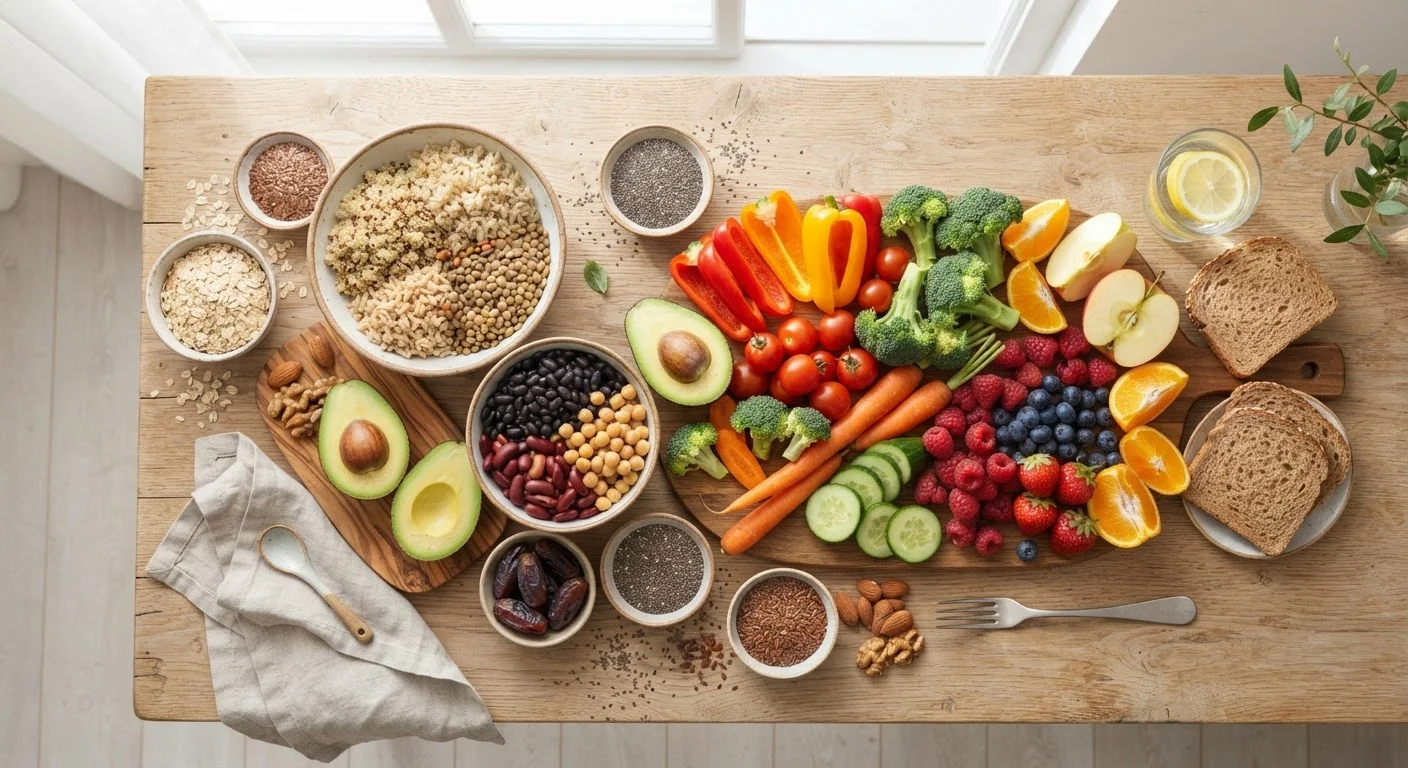
No single food provides all the fiber your body needs. A varied diet built around whole plant foods is the most practical approach. Below are some of the most fiber-dense options by category:
- Legumes: Lentils, black beans, chickpeas, and split peas are among the richest sources - a half-cup of cooked lentils delivers roughly 8 grams of fiber.
- Whole grains: Oats, barley, bulgur, and whole wheat bread or pasta offer substantially more fiber than their refined counterparts.
- Vegetables: Broccoli, Brussels sprouts, carrots, and artichokes are particularly high in fiber relative to their calorie content.
- Fruits: Raspberries, pears, apples (with skin), and avocados are standout sources among commonly consumed fruits.
- Nuts and seeds: Chia seeds, flaxseeds, and almonds contribute both fiber and healthy fats.
When evaluating packaged foods, the nutrition facts label lists dietary fiber per serving. A food providing 5 grams or more of fiber per serving is generally considered a high-fiber food. Our guide to reading a nutrition label can help you interpret these figures accurately.
Increase Fiber Gradually
If your current fiber intake is low, adding too much too soon can cause gas, bloating, or cramping. Aim to increase your intake by a few grams per week rather than all at once. Pairing higher fiber intake with adequate water consumption helps your digestive system adjust smoothly.
Practical Ways to Increase Your Fiber Intake
Boosting fiber intake does not require a dramatic diet overhaul. Small, consistent substitutions tend to be more sustainable than wholesale change. Swapping refined grains for whole grain versions, adding a serving of legumes to soups or salads, and keeping fruit accessible for snacking are all low-effort strategies that compound over time.
One important note: increasing fiber too quickly can cause bloating, gas, or cramping, particularly in people whose current intake is very low. A gradual increase over several weeks allows the digestive system and gut microbiome to adapt. Adequate hydration is equally important - fiber absorbs water, and drinking enough supports its transit through the gut. For more on how fluid intake supports digestion and nutrient absorption, see how water fits into a balanced diet.
Fiber needs also shift across life stages - children, older adults, and people with certain health conditions may have different requirements. Nutrition through different life stages provides useful context on these variations. As always, anyone managing a chronic condition or digestive concern should consult a qualified healthcare provider before making significant dietary changes.
This article is for general informational purposes only and does not constitute medical or dietary advice. Consult a qualified healthcare professional for guidance tailored to your individual health needs.