What Makes a Sugar 'Natural' or 'Added'?
The distinction between natural and added sugar is not about the sugar molecule itself - both consist primarily of glucose, fructose, or sucrose - but about its origin and the nutritional company it keeps.
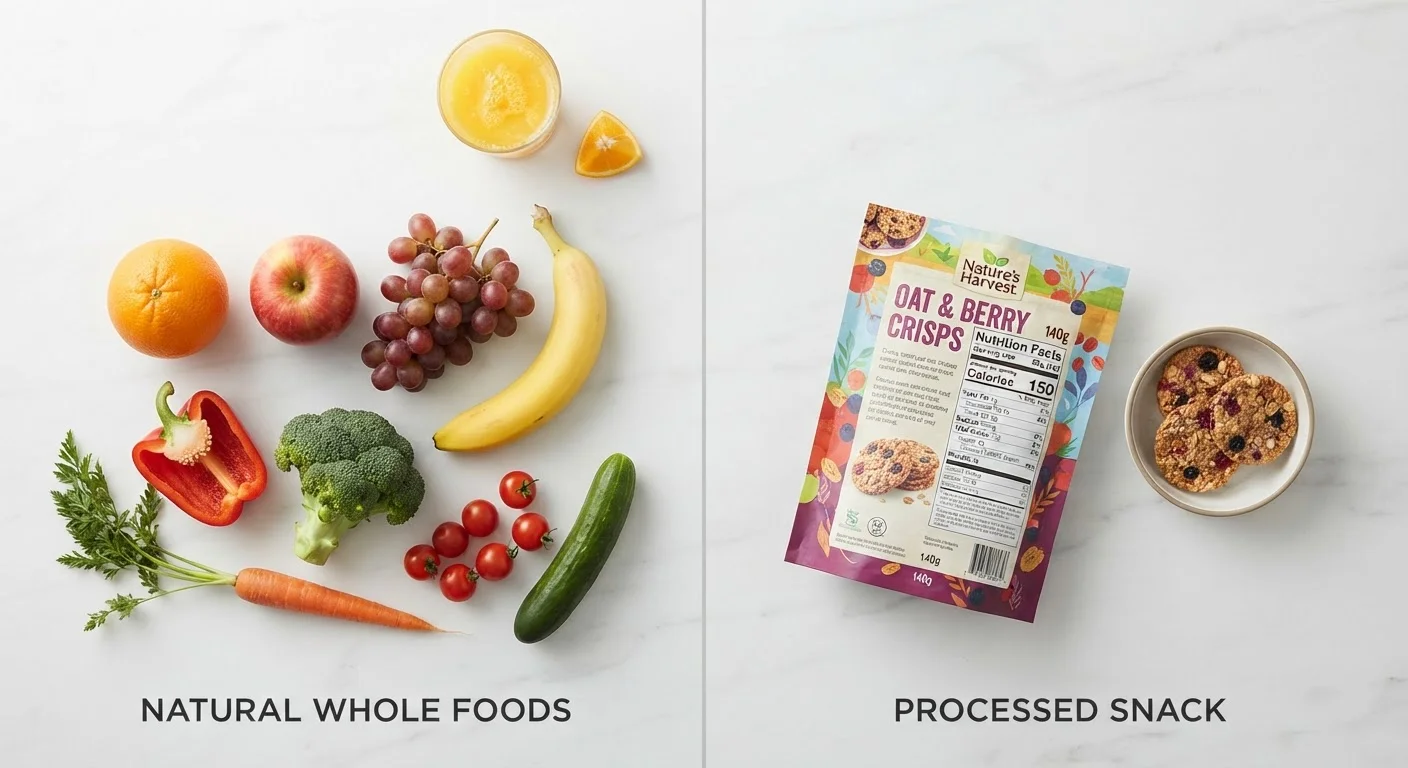
Natural sugars are those found inherently in whole or minimally processed foods. Lactose in milk, fructose in an apple, and glucose in a carrot all qualify. These sugars arrive alongside fiber, water, protein, vitamins, and minerals. That surrounding food matrix - sometimes called the "food package" - influences how quickly sugars enter the bloodstream and how the body responds.
Added sugars, by contrast, are sugars and syrups added to foods or beverages during processing, preparation, or at the table. Examples include white table sugar, high-fructose corn syrup, honey added to packaged granola, and concentrated fruit juice used as a sweetener. They contribute calories but little or none of the nutritional context that whole foods provide.
For a broader introduction to how these figures appear on packaging, see our guide to reading a nutrition label.
| Criterion | Natural Sugar | Added Sugar |
|---|---|---|
| Origin | Inherent in whole foods | Added during processing or cooking |
| Common sources | Fruit, dairy, vegetables | Sodas, baked goods, sauces, cereals |
| Accompanying nutrients | Fiber, vitamins, minerals present | Typically minimal additional nutrients |
| Listed on Nutrition Facts | Included in Total Sugars only | Listed separately as Added Sugars |
| Dietary guideline target | No specific limit recommended | Less than 10% of daily calories |
| Typical absorption context | Slowed by food matrix (fiber, water) | Often absorbed more rapidly |
How Labels Help You Tell Them Apart
Since 2020, the US Food and Drug Administration (FDA) has required that Nutrition Facts panels on most packaged foods list Added Sugars as a separate sub-line beneath Total Sugars. The value is expressed in grams and as a percentage of the Daily Value (DV), which is set at 50 grams of added sugar per day based on a 2,000-calorie reference diet.
This means you can now distinguish, at a glance, how much of a product's sugar is inherent to its ingredients versus introduced during manufacturing. A plain yogurt, for example, may show 12 g of Total Sugars but 0 g of Added Sugars - that sugar is lactose, naturally present in milk. A flavored yogurt of the same size might show 22 g Total Sugars and 10 g Added Sugars, signaling that sweeteners were incorporated.
<10%
Recommended daily limit for added sugars
The Dietary Guidelines for Americans set this threshold as a percentage of total daily caloric intake.
17 tsp
Estimated average daily added sugar intake for US adults
According to CDC data, US adults consume roughly 17 teaspoons of added sugar per day - more than double the recommended limit.
39 g
Added sugar in a typical 12-oz sweetened soda
A single can of a standard cola-type beverage contains nearly 80% of the recommended daily added sugar limit on a 2,000-calorie diet.
The Dietary Guidelines for Americans recommend limiting added sugars to less than 10% of total daily calories. For a 2,000-calorie diet, that translates to roughly 200 calories or 50 grams of added sugar per day. Many Americans currently exceed this threshold, largely through sweetened beverages, desserts, and ultra-processed snacks - a topic explored further in our comparison of whole foods and ultra-processed foods.
Why the Distinction Matters for Everyday Eating
Understanding this difference helps consumers make more informed choices without unnecessarily avoiding nutritious whole foods. Bananas, for instance, are sometimes singled out for their sugar content, yet they also provide potassium, vitamin B6, and dietary fiber. That nutritional profile makes them a fundamentally different proposition from a fruit-flavored candy of equivalent sugar content.
That said, the picture is not always black and white. Some foods - like fruit juice or dried fruit - are minimally processed but can deliver concentrated sugar with less fiber than the whole fruit. Similarly, small amounts of added sugar used in cooking at home differ considerably in context from the large quantities found in commercial sweetened beverages.
Practical habits that support awareness of added sugar intake include reading the Added Sugars line on Nutrition Facts labels, choosing unsweetened or lightly sweetened versions of packaged foods, and prioritizing whole fruits and vegetables when reaching for something sweet. These are general strategies, not personal prescriptions - anyone with specific health concerns around blood sugar, weight, or metabolic health should speak with a qualified healthcare professional for guidance tailored to their situation.
This article is for general informational purposes only and does not constitute medical or dietary advice. Consult a qualified healthcare professional before making significant changes to your diet, particularly if you have an existing health condition.