Why the Nutrition Facts Label Exists
The Nutrition Facts label is a standardized format required by the U.S. Food and Drug Administration (FDA) on most packaged foods. Its purpose is to give consumers consistent, comparable information about what they're eating. The format was updated significantly in 2016 to reflect current dietary science, with changes including a more prominent calorie display, a mandatory added sugars line, and an updated list of required nutrients.
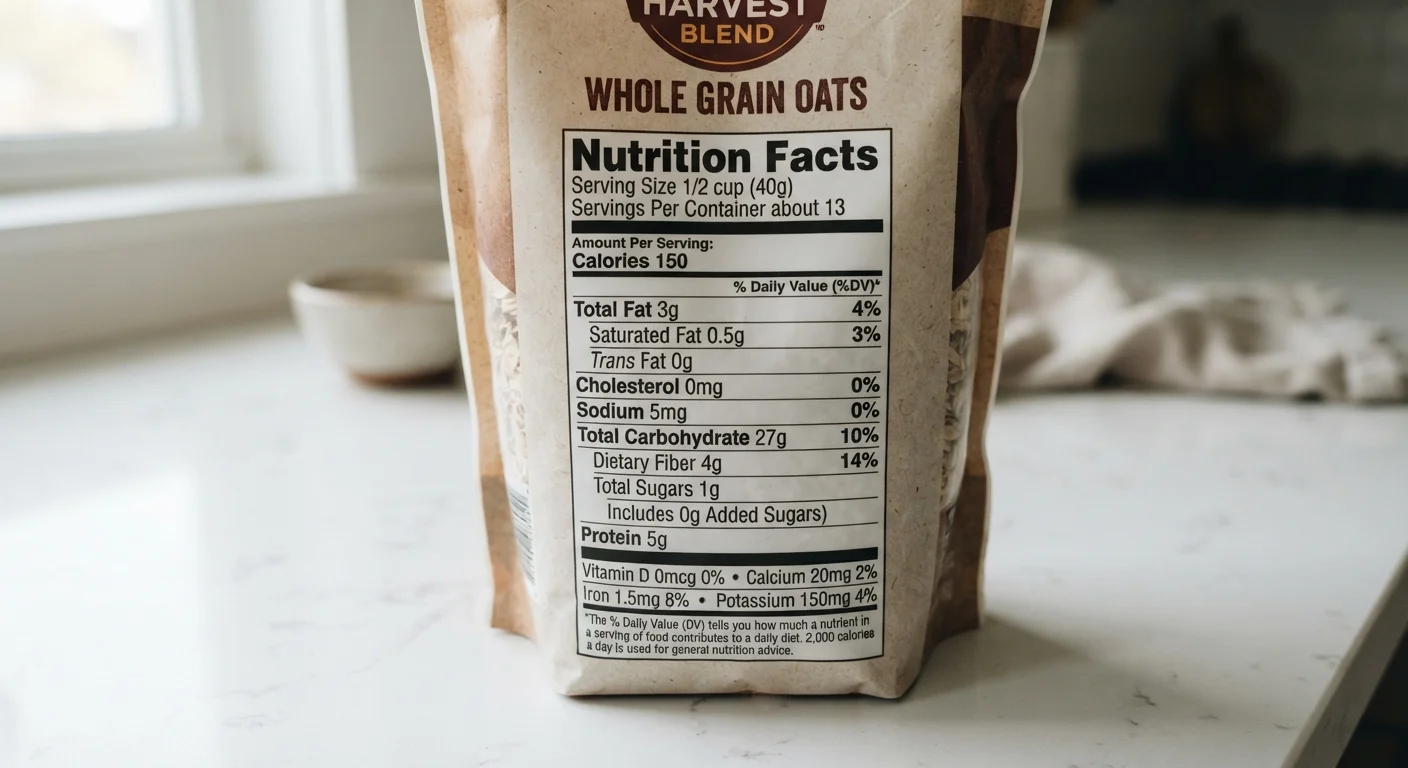
Before diving into individual sections, it helps to understand the label as a system. Every number on it is expressed per serving, which means the serving size declaration at the very top controls everything below it. If you eat two servings, every figure doubles. If you eat half a serving, every figure is halved. Misreading serving size is the single most common source of confusion on the label. For deeper context on nutrition terminology, the nutrition concept glossary covers key terms you'll encounter.
What you will need
Step-by-Step: Reading Each Section of the Label
Work your way down the label in order. Each section builds on the one above it.
Check the Serving Size and Servings Per Container
Locate the serving size at the top of the label (e.g., "2/3 cup" or "1 slice"). Directly below it, note the number of servings per container. If a bag of chips lists 7 servings and you eat the whole bag, multiply every nutrient value by 7. This step is non-negotiable - skipping it distorts every other number on the label.
Read the Calorie Count
Calories appear in large type just below the serving information. This figure represents the total energy provided by one serving. It accounts for all macronutrients - fat, carbohydrates, and protein. Calories are a useful reference point but don't indicate nutrient quality on their own.
Review the Macronutrients: Fat, Carbohydrates, and Protein
The middle section of the label breaks down the three macronutrients:
- Total Fat is subdivided into saturated fat and trans fat. Saturated fat has a % Daily Value; trans fat does not, because no safe level has been established.
- Total Carbohydrates includes dietary fiber, total sugars, and - since the 2016 update - added sugars listed separately. Added sugars are those introduced during processing, distinct from naturally occurring sugars in fruit or dairy.
- Protein is listed in grams. Unlike fat and carbohydrates, protein does not always carry a % Daily Value on the label.
Use the % Daily Value Column
The right-hand column shows each nutrient's % Daily Value (% DV), based on a 2,000-calorie reference diet. This is a comparison tool, not a personal target. Use the general rule: 5% DV or less means a food is low in that nutrient; 20% DV or more means it is high. Apply this to decide whether a food is a meaningful source of fiber or calcium, or whether it is high in sodium or saturated fat.
Check the Micronutrients Listed at the Bottom
The lower section of the label lists select vitamins and minerals required by the FDA, currently including Vitamin D, Calcium, Iron, and Potassium. These were chosen because many Americans consume them in insufficient amounts. Each is listed with its % Daily Value. A food that provides 20% DV of calcium per serving is a meaningful contributor to daily intake for most adults.
Scan the Ingredients List
The ingredients list appears below or adjacent to the Nutrition Facts panel and is not technically part of it - but it's essential context. Ingredients are listed in descending order by weight, so the first ingredient is the most predominant. A product whose first three ingredients are whole grain oats, water, and nuts has a very different profile from one whose top ingredients are refined flour, sugar, and oil, even if the nutrient numbers look similar.
What the Label Doesn't Tell You
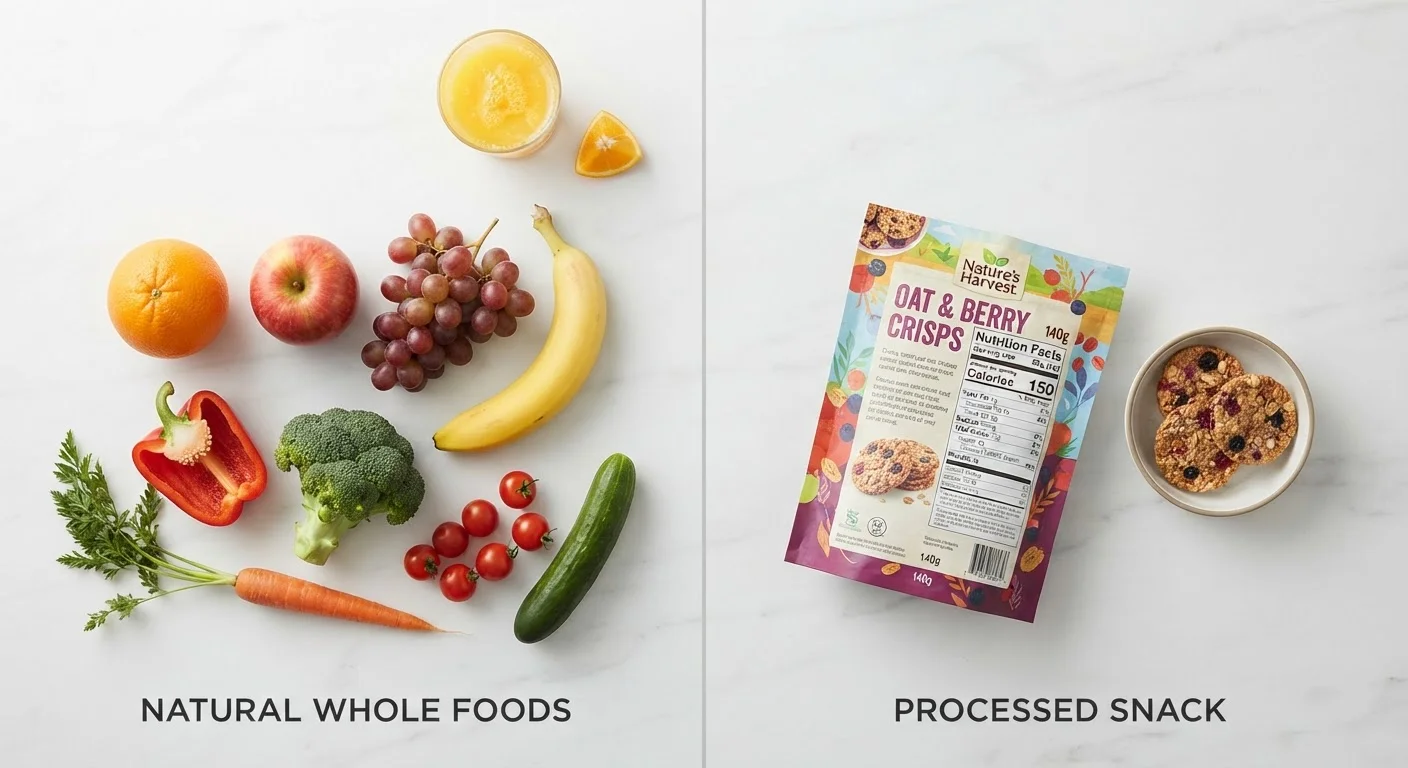
Nutrition labels are genuinely useful, but they have real limits. They don't capture how nutrients interact with each other, how individual bodies absorb them differently, or the broader dietary pattern a food fits into. A food can have a favorable label profile and still be ultra-processed; another can look less impressive on paper but contribute meaningfully to a balanced diet.
Labels also don't reflect ingredient quality beyond the nutrient math. Two products with identical fiber counts might differ substantially in ingredient sourcing or processing. For a closer look at how calorie figures specifically can mislead, see why calorie counting alone misses the point. And if you want to understand the vitamins and minerals listed in the lower portion of the label in more detail, micronutrients at a glance is a practical reference. For fiber specifically, most adults aren't getting enough dietary fiber explains why that number on the label deserves close attention.
Use Labels to Compare, Not to Judge
Nutrition labels are most valuable when used to compare two similar products side by side - for example, two breakfast cereals or two yogurts. Rather than deciding a food is 'good' or 'bad' based on a single number, look at the overall pattern across fat, fiber, added sugars, and sodium. This comparative approach tends to be more informative than any single metric in isolation.
This article provides general nutrition education and is not a substitute for personalized dietary advice. Consult a registered dietitian or qualified healthcare provider for guidance specific to your health needs.