What Calorie Counting Gets Right - and Where It Falls Short
Calorie counting became mainstream because it is measurable, and measurement feels like control. A calorie is a unit of energy, and the basic principle that energy balance matters for body weight is supported by established science. But the moment a calorie number is treated as the only meaningful indicator of a food's value, a significant amount of nutritional information gets lost.
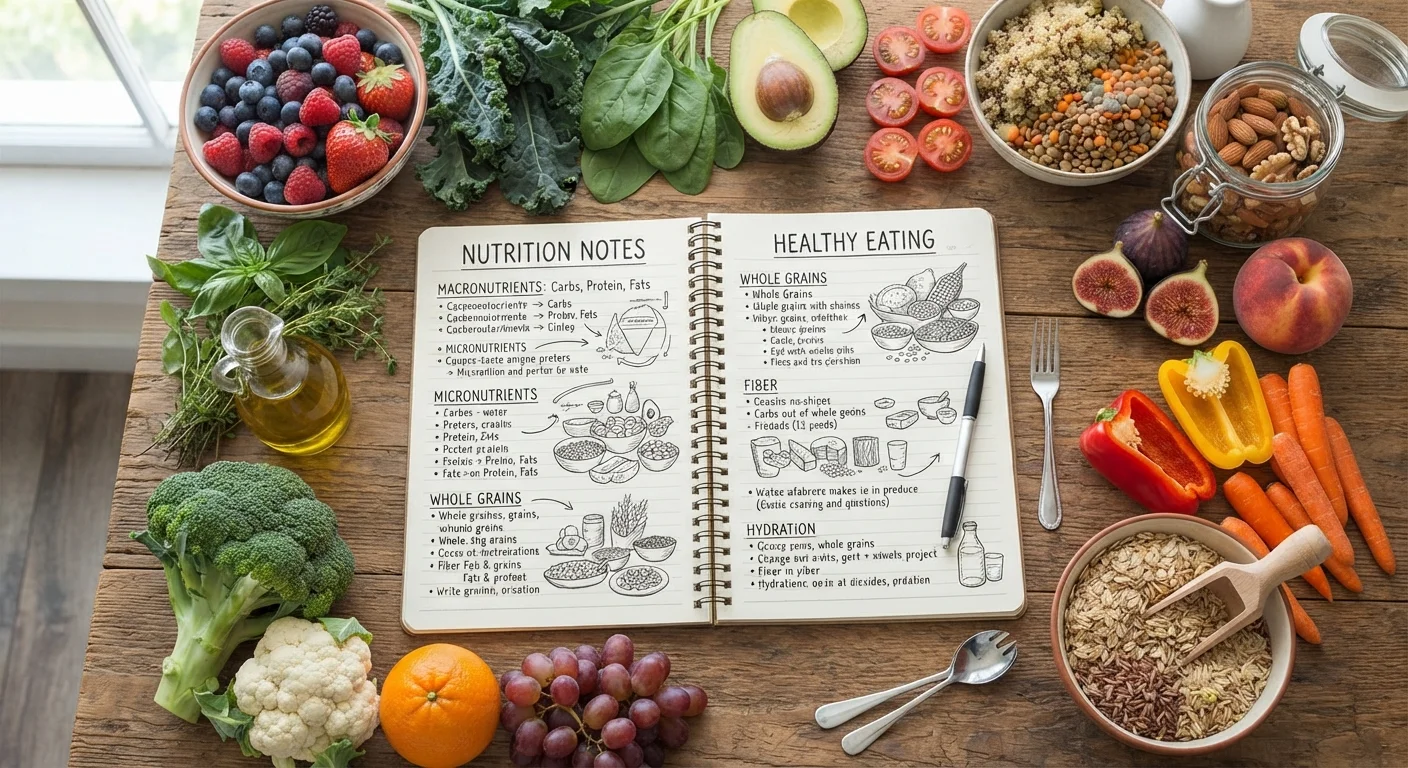
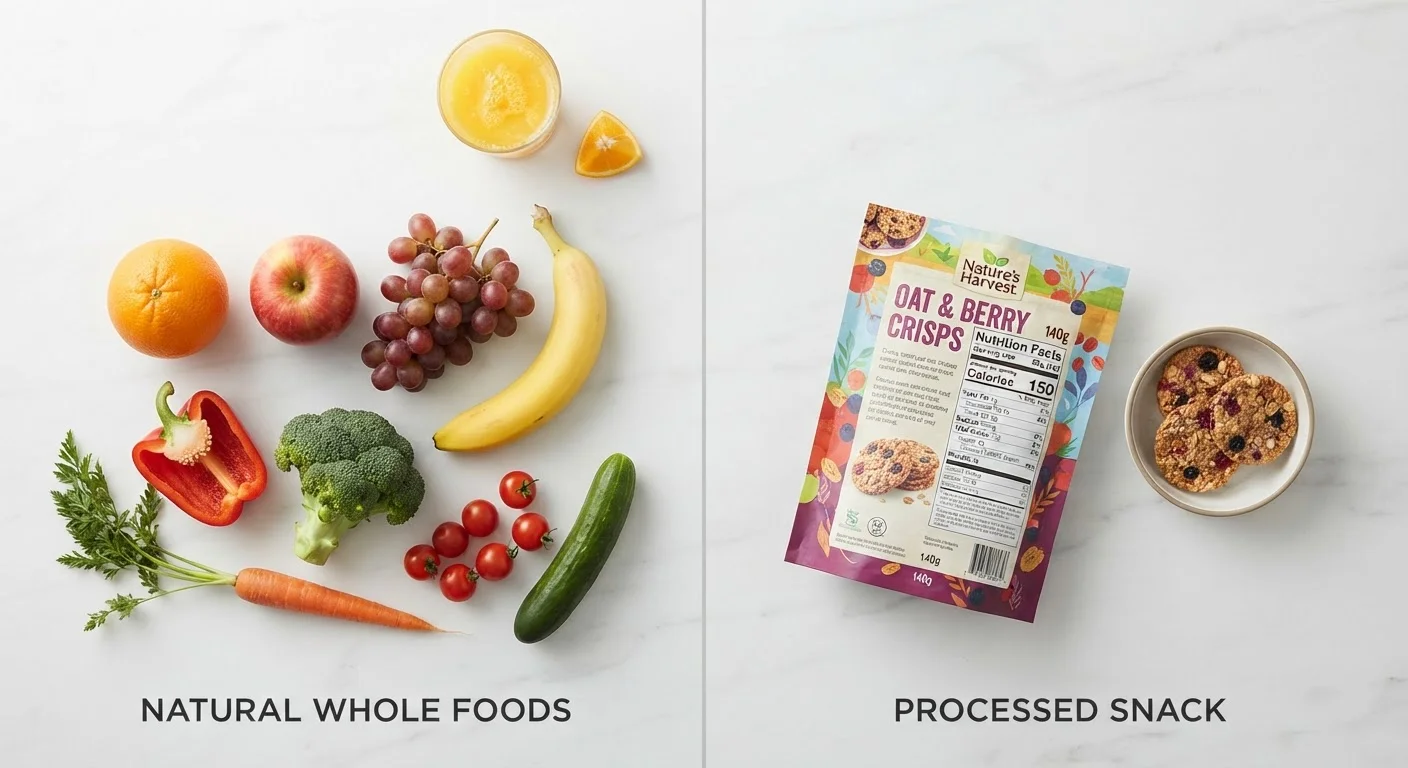
Whole-food sources of nutrition - leafy greens, legumes, fatty fish, nuts - contribute fiber, antioxidants, essential fatty acids, and dozens of micronutrients that never appear in a calorie count. Ultra-processed foods engineered to hit the same number on a tracking app often deliver very little of the above. The result is that a diet optimized purely around calories can look successful on paper while quietly underdelivering on diet quality. For a broader look at how nutritional frameworks can mislead, see our breakdown of common nutrition myths.
Treating all calories as nutritionally equivalent regardless of their source.
Why it happens: Calorie-counting tools display a single number per food, which can make 200 calories of soda seem interchangeable with 200 calories of lentils.
Ignoring how different foods affect satiety and hunger hormones differently.
Why it happens: Calorie math treats the body as a simple combustion engine, but hormones like ghrelin and leptin respond differently to protein, fiber, and refined carbohydrates.
Overlooking the role of micronutrients - vitamins and minerals - in long-term health.
Why it happens: Micronutrients are invisible in calorie counts, so calorie-focused tracking gives no credit to foods rich in iron, magnesium, vitamin D, or folate.
Using calorie deficits as the only strategy without considering diet quality or eating patterns.
Why it happens: Popular culture frames weight management almost entirely through the lens of "calories in vs. calories out," making it easy to discount what those calories are actually made of.
Letting calorie tracking create anxiety, guilt, or a rigid relationship with food.
Why it happens: When a number becomes the primary measure of dietary success, going over it can feel like failure - which some research suggests may contribute to disordered eating patterns in susceptible individuals.
Why Diet Quality Matters Beyond the Numbers
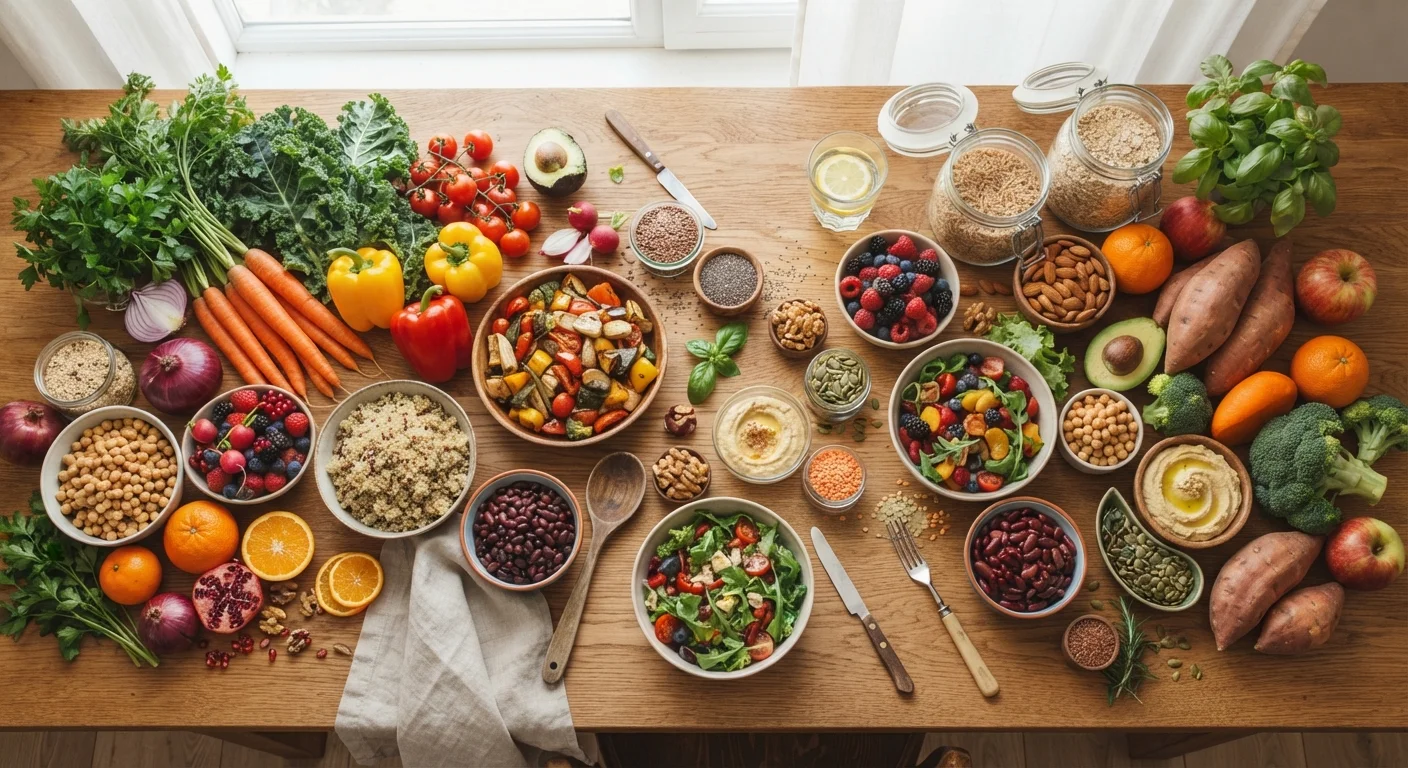
Research in nutritional epidemiology consistently points to dietary patterns - not isolated nutrients or calorie totals - as strong predictors of long-term health outcomes. Diets characterized by high consumption of vegetables, whole grains, legumes, and minimally processed proteins are associated with lower rates of several chronic diseases, independent of calorie intake levels.
~57%
of US caloric intake from ultra-processed foods
Research published in the journal BMJ Open estimated that ultra-processed foods account for roughly 57% of energy intake among US adults, underscoring the gap between calorie sufficiency and diet quality.
30-35%
greater satiety from high-protein meals
Studies in nutrition science consistently find that higher-protein meals tend to suppress appetite hormones and increase fullness signals compared with calorie-equivalent lower-protein meals.
One practical concept worth understanding is nutrient density: the ratio of beneficial nutrients a food provides relative to its calorie content. A handful of almonds and a small bag of pretzels might carry similar calorie counts, but one delivers vitamin E, magnesium, and healthy unsaturated fats while the other offers little beyond refined starch. Making choices that favor nutrient density - without requiring precise tracking - is a cornerstone of evidence-based dietary guidance. Our guide to building a balanced plate offers practical frameworks for doing exactly that.
Hydration is another dimension that calorie-focused thinking tends to ignore entirely. Water supports digestion, nutrient transport, and metabolic function - none of which register in a calorie count. How water fits into a balanced diet is worth understanding alongside food quality considerations.
This Is General Information, Not Medical Advice
The information in this article is intended for general educational purposes only. It is not a substitute for personalized guidance from a registered dietitian, physician, or other qualified healthcare professional. If you have specific health conditions, dietary needs, or concerns about your eating habits, please consult a qualified professional before making changes.
This article is for general informational and educational purposes only and does not constitute medical or dietary advice. Individual nutritional needs vary widely. Please consult a registered dietitian or qualified healthcare professional before making significant changes to your diet.