
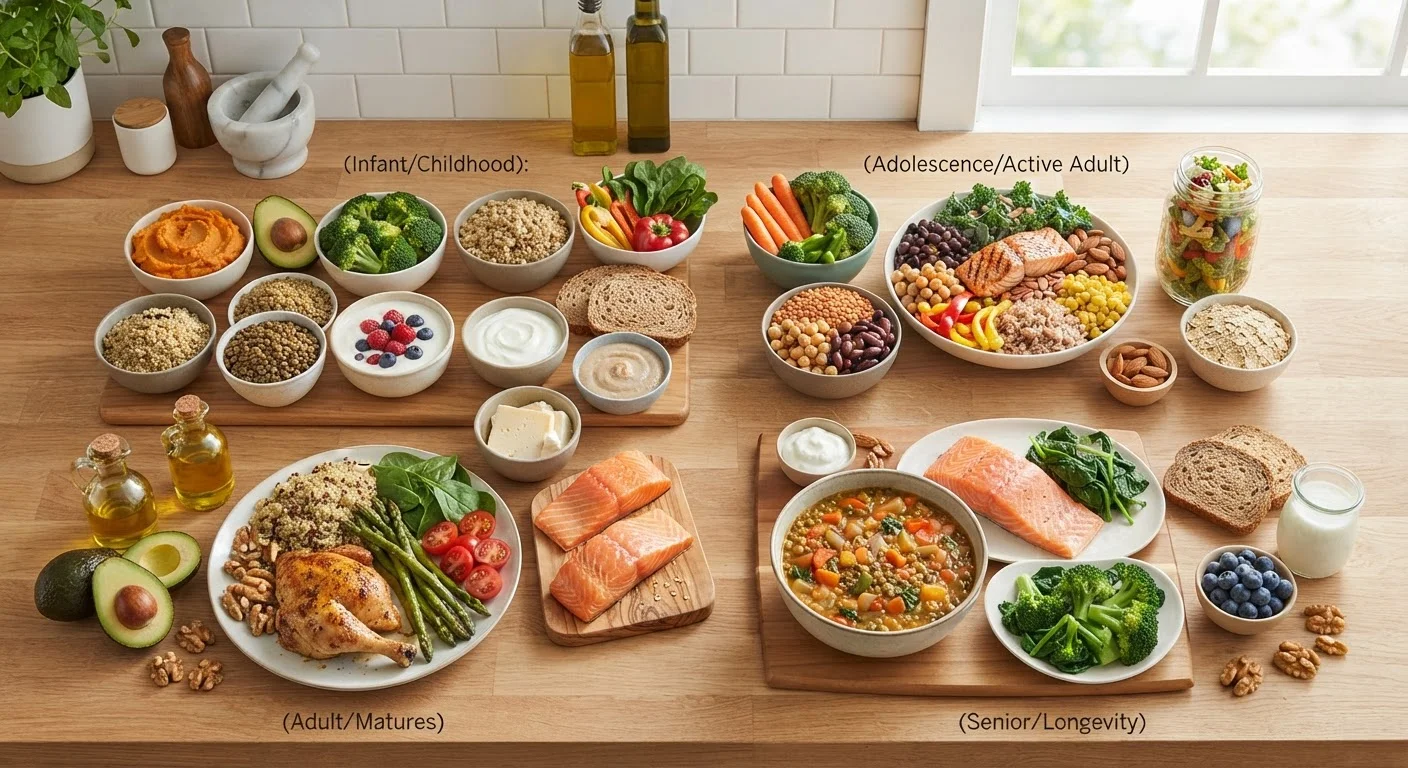
Why Nutritional Needs Don't Stay Static
The human body is not a fixed system. Hormones shift, metabolism changes, muscle mass fluctuates, and organ function evolves - all of which alter how the body processes, absorbs, and requires different nutrients. What nourishes a 25-year-old well may fall short for the same person at 55.
Understanding these changes is general health education, not a personal prescription. Anyone managing a specific health condition or navigating a major life transition should consult a registered dietitian or qualified healthcare provider for individualized guidance.
| Peak bone mass timing | Typically reached by the late 20s to early 30s (National Institutes of Health, Office of Dietary Supplements) |
| Protein importance in aging | Increases as muscle synthesis efficiency declines with age (General consensus in nutritional gerontology literature) |
| Vitamin B12 absorption risk | May decrease in older adults due to reduced stomach acid (NIH Office of Dietary Supplements) |
| Caloric needs trend | Generally decrease with age; nutrient density requirements stay high (Dietary Guidelines for Americans) |
| Iron needs (menstruating adults) | Higher than for non-menstruating adults of similar age (Dietary Reference Intakes, National Academies) |
| Folate criticality | Especially important before and during pregnancy (CDC, Folic Acid Recommendations) |
Just as emotional needs shift with age - a topic explored in our guide to emotional wellbeing across the lifespan - nutritional priorities follow a similar arc.
Young Adulthood (Roughly Ages 18-35)
This phase involves peak bone density building, hormonal activity, and in many cases, the physical demands of an active lifestyle. Calcium and vitamin D remain important for skeletal health. Iron needs are notably higher for people who menstruate, as losses through menstruation increase demand. Folate is particularly critical during reproductive years, especially before and during pregnancy.
Energy needs in young adulthood tend to be relatively high, particularly for those with physically demanding jobs or active routines. However, high energy intake without adequate nutrient density can lead to gaps in micronutrients even when calories appear sufficient.
Sarcopenia
The gradual loss of skeletal muscle mass and strength that occurs with aging. It can begin as early as the 30s and accelerates without adequate protein intake and physical activity.
Nutrient density
The amount of beneficial nutrients (vitamins, minerals, protein, fiber) a food provides relative to its calorie content. Foods high in nutrient density deliver more nutritional value per calorie.
Micronutrients
Vitamins and minerals required by the body in relatively small amounts to support essential functions including bone health, immune response, and energy metabolism.
Perimenopause
The transitional period before menopause during which hormonal changes begin, typically occurring in the 40s. It can affect bone density, metabolism, and cardiovascular risk factors.
Dietary Reference Intakes (DRIs)
A set of science-based nutrient reference values established by the National Academies of Sciences, used as a framework for assessing and planning nutrient intake across population groups.
Midlife (Roughly Ages 35-60)
Metabolic rate tends to gradually decline through midlife, meaning the same caloric intake that maintained weight earlier may no longer do so. Protein becomes increasingly important as the body's efficiency at synthesizing and preserving muscle mass begins to decline - a process called sarcopenia that accelerates with age if not addressed through diet and physical activity.
Perimenopause and menopause bring significant hormonal shifts that affect bone density, cardiovascular risk factors, and body composition. Calcium and vitamin D requirements may increase, and dietary patterns that support heart health - such as those emphasizing fiber, unsaturated fats, and reduced sodium - become more relevant.
Midlife Is a Key Window for Prevention
Many chronic conditions associated with later life - including cardiovascular disease and type 2 diabetes - have well-established dietary risk factors. Midlife is generally considered an important period for establishing or reinforcing dietary patterns that may reduce long-term risk. This does not mean dramatic dietary overhauls are required; consistent, incremental improvements in food quality tend to be more sustainable. Always discuss significant dietary changes with a healthcare provider, particularly if managing existing health conditions.
Older Adulthood (60 and Beyond)
Several physiological changes converge in later life to make nutrition both more important and more complex. Appetite often decreases, reducing total food intake - yet needs for certain nutrients, particularly protein, calcium, vitamin D, vitamin B12, and fiber, remain high or even increase. This creates what researchers sometimes call the "nutrient density gap."
Vitamin B12 absorption can decline as gastric acid production decreases with age, making adequate intake from fortified foods or supplements (discussed with a doctor) a consideration. Hydration needs remain significant even as the thirst mechanism becomes less reliable. Dehydration is a notable risk in older adults and can affect cognition, kidney function, and energy levels.
Chewing difficulties, medication interactions with nutrients, and reduced mobility affecting food access are practical factors that can compound nutritional challenges. For special populations - including older adults managing chronic conditions - consulting a healthcare professional is especially important rather than relying solely on general guidance.
This article is for general informational and educational purposes only and does not constitute medical or dietary advice. Speak with a qualified healthcare professional or registered dietitian for guidance tailored to your individual circumstances.