
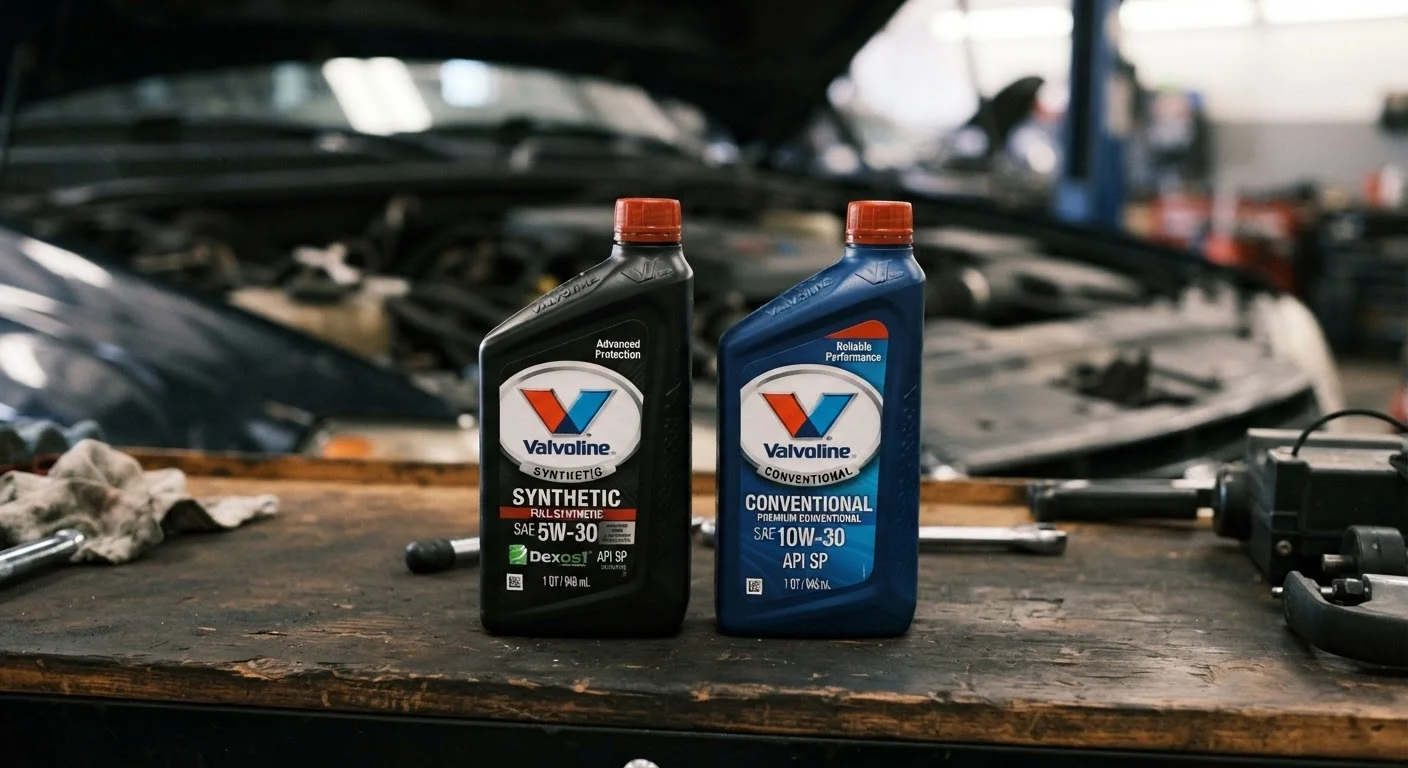
How Each Oil Is Made
The most fundamental difference between these two oil types lies in their origins. Conventional motor oil starts as crude petroleum extracted from the ground. It goes through a refining process to remove impurities, but because crude is a natural mixture of many hydrocarbon chain lengths, the resulting oil contains molecules of varying sizes. That inconsistency affects how the oil behaves under stress.
Synthetic motor oil, by contrast, is chemically constructed - typically starting from refined base stocks or natural gas derivatives that are broken down and rebuilt into uniform molecules. Engineers can design those molecules to perform specific functions: resist oxidation, maintain viscosity across temperatures, and reduce friction more consistently. The process is more complex and costly, which is reflected in the price per quart.
There is also a middle-ground option worth knowing: synthetic-blend oil mixes conventional base stock with synthetic additives, offering some performance benefits at a moderate price point. Many drivers use blends as a transitional choice or for vehicles with moderate demands.
A Note on 'Full Synthetic' Labels
Not all products labeled 'full synthetic' are identical. The American Petroleum Institute (API) sets performance certification standards, and oils meeting those standards carry a certification mark. When comparing options, look for the API donut symbol and the viscosity grade recommended in your owner's manual rather than relying on marketing language alone. Group III base oils refined from petroleum can legally be marketed as synthetic in the US, so the label tells only part of the story.
Performance: Where the Differences Show Up
Under everyday driving, both oil types lubricate engine components, reduce friction, carry heat away from moving parts, and suspend combustion byproducts until the oil is changed. The differences become more apparent at the extremes.
| Criterion | Synthetic Oil | Conventional Oil |
|---|---|---|
| Source | Chemically engineered molecules | Refined crude petroleum |
| Cold-weather flow | Flows readily in low temperatures | Can thicken in extreme cold |
| Heat resistance | Resists breakdown at high temps | More prone to oxidation under heat |
| Typical change interval | Often 7,500-10,000+ miles | Often 3,000-5,000 miles |
| Cost per quart | Higher upfront cost | Lower upfront cost |
| Sludge resistance | Generally superior | More susceptible over time |
| Engine compatibility | Required by many modern engines | Suited to older, simpler engines |
Cold starts are one area where synthetic has a clear advantage. On a frigid morning, conventional oil can thicken significantly, leaving engine parts briefly less protected during those first seconds of operation. Synthetic oil flows more readily at low temperatures, reaching critical engine surfaces faster.
At high temperatures - common in turbocharged engines, towing scenarios, or stop-and-go traffic in summer heat - synthetic oil resists breakdown better. Conventional oil can oxidize and form sludge more quickly under sustained heat, potentially shortening engine life if change intervals slip.
For a deeper look at how oil degrades and what viscosity ratings actually mean, see our guide to oil change intervals.
Cost, Change Intervals, and Practical Considerations
Synthetic oil typically costs noticeably more per quart than conventional oil. However, most manufacturers allow synthetic oil to go longer between changes - commonly in the range of 7,500 to 10,000 miles or more, depending on the vehicle and the specific product - whereas conventional oil is often changed every 3,000 to 5,000 miles. When you factor in frequency, the cost difference narrows considerably over time, though it varies by vehicle and driving habits.
The single most important factor in this decision is your owner's manual. Some engines specifically require synthetic oil to maintain warranty coverage. Others are built to older tolerances and run fine on conventional. Never override the manufacturer's specification based solely on cost or marketing claims.
If you're thinking about overall vehicle ownership costs - including maintenance decisions like this one - our complete maintenance overview covers the full picture from early ownership through high-mileage care.
This article is for general informational purposes only. Always consult your vehicle's owner's manual and a qualified mechanic for maintenance decisions specific to your vehicle.