Why These Three Fluids Matter
Engine oil gets most of the attention, but coolant, transmission fluid, and power steering fluid each play an equally critical role in keeping your vehicle running safely. Neglecting any one of them can lead to expensive repairs or a breakdown far from home. This reference guide cuts through the terminology to give you practical, at-a-glance knowledge for each fluid.
For a broader look at fluid checks as part of a pre-trip routine, see our vehicle readiness walkthrough before any long drive. And if a dashboard warning light prompts your fluid check, our warning lights guide can help you decode what the car is trying to tell you.
| Coolant check method | Check overflow reservoir only when engine is cold |
| Typical coolant flush interval | 30,000-50,000 miles (verify in owner's manual) |
| ATF color when new | Bright red or pink, nearly transparent |
| Typical ATF change interval | 30,000-60,000 miles for older vehicles; varies for newer |
| Power steering fluid color when healthy | Clear, light amber, or slightly pink |
| Vehicles with no power steering fluid | Those equipped with electric power steering (EPS) |
Coolant (Antifreeze)
What it does: Coolant circulates through the engine and radiator to regulate operating temperature - preventing overheating in summer and freezing in winter. It also contains corrosion inhibitors that protect metal components inside the cooling system.
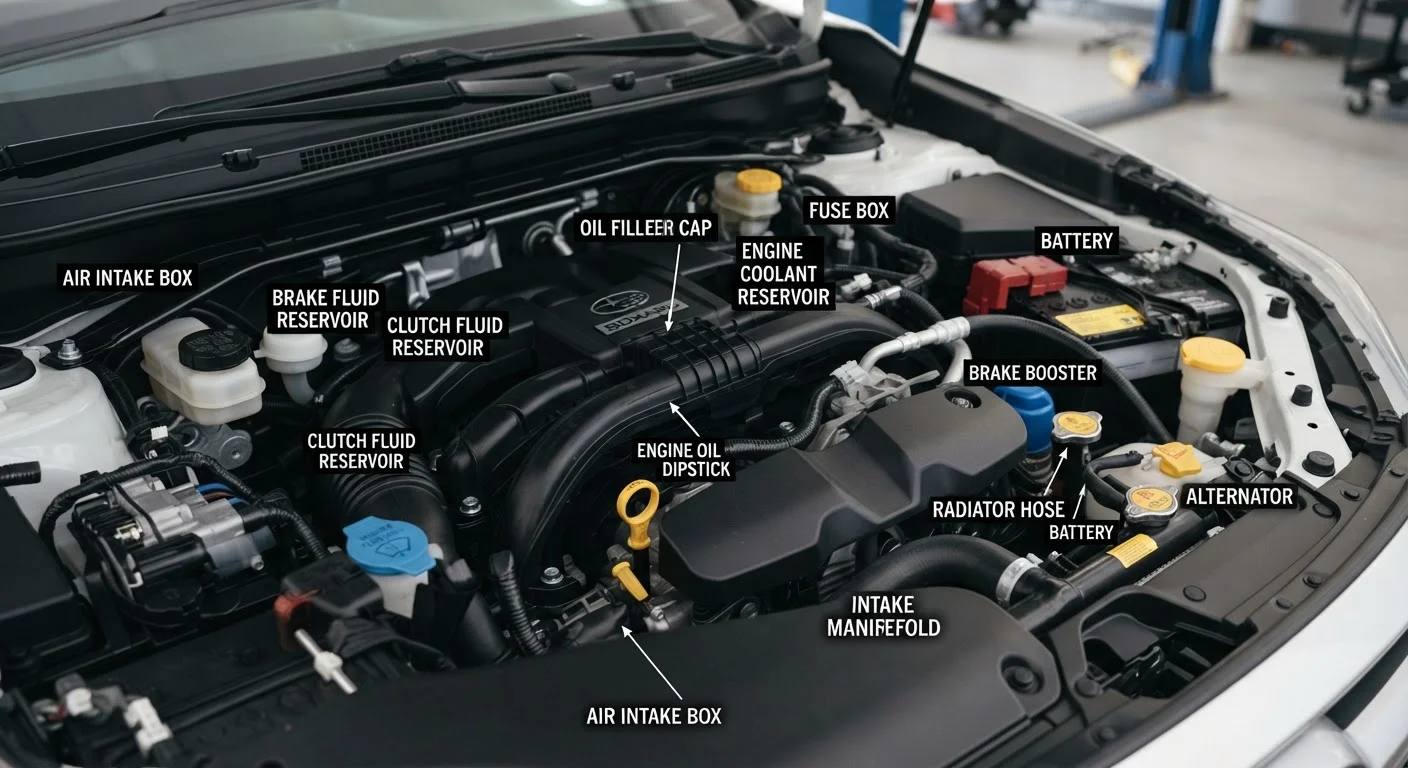
Where to find it: Look for the translucent plastic overflow reservoir near the radiator. Most are marked with MIN and MAX lines. Never open the radiator cap on a hot engine - pressurized coolant can cause serious burns. Allow the engine to cool fully first.
What healthy coolant looks like: Depending on the formula, fresh coolant is typically bright green, orange, pink, or blue-green. It should be clear, not murky.
Warning signs:
- Rusty or brown color: Indicates contamination or degraded inhibitors - a flush may be needed.
- Milky or foamy appearance: Can signal a head gasket leak allowing engine oil to mix with coolant. Have this inspected by a qualified mechanic promptly.
- Sweet smell near the engine or inside the cabin: Coolant has a distinctively sweet odor; detecting it often points to a leak.
- Level consistently dropping: Suggests an external leak or internal combustion issue - don't just keep topping it off without finding the cause.
General service interval: Many manufacturers recommend a coolant flush every 30,000-50,000 miles, but always consult your owner's manual for the specification that applies to your vehicle.
Coolant flush
A service procedure where old coolant is drained from the system, the system is rinsed, and fresh coolant is added. It removes degraded inhibitors and contaminants that can cause corrosion or reduce heat transfer efficiency.
Automatic transmission fluid (ATF)
A specialized fluid used in automatic transmissions that simultaneously lubricates components, cools the unit, and acts as a hydraulic medium to enable gear shifting. Different vehicle types require specific ATF formulations.
Corrosion inhibitors
Chemical additives in coolant that protect metal surfaces inside the engine and cooling system from rust and oxidation. These inhibitors break down over time, which is why periodic coolant replacement is necessary.
Electric power steering (EPS)
A steering assist system that uses an electric motor rather than hydraulic pressure. Vehicles with EPS do not have a power steering fluid reservoir and require no fluid maintenance for this system.
Head gasket
A critical engine seal located between the engine block and cylinder head. When it fails, it can allow coolant and engine oil to mix - a serious condition recognizable by milky or foamy fluid in the coolant reservoir.
Sealed transmission
A transmission design with no user-accessible dipstick or fill point. Fluid inspection and changes on sealed units must be performed by a mechanic using specialized equipment.
Transmission Fluid
What it does: Transmission fluid lubricates the moving parts inside your transmission, cools the unit under load, and - in automatic transmissions - acts as a hydraulic fluid that enables gear changes. Without adequate, clean fluid, transmission components wear rapidly.
Where to find it: Many automatic transmissions have a dipstick located toward the rear of the engine bay (often with a red or pink handle). Some modern vehicles have a sealed transmission with no dipstick; checking these requires a mechanic. Manual transmissions typically have a fill plug on the side of the gearbox itself - not a dipstick.
What healthy fluid looks like: Automatic transmission fluid (ATF) is usually bright red or pink and nearly transparent when new. As it ages, it darkens.
Warning signs:
- Dark brown or black color: Indicates the fluid is overdue for a change and may have lost its protective qualities.
- Burnt smell: A sharp, acrid odor is a strong indicator of overheating or severely degraded fluid.
- Pink and foamy: Suggests water or coolant contamination - requires immediate professional attention.
- Slipping gears or delayed engagement: While not always a fluid issue, these symptoms warrant checking the fluid level and condition first.
General service interval: Automatic transmission fluid is commonly changed every 30,000-60,000 miles in older vehicles, though some manufacturers rate newer formulations for longer intervals. Verify with your owner's manual. For a complete picture of routine maintenance milestones, see our full maintenance overview.
Power Steering Fluid
What it does: Power steering fluid transmits the hydraulic pressure that makes turning your steering wheel feel light and responsive. Without it, steering becomes extremely stiff - particularly at low speeds. Note that electric power steering (EPS) systems, found on many newer vehicles, use a motor instead of hydraulic fluid and have no reservoir to check.
Where to find it: Look for a small reservoir, often labeled with a steering wheel icon, near the front of the engine. The cap or reservoir body is usually translucent so you can read the level without opening it.
What healthy fluid looks like: Typically clear, light amber, or slightly pink. It should not appear dark or cloudy.
Warning signs:
- Whining or groaning when turning: A classic symptom of low power steering fluid or a developing pump issue.
- Dark, murky appearance: Signals oxidation or contamination - a fluid flush may be warranted.
- Foamy fluid: Air in the system, possibly from a leak or low level.
- Stiff or jerky steering feel: Can indicate low fluid, a leak, or pump wear.
General service interval: There is no universal standard - some manufacturers recommend a flush every 50,000 miles; others treat it as a long-life fluid. Check your owner's manual. If you notice any of the warning signs above, have the system inspected rather than waiting for a scheduled interval.
This article provides general maintenance information. For any fluid condition that suggests a mechanical problem - such as coolant mixing with oil, severely burnt transmission fluid, or persistent steering difficulty - consult a qualified mechanic before driving further.