Liability Coverage: Protection for Others, Not Your Car
Liability is the foundation of almost every auto insurance policy in the United States. When you cause an accident - whether a rear-end collision, a lane-change scrape, or a pedestrian injury - liability coverage pays for the resulting costs to the other party. It does not cover your own vehicle or your own injuries.
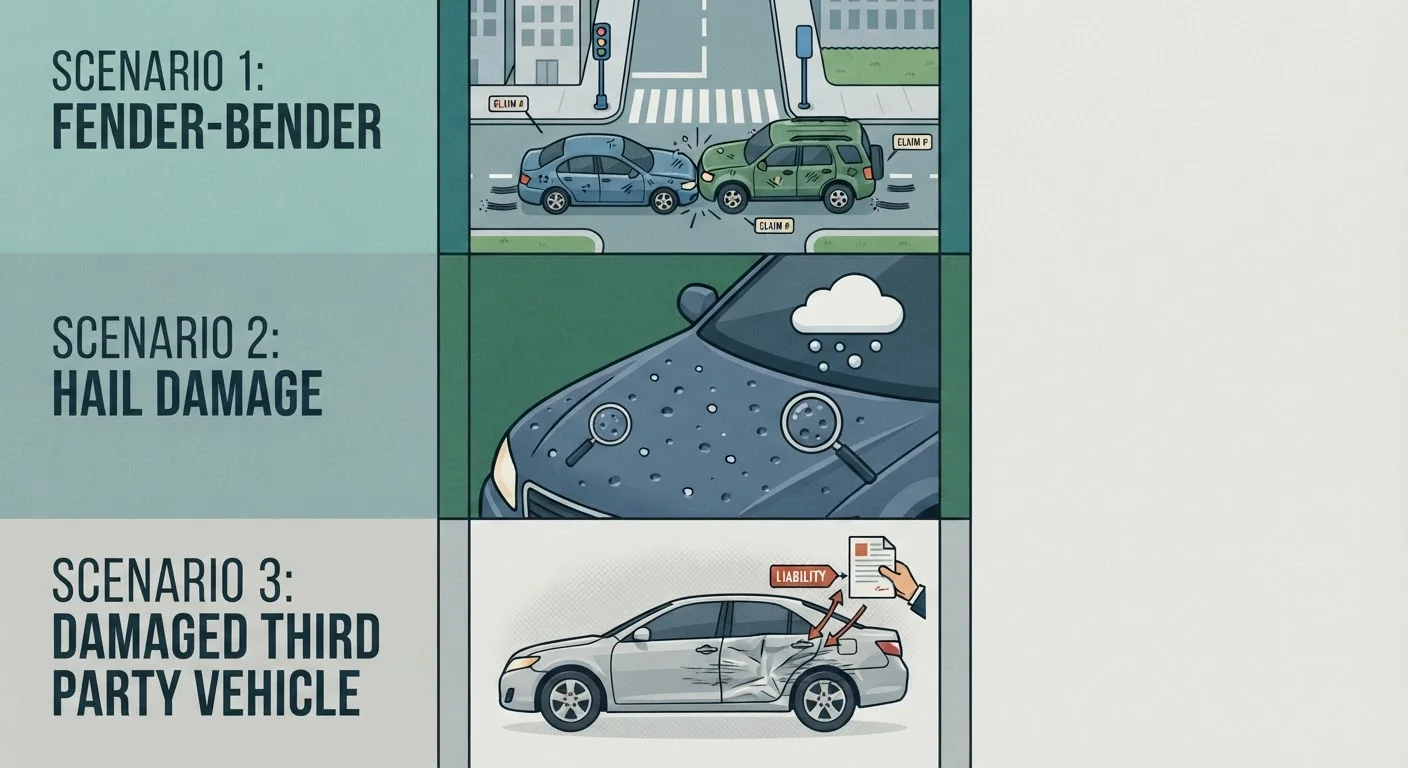
Liability splits into two components. Bodily injury liability covers medical expenses, lost wages, and legal costs if you injure someone else. Property damage liability covers the cost of repairing or replacing the other person's vehicle or property. State laws set minimum limits, but those minimums are often lower than the actual costs of a serious accident - something worth considering when choosing your policy limits.
For a broader look at how liability fits into your overall coverage strategy, see the complete auto insurance guide covering everything from policy structure to claims.
Check Your State's Minimum Liability Requirements
Every US state sets its own minimum liability limits, expressed as three numbers (e.g., 25/50/25 - covering $25,000 per person, $50,000 per accident for bodily injury, and $25,000 for property damage). These minimums can fall short in serious accidents. Review your state's requirements and consider whether higher limits better reflect your financial exposure.
Collision Coverage: When Your Own Car Is Damaged in an Accident
Collision coverage pays to repair or replace your vehicle when it is damaged in an accident involving another vehicle or a stationary object - a guardrail, a tree, a parking lot bollard. Unlike liability, collision applies to your car regardless of who is at fault in the accident.
A key element of collision coverage is the deductible: the amount you pay out of pocket before your insurer covers the rest. Choosing a higher deductible generally lowers your premium but increases what you owe if you file a claim. Your insurer will typically pay up to the actual cash value (ACV) of your vehicle - meaning depreciation is factored in, not the replacement cost of a brand-new model.
Collision does not cover mechanical failure, normal wear, or damage caused by something other than an accident. Those scenarios fall under a different coverage type.
~75%
US drivers carrying collision coverage
According to the Insurance Information Institute, roughly three-quarters of US insured drivers include collision coverage in their policies.
~80%
US drivers carrying comprehensive coverage
The Insurance Information Institute estimates comprehensive coverage is held by approximately 80% of insured US drivers, often required by lenders.
1 in 8
Drivers on US roads are uninsured
The Insurance Research Council has estimated roughly one in eight US drivers carries no auto insurance, underscoring why liability limits and uninsured motorist coverage matter.
Comprehensive Coverage: Everything Else That Can Go Wrong
Despite its broad-sounding name, comprehensive coverage has a specific focus: damage to your vehicle from events that are not a collision with another vehicle or object. This includes theft, vandalism, hailstorms, flooding, fire, falling objects, and animal strikes - a deer collision being among the most common claims in rural and suburban areas.
Like collision, comprehensive carries a deductible and pays up to your vehicle's actual cash value. The two are often sold together, and lenders financing your vehicle will typically require both until the loan is paid off. When the loan is cleared, you regain the flexibility to decide whether keeping both makes financial sense for you.
Comprehensive also does not cover personal belongings stolen from your car - those claims generally fall under a homeowners or renters insurance policy. For a clear breakdown of policy language, the guide to reading an auto insurance policy is a useful reference.
How the Three Coverage Types Work Together
Liability, collision, and comprehensive operate independently - each triggers under different circumstances, each has its own limit and deductible, and each pays a different party. A single accident could activate more than one type: if you cause a crash, liability covers the other driver's damages while collision covers your own vehicle's repairs (minus your deductible).
Gaps are real. None of these three types covers medical costs for you and your passengers (that falls to medical payments or personal injury protection), and none covers scenarios involving uninsured drivers unless you carry separate uninsured motorist coverage. For clarity on terms like deductible, ACV, and limit, the auto insurance glossary defines more than 30 common policy terms. And if you're weighing optional add-ons that build on this base, gap insurance and roadside assistance explains where those fit in.
Actual Cash Value vs. Replacement Cost
Both collision and comprehensive pay based on your vehicle's actual cash value (ACV) - the market value at the time of the loss, accounting for depreciation. This can be significantly less than what you originally paid or what a replacement vehicle would cost today. If you carry a loan balance that exceeds your car's ACV, gap insurance may be worth exploring to cover the difference.
This article provides general insurance information for educational purposes only and is not personalized insurance, financial, or legal advice. Coverage terms, limits, exclusions, and availability vary by insurer and state. Always read your policy documents carefully and consult a licensed insurance agent or adviser for guidance specific to your situation.