
Why Your Driving Record Matters to Insurers
Auto insurers use your driving history as one of the most direct indicators of future risk. A clean record signals to an underwriter that you're statistically less likely to file a claim; a record with violations or accidents signals the opposite. Understanding which factors shape your auto insurance rate - and how much weight each carries - is the foundation for making sense of your premium.
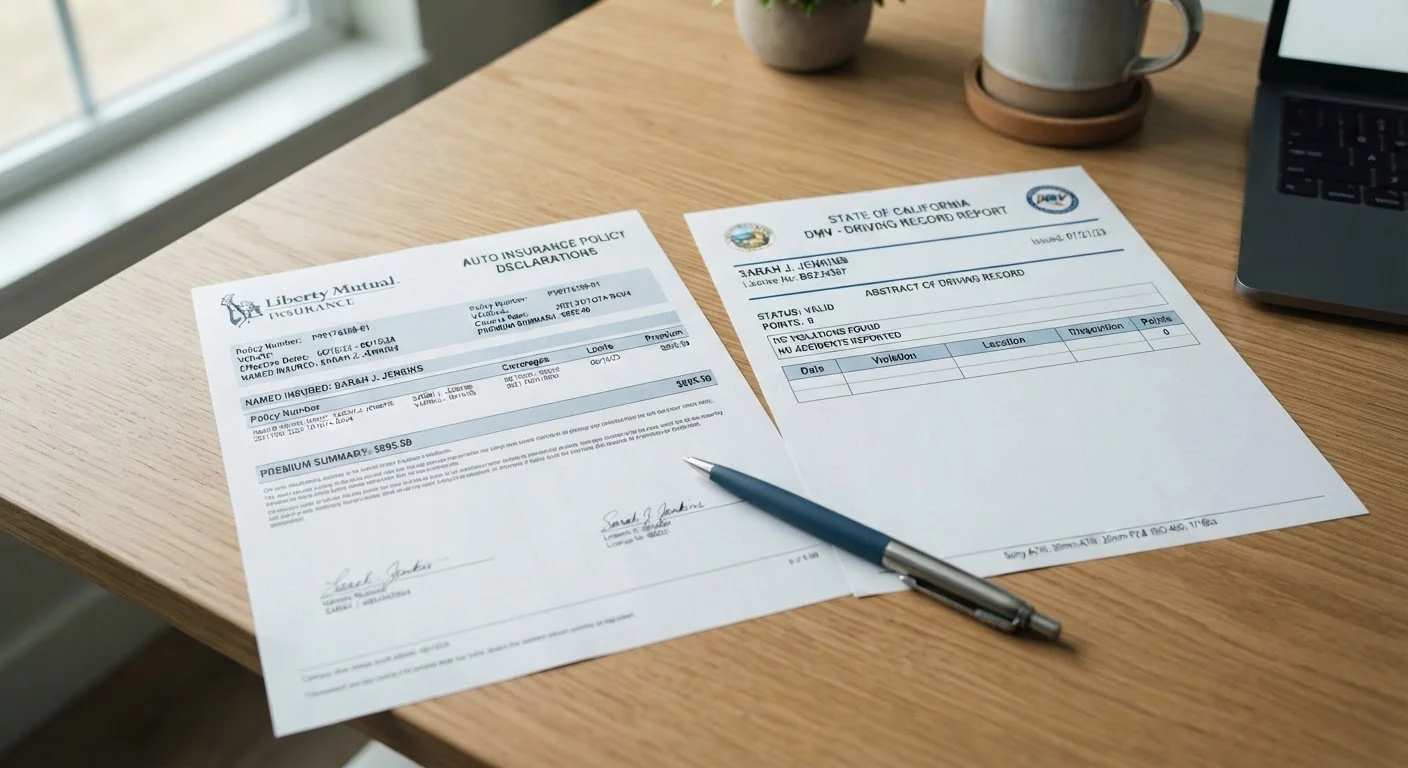
When you apply for coverage or renew a policy, insurers typically pull your Motor Vehicle Record (MVR) from your state's DMV. This report lists licensed driving activity: moving violations, license suspensions, and certain accident records. Insurers then apply their own internal lookback window - often 3 to 5 years - to determine which events are still priceable.
3-5 years
Typical insurer lookback window for violations
Most US auto insurers review the past 3 to 5 years of your Motor Vehicle Record when calculating your premium at renewal or application.
5-10 years
DUI impact window on insurance rates
A DUI or DWI conviction is commonly factored into auto insurance premiums for 5 to 10 years, depending on state law and insurer policy.
~20-25%
Typical rate increase after one at-fault accident
Industry data generally suggests a first at-fault accident can raise premiums by roughly 20-25% on average, though actual amounts vary widely by insurer and state.
Common Events and How Long They Typically Linger
Not all driving record events carry equal weight or equal duration. Here's a general breakdown of how different incident types are commonly treated:
- Minor moving violations (e.g., speeding 1-10 mph over the limit, improper lane change): Typically affect rates for 3 years in most states. A single minor ticket may cause only a modest premium increase.
- Serious moving violations (e.g., reckless driving, street racing, excessive speeding): Often remain on record for 3 to 5 years and produce sharper premium surcharges due to their higher risk signal.
- At-fault accidents: Most insurers look back 3 to 5 years. The surcharge is tied to the accident's severity - a fender-bender is weighted differently than a multi-vehicle collision involving injury.
- DUI or DWI convictions: These carry the longest impact window - commonly 5 to 10 years, and in some states the conviction remains on your DMV record indefinitely. Insurers treat DUI as a high-risk marker, and some may non-renew a policy upon conviction.
It's worth noting that state laws govern how long violations appear on a DMV record, while insurers independently decide how far back they look when pricing a policy. These two windows don't always align.
How Multiple Events Compound Over Time
A single isolated incident is treated very differently from a pattern of violations. Insurers assess frequency as well as severity. Two speeding tickets within 18 months, for example, signal a behavioral pattern and typically result in a larger combined surcharge than either ticket would produce alone.
Drivers who accumulate points on their license - a system used by most state DMVs to track violations - may also face license suspension or mandatory enrollment in a defensive driving course before an insurer will renew coverage. Some states use a point system that is separate from the insurer's own risk-scoring model, so the effects can stack.
Check Your MVR Before Shopping for Coverage
You can request a copy of your Motor Vehicle Record directly from your state's DMV - often for a small fee. Reviewing it before you shop for insurance lets you verify that all listed events are accurate and that older violations have been properly cleared. Errors on your MVR can cost you in higher premiums, and disputing inaccuracies is your right as a licensed driver.
If you're reviewing a used vehicle's history for prior accidents, the vehicle history report guide explains what accident records in that context typically mean - though note that a vehicle's accident history and a driver's personal MVR are separate documents used for different purposes.
What Happens After an Event Ages Off Your Record
Once a violation or accident moves outside your insurer's lookback window, it generally stops influencing your rate - but this doesn't happen automatically in most cases. Your rate is typically recalculated at renewal, not mid-term. And if you stay with the same insurer without actively requesting a re-quote, some pricing structures may not immediately reflect the improvement in your record.
The most effective approach is to request a fresh quote at your next renewal date after a significant event has aged off. Shopping with multiple insurers at that point ensures you're being evaluated on your current record, not a residual risk tier from a prior underwriting cycle. This is general information - for guidance tailored to your specific situation, consulting a licensed insurance agent is recommended.
This article is for general informational purposes only and does not constitute insurance, financial, or legal advice. Coverage terms, lookback periods, and rate impacts vary by insurer and by state. Consult a licensed insurance professional for guidance specific to your circumstances.