
What These Two Terms Actually Mean
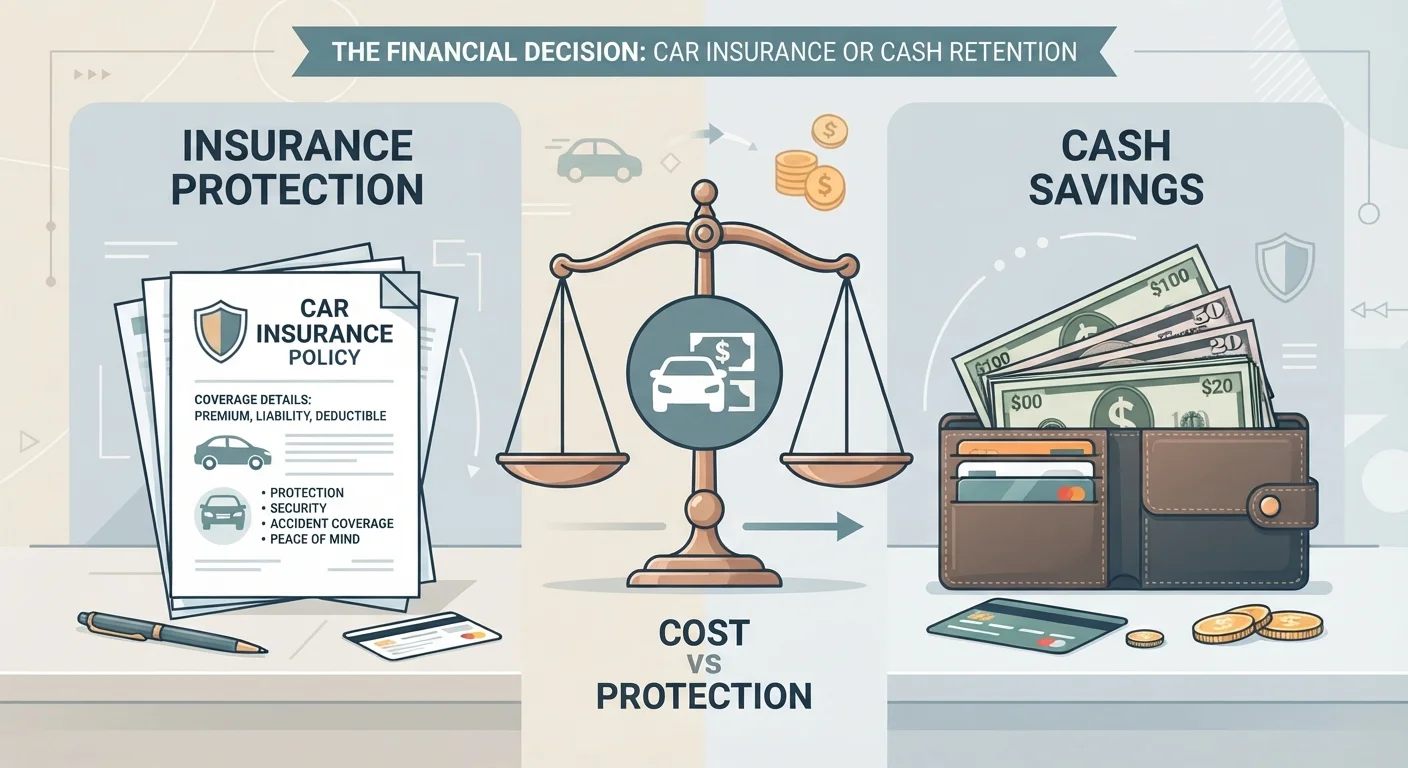
Your deductible is the amount you agree to pay out of pocket before your insurance covers the remainder of a claim. Your premium is the amount you pay - usually monthly or semi-annually - to keep your policy active. These two numbers move in opposite directions: raise the deductible, and the insurer lowers your premium; lower the deductible, and the premium rises.
It sounds like a straightforward lever, but many drivers pull it the wrong way for their situation. The relationship isn't just about what you pay now versus what you might pay later - it's about probability, personal finances, and the realistic math behind a claim scenario.
Deductibles apply to collision and comprehensive coverage - not liability. If you carry only liability coverage, the deductible conversation is largely moot. For more on how coverage types interact, see Liability vs. Full Coverage and the Auto Insurance Glossary for precise definitions of related terms.
| Criterion | High Deductible | Low Deductible |
|---|---|---|
| Monthly premium | Lower | Higher |
| Out-of-pocket after a claim | More (e.g., $1,000-$2,000) | Less (e.g., $250-$500) |
| Best savings scenario | Many claim-free years | One or more claims filed |
| Emergency fund required | Larger cushion needed | Smaller cushion needed |
| Lender/lease compatibility | May conflict with limits | Usually lender-compliant |
| Suitable vehicle age | Older, paid-off vehicles | Newer or financed vehicles |
The Break-Even Calculation Drivers Skip
Here is the core question: How many claim-free years does it take for your premium savings to offset the higher deductible you'd owe if something happened?
Consider a simplified example. Suppose raising your deductible from $500 to $1,500 saves you $200 per year in premiums. You are now $1,000 more exposed per claim, but saving $200 annually. To break even, you would need five consecutive claim-free years. File one claim in year two, and you've paid more overall than if you'd kept the lower deductible.
This calculation doesn't make the high-deductible option wrong - but it makes the decision conditional. If you go ten or fifteen years without a collision claim (not unusual for careful drivers), the math favors the higher deductible decisively. The risk is that most people overestimate how long their streak will last.
$500
Most common collision deductible chosen by US drivers
Industry surveys consistently show $500 as the default selection, though higher options are widely available and increasingly chosen for premium reduction.
~6 years
Average break-even period for a $500 deductible increase
Based on typical premium savings of $150-$200 per year when moving from a $500 to a $1,000 deductible, the savings offset the added exposure after roughly six claim-free years.
Insurance costs are one piece of a larger ownership picture. Understanding the True Cost of Owning a Car walks through how premiums, maintenance, and depreciation interact over a vehicle's life.
The Role Your Savings Play
Premium savings mean nothing if a $1,500 deductible would require putting repairs on a credit card at high interest. Many financial advisors suggest treating a deductible as a near-term liability - money you may need to produce quickly, without warning. If your emergency fund doesn't comfortably cover your chosen deductible, choosing the higher amount is effectively a gamble on not needing it soon.
A practical rule of thumb: your deductible should not exceed what you could pay in 30 days without going into debt. That threshold varies enormously by household, which is why there is no universal right answer to this trade-off.
Drivers with financed or leased vehicles face an additional constraint. Lenders and leasing companies often require deductibles to stay at or below a specified amount - commonly $500 or $1,000 - to protect their collateral interest in the vehicle. Check your loan or lease agreement before adjusting your deductible.
To understand the broader factors that shape what you're quoted in the first place, Why Your Car Insurance Premium Is What It Is covers the variables insurers weigh - from ZIP code to credit score.
Making a Decision That Fits Your Reality
There is no objectively correct deductible level - only the one that matches your financial position and risk tolerance. Drivers who rarely make claims, maintain healthy savings, and drive older, paid-off vehicles often benefit from higher deductibles. Drivers navigating tighter budgets, newer vehicles, or lender requirements typically find lower deductibles worth the additional premium cost.
Before adjusting your deductible, ask three questions: Can I write a check for this deductible today without disrupting my finances? How many years of premium savings does it take to break even against the higher out-of-pocket exposure? And does my lender or lessor restrict how high my deductible can go?
Be wary of common cost myths that lead drivers to optimize premiums without accounting for the full picture. The lowest monthly bill is not always the most cost-effective choice over time.
This article provides general information about auto insurance concepts and is not personalized insurance or financial advice. Coverage terms, deductible options, and premium calculations vary by insurer, policy, and state. Consult a licensed insurance agent or advisor for guidance specific to your situation.