Why These Gaps in Disclosure Happen
Buying a car involves multiple negotiating stages - price, trade-in, financing, and back-end products - and not every detail surfaces at the same time. Dealers operate within a structured sales process designed to move efficiently toward a signed contract, and certain costs tend to emerge only when the buyer is deep into that process and emotionally committed to a vehicle.
This isn't always deliberate concealment. Some fees are simply treated as standard by dealership staff and assumed to be understood. But for buyers who haven't purchased a vehicle recently, or who haven't researched the process, the cumulative effect of undisclosed add-ons and fees can be significant. See our step-by-step overview of the car-buying process for context on how each stage fits together.
Understanding where these gaps typically appear - and why - is the most practical preparation a buyer can do before setting foot in a showroom.
The Most Common Blind Spots for Car Buyers
The mistakes below represent the situations where buyers most frequently encounter costs or terms they didn't anticipate. Each one is avoidable with the right preparation.
Accepting dealer-installed accessories without questioning their value or negotiability.
Why it happens: Accessories like paint protection film, cargo mats, or window tinting are often pre-installed on lot vehicles before buyers arrive, making them feel like a fixed part of the deal.
Overlooking documentation and dealer fees that appear late in the transaction.
Why it happens: Fees labeled as 'doc fees,' 'dealer prep,' or 'market adjustment' are introduced during paperwork, after verbal price agreement, when buyers are fatigued and ready to finish.
Accepting the dealership's financing rate without comparing it to outside offers.
Why it happens: Dealers act as intermediaries between buyers and lenders and are often permitted to mark up the interest rate above what the lender actually requires - a practice sometimes called a 'dealer reserve.'
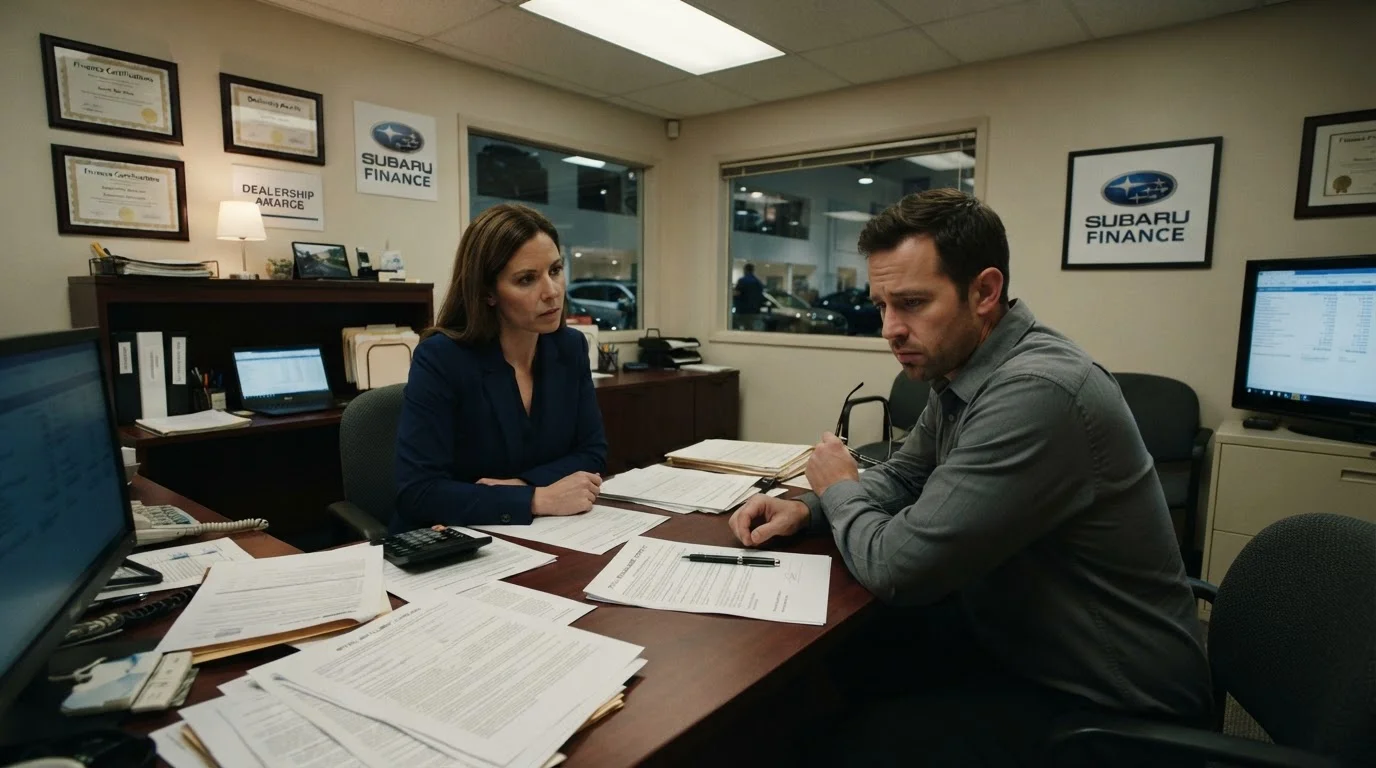
Agreeing to extended warranties or add-on products at the finance desk without adequate review.
Why it happens: Finance managers are trained to present extended warranties, gap insurance, and service contracts as routine, low-cost additions after the main price negotiation feels settled.
Negotiating only on the monthly payment rather than the out-the-door price.
Why it happens: Monthly payment framing is intuitive and budget-friendly in concept, but it allows the total vehicle price, loan term, and interest rate to shift without the buyer noticing.
For a broader look at how financing assumptions can work against buyers, see our article on car-buying myths that cost drivers money.
Putting It Into Practice Before You Sign
Always Review the Full Itemized Contract
Before signing any purchase agreement, request a complete, itemized breakdown of every fee, add-on, and financing term. Verbal assurances about what is or isn't included carry no legal weight once you've signed. If any line item is unclear, ask for a written explanation before proceeding.
The most effective approach is to treat each component of the deal as a distinct transaction. Agree on the vehicle price first. Discuss trade-in value separately. Then, and only then, address financing - ideally with a competing pre-approval already in hand from your bank or credit union. Learn more about negotiation principles that apply across any dealership.
Monthly Payment Focus Can Mask Total Cost
A lower monthly payment can be achieved by extending the loan term rather than reducing the vehicle price. This approach often results in paying significantly more in total interest over the life of the loan. Always evaluate the out-the-door price and total loan cost alongside the monthly figure.
Once you've signed, unwinding problematic terms becomes difficult. Taking an extra 20-30 minutes to review the full contract before signing - and asking questions about any unfamiliar line items - is consistently the most effective protection available to buyers. For a full picture of what vehicle ownership will cost beyond the purchase price, see our guide to understanding the true cost of owning a car.
$400-$900
Typical doc fee range across US dealerships
Documentation fees vary widely by state and dealer; some states cap them by law while others impose no limit, according to consumer automotive research.
1-3%
Common dealer financing markup above lender rate
Industry analyses suggest dealers frequently add one to three percentage points to the base rate offered by the financing lender, increasing the buyer's total interest paid.