What Each Source Is Actually Designed to Do
Before you can use either source well, you need to understand what it was built for - because that purpose shapes every word on the page.
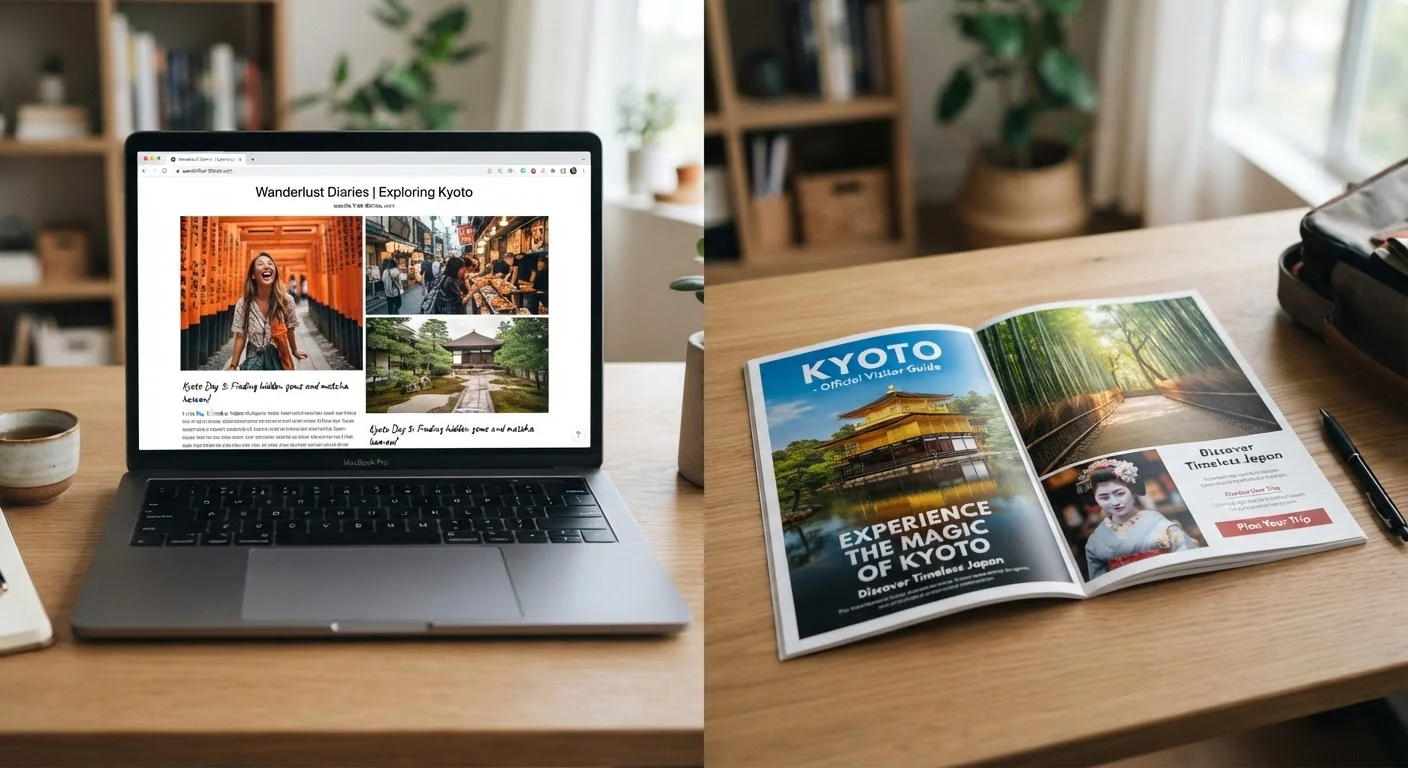
Travel blogs are personal publishing platforms. Some are operated by independent travelers sharing honest recollections; others are run as media businesses with advertising revenue, sponsored trips, and affiliate commissions baked into the content model. The author's experience is real, but the framing of that experience may be influenced by relationships with hotels, tour operators, or destination marketing organizations. Transparency around these arrangements varies enormously.
Official tourism sources - typically websites, brochures, and visitor guides produced by national or regional tourism boards - are funded in part or wholly by government bodies whose explicit mandate is to attract visitors. This makes them authoritative on logistics and entry requirements, but structurally reluctant to highlight negatives: overcrowding, infrastructure gaps, or areas of a destination that simply aren't visitor-ready.
Understanding this distinction is the foundational step in any structured destination research process. For a fuller framework on what to actually evaluate before booking, see our guide on evaluating a travel destination.
| Criterion | Travel Blogs | Official Tourism Sources |
|---|---|---|
| Primary purpose | Share personal experience; often monetised | Promote destination; attract visitors |
| Tone toward negatives | Variable - can be candid or softened | Typically minimised or omitted |
| Logistics accuracy | May be outdated; author-dependent | Generally current; links to official data |
| Ground-level detail | High - costs, crowds, local feel | Low - broad strokes only |
| Bias transparency | Varies widely by author | Promotional bias is structural and known |
| Seasonal/off-peak insight | Often strong if post is dated | Rarely addressed honestly |
| Entry and visa guidance | Unreliable - always verify elsewhere | Better starting point; still verify officially |
Where Each Source Tends to Excel - and Fall Short
Travel blogs tend to deliver on granular, time-stamped, experiential detail: how long the taxi queue at a specific airport actually was, whether a famous beach was crowded on a Tuesday in March, what a mid-range restaurant meal realistically cost. This kind of ground-level intelligence is genuinely hard to find elsewhere, and when a blogger's incentives are clearly disclosed, it can be highly useful.
Where blogs often fall short: they reflect one person's trip, during one season, with one travel style. A solo backpacker's account of a destination may share almost nothing useful with a family of four planning the same trip. Publication dates matter enormously too - a blog post from four years ago may describe infrastructure, prices, or entry rules that no longer apply.
Official tourism sources excel at structured orientation. They can tell you how regions are organized, what categories of attractions exist, and - crucially - where to find authoritative entry and visa information. For anything touching border rules, health requirements, or public safety advisories, always verify through a government portal rather than any third-party source, including blogs. Our article on interpreting destination safety information covers this verification process in detail.
Official sources fall short when you need honesty about limitations. Seasonal closures, underdeveloped regions, and visitor-volume problems are rarely highlighted in promotional materials.
~600M
Travel blogs estimated globally
Industry estimates suggest hundreds of millions of travel-focused blog posts exist online, making source quality assessment a critical research skill.
Less than 50%
Bloggers who fully disclose paid partnerships
Research on influencer and blogger disclosure practices consistently finds that sponsored content is underreported, complicating reader trust assessment.
How to Triangulate Both Sources Effectively
The goal of destination research isn't to find the one perfect source - it's to build a layered, cross-checked picture. A practical approach looks like this:
- Start with official sources for structure. Use a tourism board's regional breakdown to understand the geography, then note what categories of attractions and infrastructure they emphasize.
- Use blogs to stress-test official claims. Search specifically for accounts that mention the same locations or experiences the official source highlighted. Look for posts that include trip dates, so you can assess how recent and seasonally relevant they are.
- Look for patterns across multiple bloggers. A single negative account may reflect one bad day; the same complaint appearing across five separate accounts is worth taking seriously.
- Verify all logistics through primary sources. Visa requirements, health entry conditions, and local laws must be confirmed via official government portals - not tourism board websites, and certainly not blogs. Conditions change and consequences matter.
- Apply critical questions to every source. Who funded this trip? When was this written? Does this person's travel style match mine?
This triangulation approach is part of a broader research method. If you are building destination knowledge from the beginning, our destination research starting point guide walks through the full sequence. And for context on why ranked lists and popular recommendation sites carry similar biases, see why traveler rankings often mislead.