Why Safety Research Requires a Framework, Not a Gut Reaction
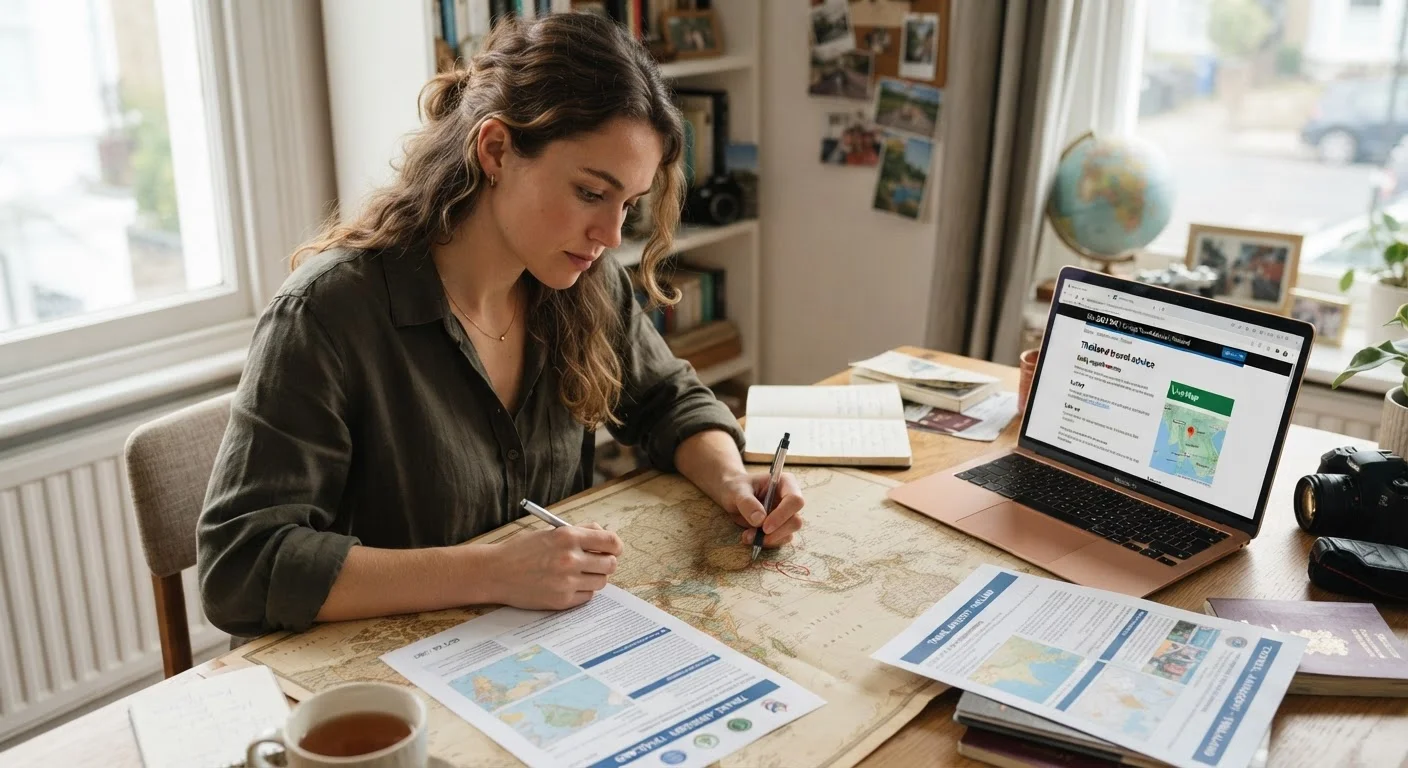
Most travelers encounter destination safety information in one of two ways: a jarring news headline or a well-meaning warning from someone who read that same headline. Neither is a reliable basis for a travel decision. The challenge is not that safety information is unavailable - it is that the available information comes in varying formats, covers different scopes, and is produced for different audiences.
A structured approach resolves this. By systematically consulting authoritative sources and mapping what you find against your specific itinerary, you replace vague anxiety with a grounded, proportionate view. This is the same process travel risk professionals use, adapted for individual travelers.
As you build your assessment, it helps to situate safety within the broader set of factors that shape a destination experience. The full destination evaluation framework covers climate, infrastructure, cost, and logistics alongside safety - because no single factor tells the whole story.
What you will need
It is also worth recognizing that safety perception is often shaped by the same popularity and ranking systems that distort destination research more broadly. The limits of popular traveler rankings article explains why widely-cited safety scores deserve skepticism without the right context.
Tools and Sources You Will Need
Effective safety research draws on a small set of authoritative sources. The tools below form the core of a reliable research stack. They are all publicly available and free to use.
US Department of State Travel Advisory Portal (travel.state.gov)
Provides official four-level safety advisories for every country, with narrative explanations of specific risks.
CDC Travelers' Health Website
Lists destination-specific health notices, recommended vaccinations, and active outbreak alerts relevant to travelers.
OSAC (Overseas Security Advisory Council) Crime & Safety Reports
Offers detailed, city-level crime environment reports for many countries, produced in partnership with US embassies.
Local Embassy or Consulate Contact Page
Provides emergency contacts and real-time warden messages for US citizens already in-country or about to depart.
Avoid using traveler forum posts, social media threads, or informal blog reviews as primary safety sources. These sources reflect individual experiences that may be outdated, unrepresentative, or emotionally colored by a single incident. They can be useful for understanding the texture of day-to-day travel in a place, but not for assessing risk levels. The difference between travel blogs and official sources is worth understanding before you start your research.
Step-by-Step: Building Your Safety Assessment
Follow these steps in order. Each builds on the previous, moving from broad country-level signals to the specific neighborhoods and activities on your itinerary. The goal is not to eliminate all uncertainty - that is not possible - but to form a proportionate, evidence-based view that supports a confident decision.
Read the advisory level and its specific narrative
The US State Department assigns one of four levels to each country: Level 1 (Exercise Normal Precautions), Level 2 (Exercise Increased Caution), Level 3 (Reconsider Travel), and Level 4 (Do Not Travel). The level alone is not the full picture. Read the narrative underneath it carefully. Advisories often note that elevated levels apply to specific regions or activities within a country - not uniformly across every city or tourist zone.
Take note of which risks are cited: crime, civil unrest, terrorism, natural disaster, or health. These categories carry very different implications for a leisure traveler staying in an urban hotel versus a backpacker moving through rural areas.
Cross-reference with city-level crime environment reports
Country-level advisories are a starting point, not a conclusion. The State Department's OSAC Crime & Safety Reports go deeper, often covering specific cities and describing the types of crime most commonly affecting travelers - pickpocketing, vehicle theft, scams - versus violent crime, which is less common in most tourist corridors.
For each location on your itinerary, identify whether the risks named apply to the neighborhoods you plan to visit. A high-crime statistic for a metro area may be concentrated in districts entirely separate from your hotel and planned activities.
Check active health notices from the CDC
Visit the CDC Travelers' Health website and search your destination. The site uses three notice levels: Watch (Level 1), Alert (Level 2), and Warning (Level 3). Read what specific health risk is flagged, how it is transmitted, and whether your planned activities - such as hiking, swimming in fresh water, or visiting rural areas - increase exposure.
Note any recommended or required vaccinations and whether prophylactic medications are suggested for your travel profile. For personal health decisions, consult a travel medicine clinic or licensed healthcare provider well before departure - general CDC information is not a substitute for individualized medical guidance.
Contextualize any news coverage you have encountered
If a headline prompted your safety concern, locate the original incident report - a local news outlet, government statement, or embassy warden message - and note the specific location, date, and nature of the event. Ask: How far is this from my itinerary? Was this a targeted or opportunistic incident? Have authorities issued new guidance in response?
Media organizations understandably cover dramatic incidents, but a single event does not revise a destination's baseline risk level. Compare what you found in the advisory and OSAC reports to the incident in the news. If official sources have not updated their guidance, that is meaningful signal.
Map your specific itinerary against identified risks
Once you have gathered advisory data, crime context, health notices, and news context, place each against your actual planned activities and locations. Create a simple grid: list each destination or neighborhood in one column, and note the relevant risk category, severity, and any mitigation steps in adjacent columns.
This process often reveals that broad concerns do not apply to your specific itinerary - or, occasionally, that a particular leg of your trip warrants reconsideration or a route adjustment. Either outcome is useful. This is also the point at which to review travel insurance options that cover medical evacuation and trip disruption, noting that coverage terms vary widely by policy and provider.
Set a pre-departure verification checkpoint
Conditions change. Build a calendar reminder for two to three weeks before departure to re-check each of the sources you consulted: the State Department advisory, CDC health notices, and the relevant embassy page. If the advisory level has changed or a new health alert has been issued, repeat the contextualization steps above before making any decisions about your trip.
This final check takes less than 30 minutes and ensures your safety assessment reflects current conditions rather than research you did months earlier during initial planning.
Build a Simple Safety Reference Sheet
Create a one-page document for each destination you are seriously considering. Record the current advisory level, any active health alerts, the specific neighborhoods on your itinerary, and emergency contact numbers for the nearest US embassy or consulate. This takes under 30 minutes and gives you a clear, current snapshot you can update closer to your travel date.
Headlines Reflect Newsworthiness, Not Statistical Risk
A single high-profile incident in a major city can generate weeks of media coverage while statistically safer destinations receive no attention. Before adjusting your travel plans based on news coverage, identify the specific location of the incident, its proximity to tourist areas, and whether local authorities have issued any updated guidance. Context changes the picture significantly.
Always Verify with Official Government Sources
Travel advisories, visa rules, entry requirements, and health mandates change without notice. Always check your government's official travel advisory portal - for US travelers, that is travel.state.gov - and the destination country's official immigration and health authority websites before booking and again shortly before departure. Do not rely solely on third-party travel sites or blogs for these details.
Once you have completed this process, you will have a clear picture of which risks are real and relevant to your plans, which are overstated by media coverage or generalized statistics, and what practical steps you can take to reduce exposure. For additional signals that a destination may pose logistical - rather than safety - challenges, see the guide on recognizing when a destination isn't ready for your plans.
This article provides general travel information and educational guidance only. It is not a substitute for official government travel advisories or personalized advice from a licensed travel medicine provider, security professional, or legal adviser. Always verify entry requirements, health mandates, and safety conditions with official sources before traveling.