
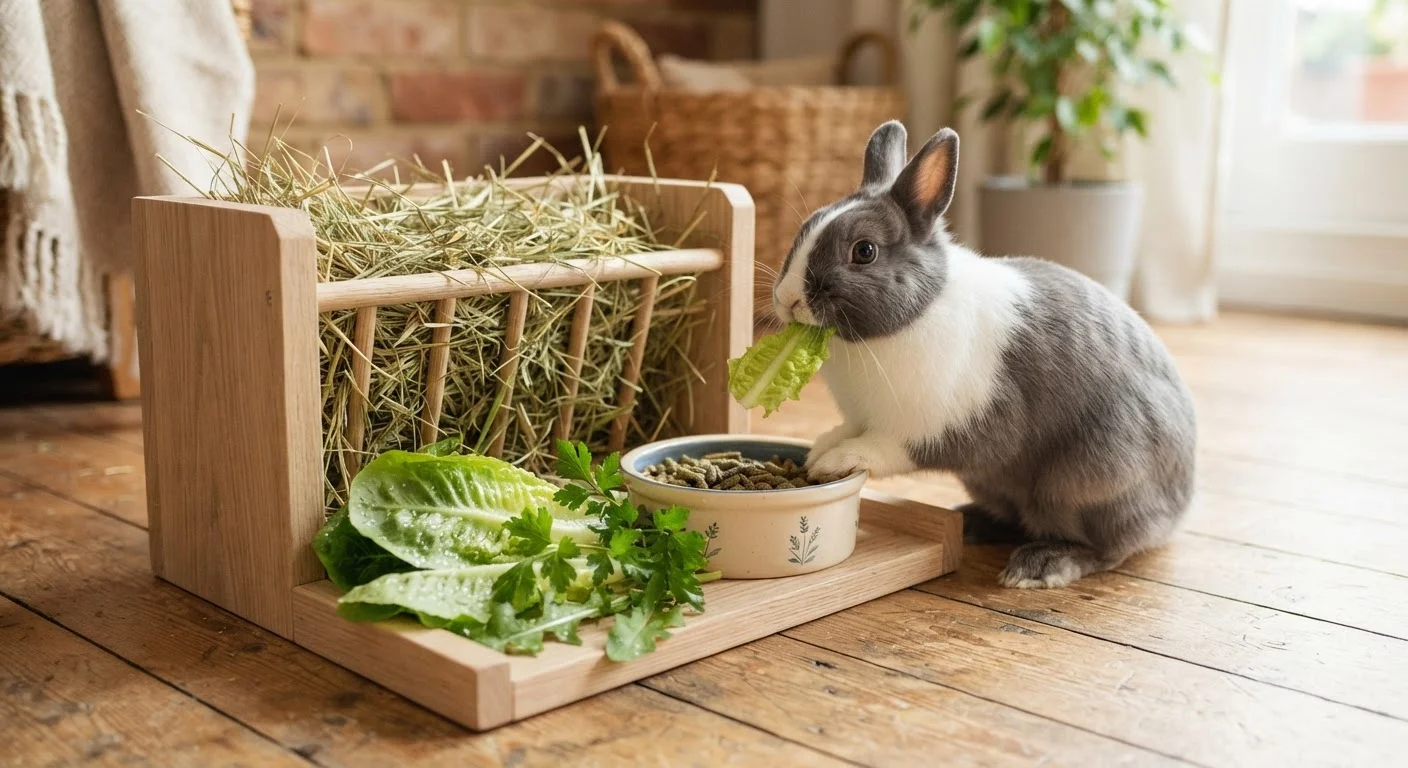
Why Hay Is the Foundation of Every Rabbit's Diet
For domestic rabbits, hay is not a supplement - it is the diet. Veterinary and rabbit welfare organizations consistently recommend that hay make up roughly 80-90% of a rabbit's daily food intake. The reason comes down to digestive anatomy: rabbits have a gastrointestinal tract that requires constant fiber movement to stay healthy. Without adequate long-strand fiber, gut motility can slow, increasing the risk of a potentially life-threatening condition called GI stasis.
Timothy hay is the most widely recommended variety for adult rabbits. It is moderately high in fiber and relatively low in calcium and calories, making it appropriate for everyday feeding. Orchard grass and meadow hay are suitable alternatives. Alfalfa hay, by contrast, is high in protein and calcium - it is appropriate for young rabbits under seven months and pregnant or nursing does, but it should not be a staple for healthy adult rabbits.
Hay should always be available fresh and in unlimited quantities. Storing it in a cool, dry place helps preserve its quality and palatability. If a rabbit is eating less hay than usual, that is worth monitoring closely, as reduced hay consumption can be an early sign of dental or digestive issues. See our complete guide for new rabbit owners for more on recognizing health signals.
Fresh Greens, Pellets, and Foods to Avoid
Fresh leafy greens are a valuable part of a rabbit's diet, providing hydration, variety, and micronutrients that complement hay. A general guideline is about one packed cup of greens per two pounds of body weight daily, though individual needs vary. Safe, commonly recommended greens include romaine lettuce, green leaf lettuce, cilantro, parsley, arugula, and bok choy. Introduce new greens gradually - adding one at a time over several days - to let your rabbit's digestive system adjust without causing loose stools.
Some greens warrant caution. Spinach, kale, and Swiss chard are safe in small amounts but are higher in oxalates and calcium, so they are best offered occasionally rather than as daily staples. Iceberg lettuce has very little nutritional value and high water content, which can cause digestive upset. Avoid feeding wild plants unless you can identify them with certainty.
Pellets serve as a concentrated source of nutrients but should be a minor component of the diet, not the centerpiece. For adult rabbits, a typical guideline is roughly one-quarter cup of plain, timothy-based pellets per five pounds of body weight per day. Pellets that are high in seeds, dried fruit, or colorful mix-ins should be avoided - they are palatable but nutritionally unbalanced and can encourage selective eating.
GI stasis
A serious and potentially life-threatening condition in rabbits where the normal movement of food through the gastrointestinal tract slows or stops. It is most commonly triggered by insufficient dietary fiber, stress, or pain.
Long-strand fiber
The type of fiber found in hay and grass that physically stimulates gut motility in rabbits. Unlike the short-chain fiber in pellets, long-strand fiber is essential for maintaining healthy digestive function.
Oxalates
Naturally occurring compounds found in some leafy greens such as spinach and kale. In large amounts, high-oxalate foods can contribute to kidney or bladder issues in rabbits over time.
Timothy hay
A type of grass hay that is the most commonly recommended staple for adult domestic rabbits. It is high in fiber, lower in protein and calcium than alfalfa, and supports healthy digestion and dental wear.
Several common foods are genuinely dangerous to rabbits and must be kept off the menu entirely: onions, garlic, avocado, chocolate, fruit seeds and pits, rhubarb leaves, and any sugary or processed human foods. Fresh fruit can be offered as an occasional treat - a small piece of apple (seeds removed) or a few blueberries - but its sugar content makes it inappropriate as a regular part of the diet.
Water is often overlooked but critical. Fresh water should be available at all times, either in a heavy ceramic bowl or a sipper bottle. Many rabbits prefer a bowl, and adequate hydration supports kidney function and overall health. For broader context on structuring animal nutrition, our guide to rabbit behavior can help you understand when diet-related discomfort may be showing up as behavioral signals.
This article provides general educational information about rabbit nutrition and is not a substitute for advice from a qualified exotic animal veterinarian. If you have concerns about your rabbit's diet or health, consult a vet experienced with small animals.