
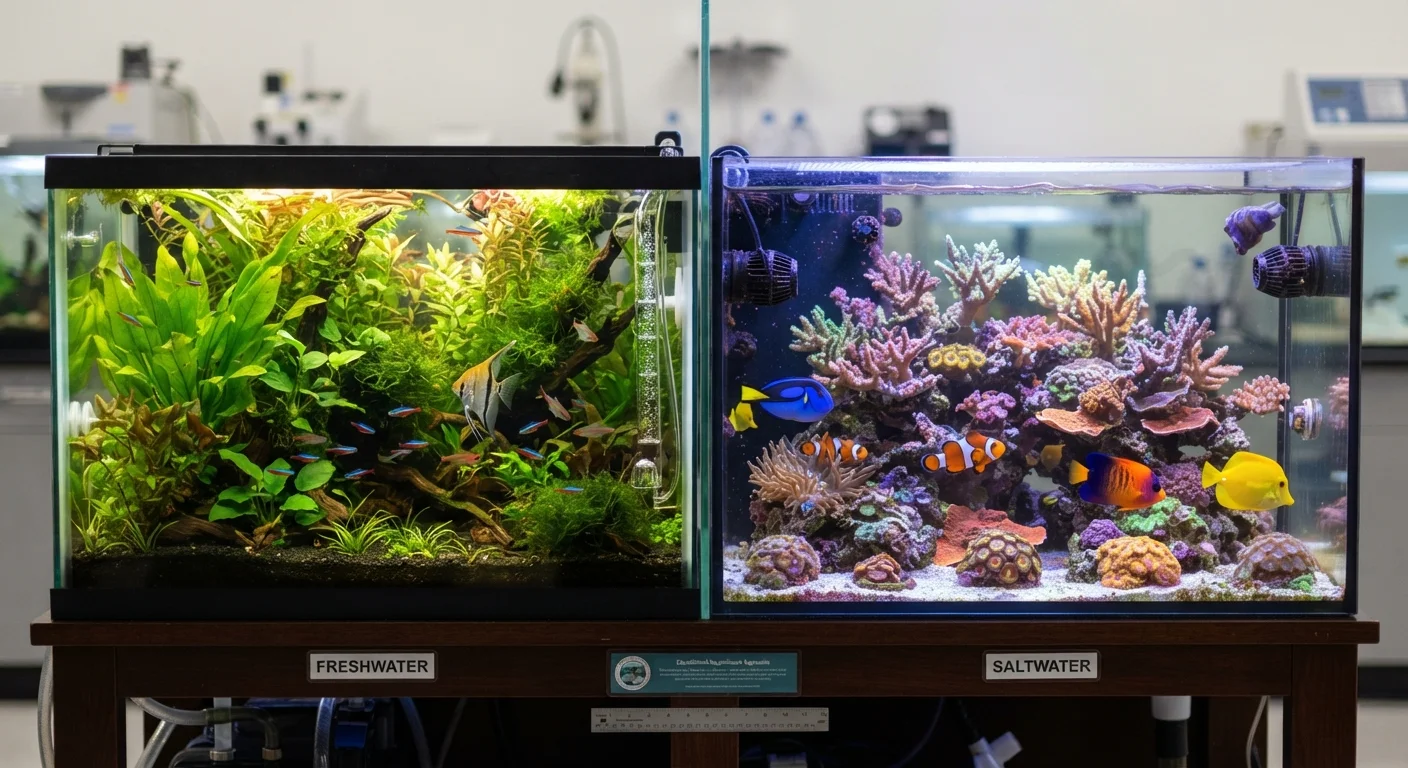
The Core Difference: Environment and Complexity
At their most basic, freshwater and saltwater aquariums recreate two entirely different ecosystems. A freshwater tank mimics rivers, lakes, or tropical streams, housing fish like tetras, guppies, and cichlids. A saltwater (or marine) tank replicates ocean environments - and may include not just fish, but coral, invertebrates, and other reef life.
That environmental difference drives almost every practical distinction between them. Saltwater requires a stable, specific salinity level (measured using a tool called a refractometer or hydrometer), tighter pH control, and more sensitive water chemistry management overall. Freshwater tanks tolerate a broader range of conditions, which makes them considerably more beginner-friendly.
The nitrogen cycle - the biological process by which beneficial bacteria break down fish waste - matters in both systems. However, marine tanks are less tolerant of the fluctuations that freshwater tanks can absorb. A small error in a saltwater setup can stress or kill sensitive marine life much faster.
| Criterion | Freshwater Aquarium | Saltwater Aquarium |
|---|---|---|
| Startup Cost | Lower - often under $200-$300 | Higher - frequently $400-$1,000+ |
| Water Chemistry Complexity | Moderate; more forgiving | High; precise parameters required |
| Equipment Required | Filter, heater, basic lighting | Protein skimmer, live rock, reef lighting |
| Fish Hardiness | Generally hardy, beginner-tolerant | Often sensitive; slower to recover |
| Species Variety | Wide; thousands of freshwater species | Exotic; coral and reef fish available |
| Maintenance Time | Moderate weekly effort | Higher; more frequent testing needed |
| Beginner Suitability | Strongly recommended | Better after prior experience |
Cost and Equipment: What to Expect
Setup costs vary widely depending on tank size and species choices, but the general pattern is consistent: saltwater systems cost substantially more. A basic freshwater starter tank can be set up with a filter, heater, lighting, and substrate for a few hundred dollars or less. A comparable saltwater system often requires a protein skimmer (a device that removes organic waste before it decays), live rock for biological filtration, and specialized lighting for coral - costs can climb quickly.
Ongoing expenses also differ. Saltwater fish and invertebrates tend to be more expensive than freshwater species, and replacing livestock after losses is costlier. Freshwater fish are widely bred in captivity, which keeps prices reasonable and reduces stress on wild populations.
~12M
US households with freshwater fish
According to the American Pet Products Association's National Pet Owners Survey, freshwater fish are among the most commonly kept pets in the United States.
2-4 weeks
Typical tank cycling time
Most aquariums require two to four weeks of nitrogen cycling before fish can safely be added, regardless of tank type.
10-25%
Recommended weekly water change volume
Aquatic specialists commonly advise changing 10-25% of tank water weekly to maintain stable water quality in most home aquariums.
Maintenance supplies - salt mix, testing kits, specialized additives - add to the monthly cost of a marine tank. Freshwater tanks require water conditioner, regular filter media, and periodic fertilizer if live plants are included, but these are modest expenses by comparison.
Time Commitment and Ongoing Maintenance
Neither type of aquarium is truly hands-off, but the time demands differ meaningfully. Freshwater tanks generally need weekly partial water changes (typically 10-25% of tank volume), filter maintenance, and visual health checks on fish. A well-established freshwater tank can be stable and predictable once the initial cycling period - usually two to four weeks - is complete.
Saltwater tanks require all of the above, plus regular salinity testing, monitoring of parameters like calcium and alkalinity (especially in reef tanks with coral), and potentially more frequent equipment checks. Protein skimmers need cleaning, and any coral additions require research into their specific light and flow requirements.
For a first-time aquarium keeper, the additional monitoring burden of a saltwater tank can be overwhelming before the basics are fully understood. Most experienced hobbyists recommend logging at least six months to a year with a freshwater system before transitioning to marine.
This article is for general informational purposes only and does not constitute veterinary or aquatic husbandry advice. Always research species-specific needs before purchasing livestock, and consult an aquatics specialist for complex setup decisions.