How Each Product Is Structured
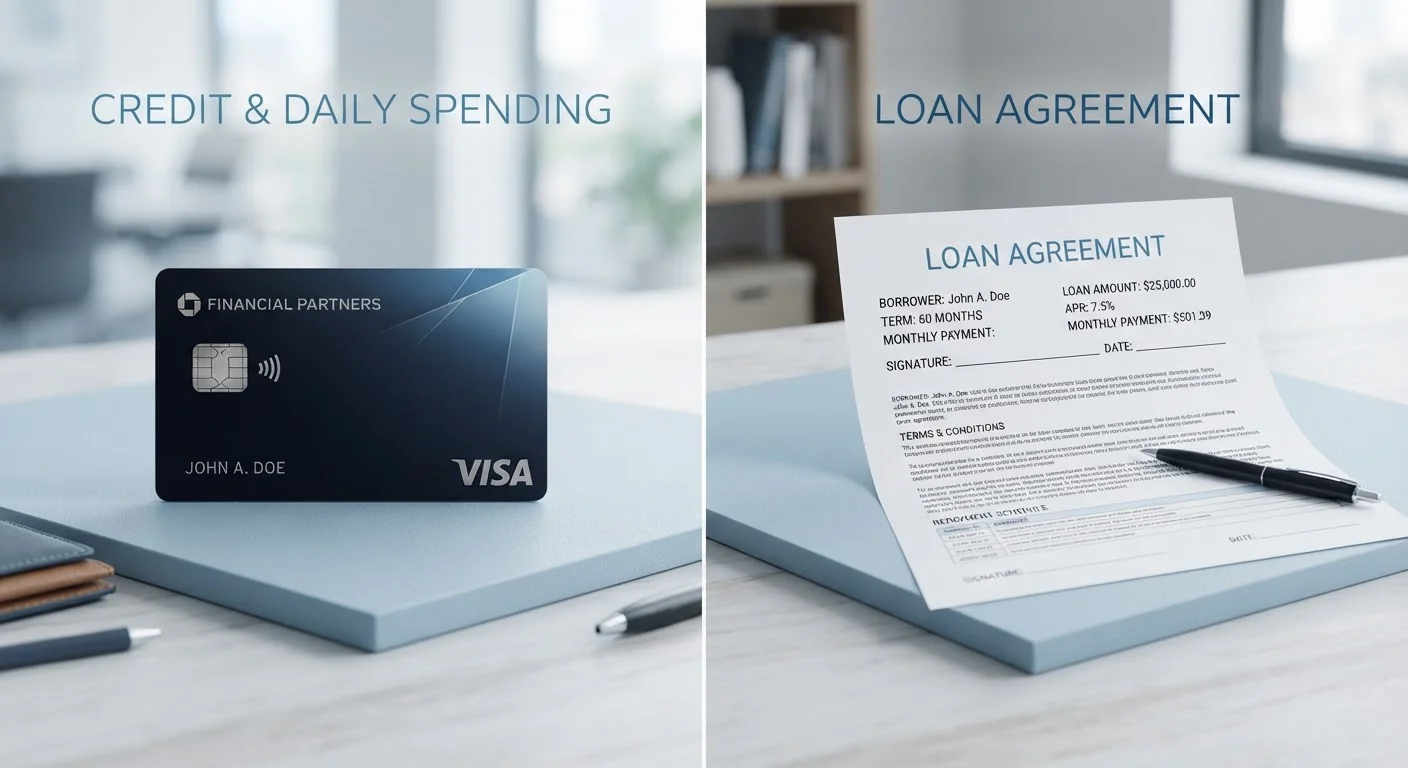
A personal loan is an installment product: you receive a fixed sum of money upfront, then repay it in equal monthly installments over a set term - commonly 24 to 84 months. The interest rate is usually fixed, meaning your payment stays the same throughout the life of the loan. For a deeper look at how this process unfolds, see the full lifecycle of a personal loan.
A credit card is a revolving credit product. You're assigned a credit limit and can borrow up to that amount repeatedly, as long as you make at least the minimum payment each month. Unlike a loan, there is no fixed end date - the balance can persist indefinitely if you only pay minimums. Interest is charged on any balance you carry past the due date, and rates are often variable, meaning they can change over time.
Understanding this structural difference is the foundation of every other comparison. One product gives you certainty and a finish line; the other gives you flexibility and ongoing access. To better understand how interest rate structures behave differently over time, see our guide on fixed-rate vs. variable-rate loans.
Cost Comparison: Interest Rates and Fees
| Personal Loan | Credit Card | |
|---|---|---|
| Credit structure | Installment (fixed term) | Revolving (no end date) |
| Funding | Lump sum upfront | Draw as needed, up to limit |
| Typical APR range | Generally lower for good credit | Often higher; $0 if paid in full monthly |
| Monthly payment | Fixed and predictable | Variable; minimum or full balance |
| Common fees | Origination, possible prepayment | Annual, late, cash advance fees |
| Best use case | Large one-time expense, debt consolidation | Everyday purchases, short-term needs |
| Credit score impact | Builds payment history, hard inquiry | Affects utilization ratio, hard inquiry |
Interest rates vary based on lender, loan type, and borrower creditworthiness. Personal loans typically carry lower annual percentage rates (APRs) than credit cards for borrowers with solid credit - though rates span a wide range depending on the lender and your credit profile. Credit cards, especially rewards cards, often carry higher ongoing APRs, but if you pay your balance in full each month, you pay no interest at all.
Personal loans may include origination fees - a percentage of the loan amount charged upfront - and some have prepayment penalties. Credit cards may charge annual fees, late fees, cash advance fees, and foreign transaction fees. Neither product is inherently cheaper; the total cost depends heavily on how you use it and how quickly you repay.
Minimum Payments Can Be Costly
Paying only the minimum on a credit card balance can extend repayment by years and multiply the total interest you pay. Unlike a personal loan with a defined payoff date, revolving debt can persist indefinitely when only minimums are made. If you're carrying a balance, prioritize paying more than the minimum whenever your budget allows.
When a Personal Loan Makes More Sense
A personal loan tends to be the more appropriate tool when:
- You have a large, defined expense - a home repair, medical bill, or major purchase - and need to spread the cost over time.
- You want a predictable monthly payment and a clear payoff date to stay on budget.
- You're consolidating high-interest credit card debt into a single, lower-rate payment.
- You need more money than your credit card limit allows.
For a balanced assessment of what you gain and give up with this product, see taking out a personal loan - weighing the trade-offs. The structured repayment of an installment loan can also support your credit profile over time when managed responsibly, as on-time payments are reported to the major credit bureaus.
When a Credit Card Makes More Sense
A credit card is generally the better fit when:
- You have ongoing or unpredictable expenses that vary month to month.
- You can reliably pay your balance in full - meaning you'll never pay interest.
- You want to build or maintain your credit history through regular, manageable use.
- You need purchase protections, rewards, or travel benefits tied to everyday spending.
If you're newer to credit and still building your profile, our starter's guide to credit and borrowing covers the foundational concepts to help you choose wisely. It's also worth understanding the difference between secured and unsecured credit cards before applying, particularly if your credit history is limited.
Use the Right Tool for the Right Job
If you're tempted to put a large, multi-year expense on a credit card, run the numbers first. Carrying that balance at a typical credit card APR for several years can cost significantly more than a personal loan for the same amount. A simple loan amortization calculator - available free from many non-commercial financial education sites - can make the total interest cost concrete before you commit.
How Each Product Affects Your Credit
Both products report to the major credit bureaus - Equifax, Experian, and TransUnion - and influence your credit score in different ways.
With a personal loan, taking on new installment debt temporarily lowers your average account age and generates a hard inquiry. However, making consistent on-time payments builds a positive payment history, which is the single largest factor in most credit scoring models.
With a credit card, your credit utilization ratio - how much of your available revolving credit you're using - plays a significant role. High utilization (generally above 30% of your limit) can lower your score even if you pay on time. Conversely, low utilization and on-time payments can meaningfully support your credit profile. For evidence-backed habits around credit-building, see building credit responsibly.
This article is for general informational and educational purposes only and does not constitute personalized financial, legal, or tax advice. Consult a qualified financial professional before making borrowing decisions based on your individual circumstances.