
Why the Distinction Matters More Than You Think
Most people know roughly how much money comes in each month. Fewer have an accurate picture of where it goes. Part of the reason is that not all expenses behave the same way - and treating them as if they do is one of the most common reasons budgets fall apart within weeks of being built.
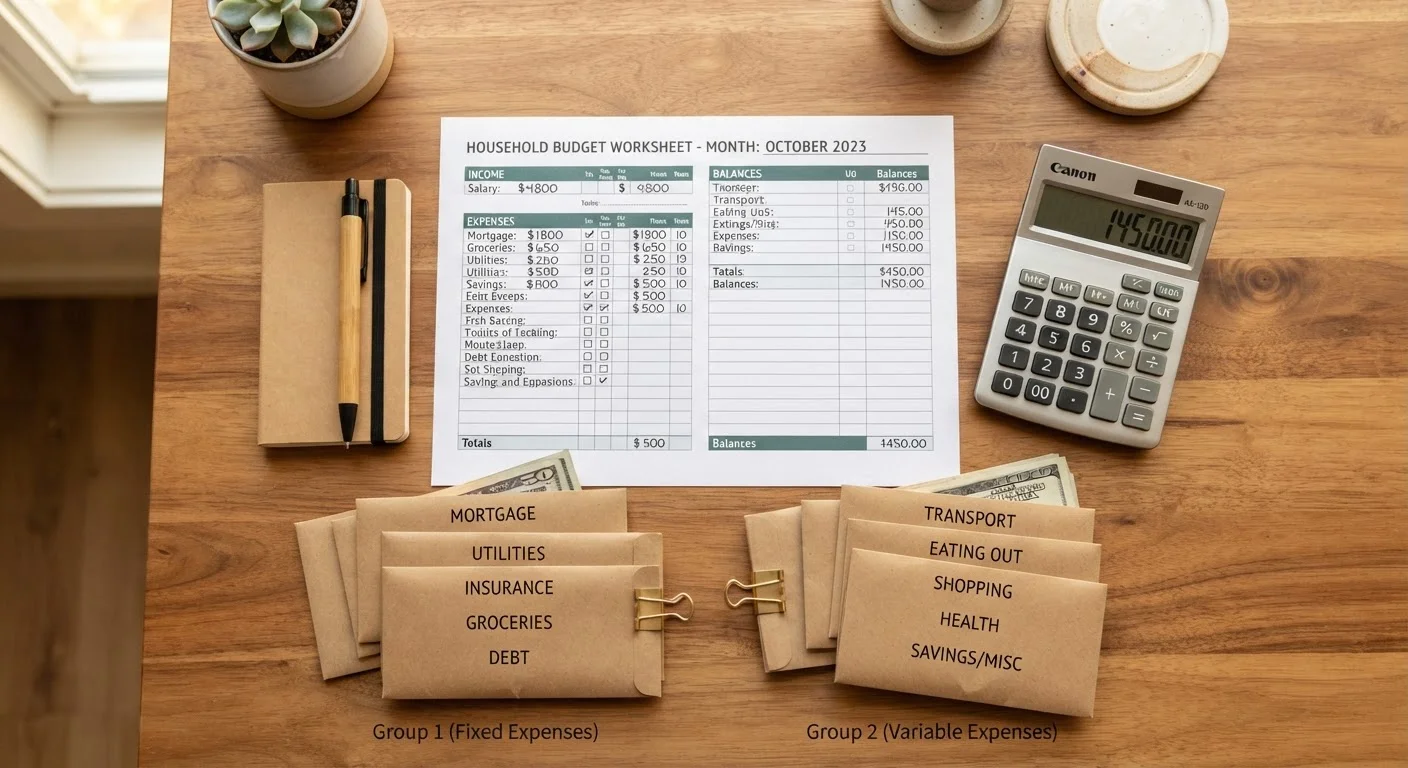
The fixed vs. variable framework gives you a reliable map. Fixed expenses form a predictable baseline: you know exactly what they cost and exactly when they are due. Variable expenses sit on top of that baseline and shift based on your decisions and circumstances. When you separate the two, you can immediately see how much of your income is already committed before the month begins - and how much you actually have room to work with.
This distinction also shapes how you respond when income drops or an unexpected cost appears. Fixed obligations generally cannot be renegotiated on short notice. Variable spending can often be reduced right away. Knowing which is which means you spend less time guessing and more time making deliberate choices. For a closer look at the difference between needs and wants, that framework pairs naturally with this one.
Fixed Expenses: The Predictable Foundation
A fixed expense is any cost that stays the same dollar amount from one billing period to the next, regardless of how much you use a service or what happens in your life. Common examples include:
- Rent or mortgage payments
- Car loan or lease payments
- Fixed-rate personal loan installments
- Monthly insurance premiums billed at a flat rate
- Internet or phone plans with set contract pricing
- Streaming or software subscriptions at a flat monthly fee
Because these costs are predictable, they are the easiest to plan for - you can list them once and rely on those numbers month after month. They also tend to be the hardest to reduce quickly, since most require a formal agreement or contract change to alter.
Review Fixed Expenses at Least Once a Year
Fixed costs can creep upward at renewal - insurance premiums, subscription prices, and service contract fees all have a way of increasing quietly. Set a calendar reminder to review every fixed-expense line item annually. Even one or two adjustments can meaningfully lower your baseline cost floor.
One category worth examining carefully is insurance. Auto insurance, for example, may feel fixed, but premiums can increase at renewal. Reviewing your coverage annually keeps your budget numbers accurate. Our car insurance guidance hub covers what factors typically affect premium changes.
Variable Expenses: Where Your Choices Show Up
Variable expenses are costs that change each month based on usage, behaviour, or circumstances. They include:
- Groceries and household supplies
- Gasoline and rideshare costs
- Utilities (electricity, gas, water)
- Dining out and entertainment
- Clothing and personal care
- Medical co-pays and out-of-pocket costs
This is the category where most people's budgets quietly leak. It is not one large purchase that causes the problem - it is the accumulated small decisions that are never tracked. As explored in our piece on overlooked spending patterns that drain monthly budgets, recurring convenience charges and forgotten subscriptions are among the most common culprits.
~33%
Share of average US household budget spent on housing
According to the U.S. Bureau of Labor Statistics Consumer Expenditure Survey, housing consistently represents the single largest fixed expense category for American households.
$227/mo
Average US household spending on food away from home
The Bureau of Labor Statistics Consumer Expenditure Survey reports that dining out represents a significant and often underestimated variable expense category for most households.
60%+
Adults who do not track monthly variable spending
Surveys conducted by the National Foundation for Credit Counseling have found that a majority of US adults do not maintain a detailed budget, making variable expense tracking particularly difficult.
Variable expenses are also where budgeting adjustments are most actionable. Because these costs respond to your choices, reducing them does not require renegotiating a contract - it requires a deliberate decision about behaviour.
The Middle Ground: Periodic and Semi-Variable Costs
Not every expense fits neatly into one column. Two additional categories are worth understanding:
- Periodic fixed expenses
- These are fixed in amount but do not occur monthly - annual car registration fees, yearly insurance premiums paid in a lump sum, or semi-annual property tax installments. Budget for these by dividing the annual total by 12 and setting aside that amount each month.
- Semi-variable (or mixed) expenses
- These have both a fixed component and a variable component. A cell phone plan, for example, may have a base monthly fee (fixed) plus overage charges if you exceed data limits (variable). Knowing both parts helps you set a realistic monthly ceiling.
Misclassifying these costs - treating a periodic expense as zero until it hits, for example - is a reliable path to a budget shortfall. Building them in from the start removes that surprise.
If your expenses include loan payments, it is also worth understanding how fixed and variable interest rates affect what you owe over time. Our explanation of fixed-rate vs. variable-rate loans covers how each structure behaves differently across the life of a loan.
This article is for general informational and educational purposes only and does not constitute personalised financial advice. For guidance tailored to your specific financial situation, consult a qualified financial professional.