Why Grout Keeps Cracking Even After You Fix It
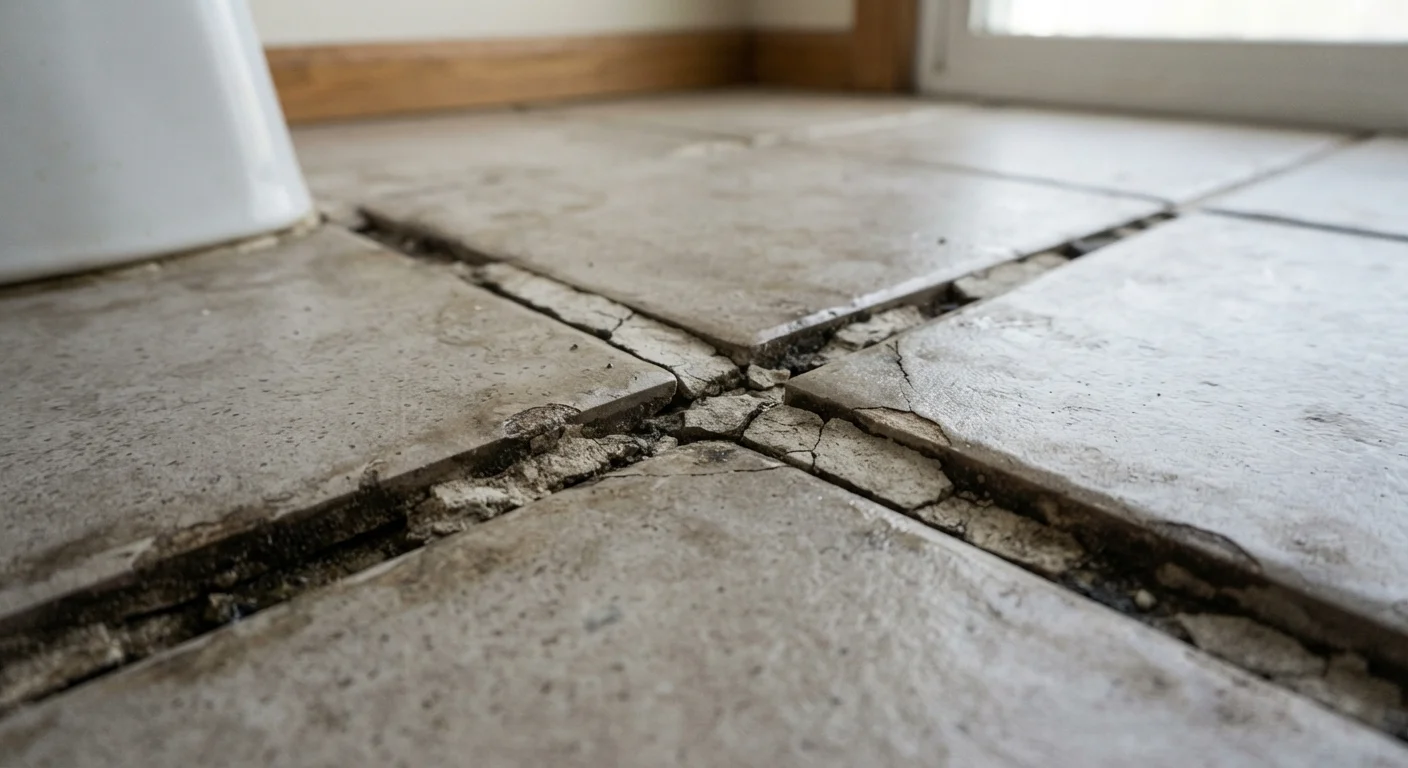
If you've patched cracked grout only to watch it crack again within months, you're not dealing with a material failure - you're dealing with a symptom. Grout is a rigid filler material. It can handle normal compression loads, but it has very little flexibility. When the surfaces around it move - even slightly - grout absorbs that stress until it fractures.
The frustrating cycle of re-grouting and re-cracking almost always points back to one of several underlying causes: a subfloor that flexes too much, a missing expansion joint, an incompatible adhesive, or an installation error that was sealed over rather than corrected. Understanding which category your problem falls into is the necessary first step before any repair makes sense.
Patching cracked grout without investigating the cause first.
Why it happens: Grout repairs look straightforward and immediate, so homeowners skip the diagnostic step to save time and money upfront.
Installing tile over a subfloor with too much deflection.
Why it happens: Subfloor stiffness isn't visible, and standard wood subfloors that feel firm underfoot can still flex beyond the tolerance tile installations require.
Omitting movement joints in large tiled areas or at transitions.
Why it happens: Movement joints are often overlooked during DIY installations, or homeowners assume grout alone can handle normal thermal and structural movement.
Using the wrong type of mortar for the tile size or substrate.
Why it happens: Many homeowners and even some installers default to standard thinset for all tile types, not accounting for the increased demands of large-format or heavy tiles.
Re-grouting over tiles that have already lost their adhesive bond.
Why it happens: If grout looks like the only visible problem, it's easy to assume the tiles underneath are still secure - especially if they don't visibly move.
How to Diagnose the Problem Before You Repair
Before removing and replacing grout, take time to assess the pattern and location of cracks. Cracks that follow a consistent diagonal line often indicate differential movement between two sections of structure. Cracks concentrated in one area of the floor - particularly in the center of a large tiled span - frequently point to subfloor deflection. Cracks along the perimeter where tile meets wall or a cabinet base are almost always a missing or improperly placed movement joint.
Don't Regrout Over a Failed Tile Bond
If tiles flex, shift, or produce a hollow sound when tapped, the adhesive layer beneath has failed. Applying fresh grout over debonded tiles will result in the same cracks returning - often within weeks. The tiles need to be removed, the substrate cleaned, and the tiles reset with appropriate mortar before any grout repair will hold.
Press gently on tiles adjacent to cracked grout. If tiles flex, click, or feel hollow when tapped, the adhesive bond has failed beneath them - a sign that the grout was never going to hold long-term regardless of quality. In these cases, tiles typically need to be removed and reset before re-grouting will achieve a lasting result.
A licensed tile installer or general contractor can assess subfloor stiffness and deflection using established industry standards - such as those outlined by the Tile Council of North America - which specify maximum allowable deflection thresholds for tile installations.
Long-Term Solutions Worth Considering
Once you've identified the root cause, repairs become more straightforward. Subfloor deflection often requires adding structural support below - sistering floor joists, adding blocking, or in some cases installing a thicker or stiffer underlayment. This is work that typically involves a contractor and may require a building permit depending on its scope; check local code requirements before proceeding.
Structural Repairs May Require Permits
Reinforcing floor joists, adding structural blocking, or making significant changes to your subfloor may require a building permit in many jurisdictions. Always check with your local building department before starting structural work. Unpermitted structural modifications can create complications when selling your home or filing an insurance claim.
Movement joints - sometimes called expansion joints - should be incorporated into any tiled area larger than roughly 8 to 12 feet in either direction, and wherever tile meets a dissimilar surface (walls, columns, curbs). These joints are filled with a flexible sealant rather than grout, allowing the assembly to expand and contract without forcing stress into rigid grout lines.
For adhesive selection, match the mortar type to the tile and substrate. Large-format tiles, for example, generally require a medium-bed or large-format mortar with polymer modification to ensure full coverage and adequate flexibility. Using a standard thinset on a flexible substrate with large tiles is a common mismatch that leads to repeated bond failure.
When the underlying cause is addressed properly, re-grouting with a quality sanded or unsanded grout - chosen based on joint width - becomes a durable, lasting repair rather than a temporary fix.