Why Protein Source Matters
Protein is made up of amino acids - the building blocks your body uses to repair tissue, produce enzymes, and support immune function. Of the 20 amino acids, nine are considered essential, meaning the body cannot synthesize them and must obtain them through food. Where protein source comparisons become meaningful is in how completely and efficiently different foods deliver these nine essentials.
The concept of protein quality typically refers to two factors: amino acid completeness (whether all essential amino acids are present) and digestibility (how much the body can absorb and use). Understanding both helps explain why nutrition discussions around protein can feel so complicated. See our guide to interpreting nutrition research for context on why expert opinions on protein sometimes conflict.
Animal Protein: Nutritional Strengths and Considerations
Animal-derived proteins - including meat, poultry, fish, eggs, and dairy - are classified as complete proteins. They contain all nine essential amino acids in proportions that closely match human needs. They also tend to score high on measures of digestibility, such as the DIAAS, a metric used by nutrition researchers to assess protein quality.
Beyond amino acids, many animal proteins supply nutrients that can be difficult to obtain from plant foods alone, including heme iron (which is absorbed more readily than non-heme iron), vitamin B12, zinc, and omega-3 fatty acids (particularly in fatty fish). These co-occurring nutrients make animal proteins nutrient-dense in a broad sense.
However, some animal protein sources - particularly red and processed meats - are also associated in observational research with higher saturated fat intake and other dietary patterns linked to chronic disease risk. The type and preparation method of animal protein can matter as much as the protein itself. This is an area where research remains active and nuanced.
| Animal Protein | Plant Protein | Blended Approach | |
|---|---|---|---|
| Amino acid completeness | Complete (all 9 essentials) | Often incomplete (varies by food) | Complete when well combined |
| Digestibility | Generally high | Moderate (affected by antinutrients) | Moderate to high |
| Fiber content | None | High | Moderate to high |
| Key micronutrients | B12, heme iron, zinc, omega-3s | Magnesium, folate, potassium | Broad micronutrient range |
| Dietary planning required | Minimal | More intentional planning needed | Moderate |
| Associated dietary benefits | High protein efficiency | Phytonutrients, antioxidants | Nutritional breadth and variety |
Plant Protein: Strengths, Gaps, and How to Bridge Them
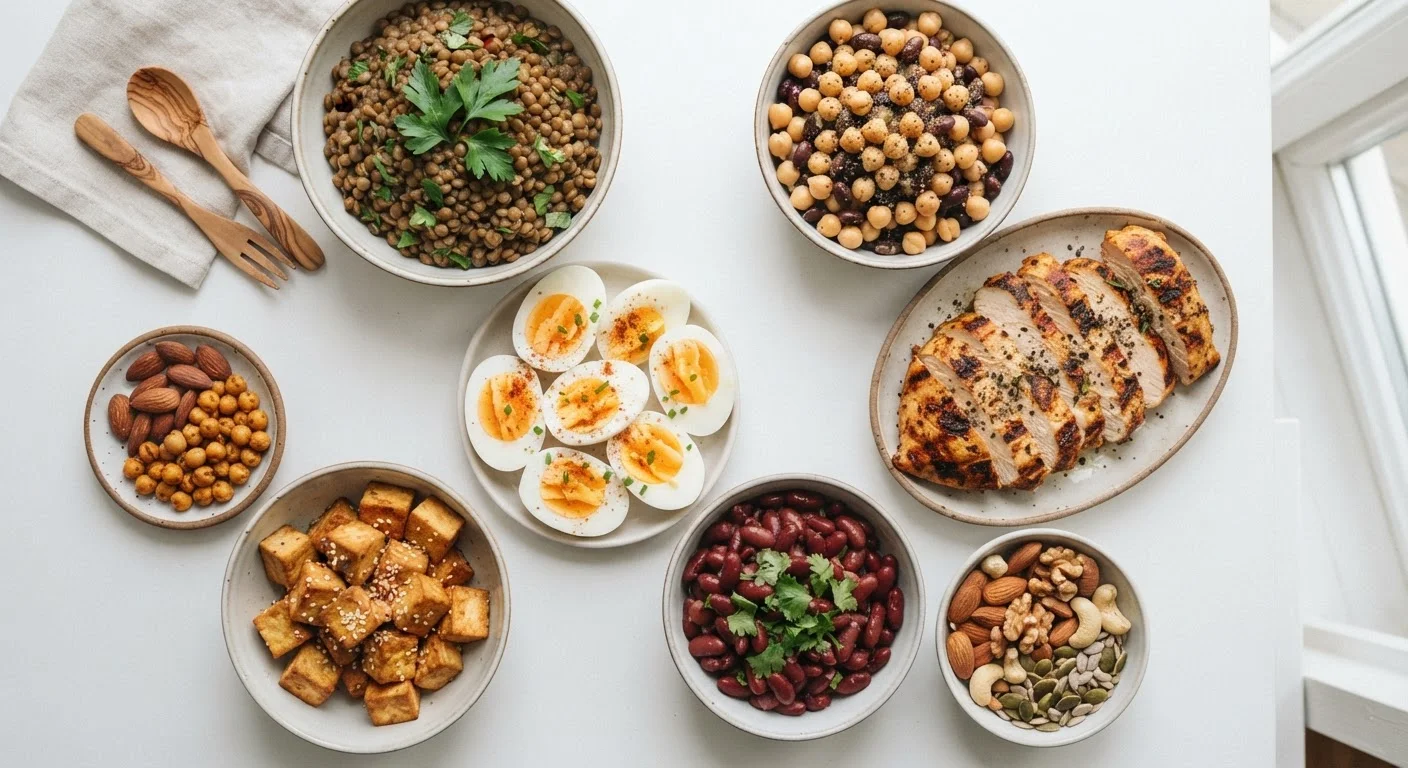
Plant proteins - found in legumes, whole grains, nuts, seeds, and soy - are often described as incomplete because most lack sufficient quantities of at least one essential amino acid. For example, most legumes are low in methionine, while many grains are low in lysine. Soy is a notable exception, generally regarded as a complete plant protein.
Digestibility of plant proteins is also typically lower than animal sources, partly due to antinutrients (naturally occurring compounds like phytates and lectins that can inhibit mineral absorption). Cooking and food processing significantly reduce the impact of most antinutrients.
The practical workaround for amino acid gaps is dietary complementation - pairing foods whose amino acid profiles offset each other. Classic examples include rice and beans, or whole grain bread with peanut butter. These don't need to be eaten at the same meal; distributing complementary proteins across the day is generally sufficient, according to mainstream nutrition guidance.
Plant protein sources also bring fiber, antioxidants, and phytonutrients not found in animal foods - factors associated with digestive and cardiovascular health in population studies. For a broader framework on incorporating these foods into daily eating, see our guide to building a balanced plate.
Making Plant Proteins Work Harder
To maximize amino acid intake from plant sources, vary your protein foods throughout the day - combining legumes, grains, nuts, and seeds covers a wider range of essential amino acids than relying on a single source. Soaking, sprouting, or cooking legumes also helps reduce antinutrients and improve digestibility. If you follow a fully plant-based diet, a registered dietitian can help you identify any nutritional gaps specific to your eating pattern.
Blended Approaches: Combining the Best of Both
A blended approach - incorporating both animal and plant proteins - is how most Americans already eat, and it has practical nutritional advantages. Animal proteins fill amino acid gaps efficiently, while plant proteins contribute fiber and micronutrients that animal foods largely lack. Together, they can support both protein adequacy and overall dietary quality.
For those following a predominantly plant-based diet, intentional inclusion of eggs or dairy (as in lacto-ovo vegetarian eating) can substantially close the nutritional gaps associated with fully plant-based eating. For those focused primarily on animal proteins, adding legumes and whole grains improves fiber intake and introduces beneficial plant compounds.
Protein needs vary by age, activity level, and health status. General population guidance from health authorities suggests most adults benefit from distributing protein intake across meals rather than concentrating it in one sitting - a pattern that supports muscle protein synthesis throughout the day. If you're considering a structured approach, our meal planning framework offers a practical starting point for building variety into your weekly routine.
This article is for general informational purposes only and does not constitute medical or dietary advice. Individual nutritional needs vary. Consult a registered dietitian or qualified healthcare professional before making significant changes to your diet, especially if you have an underlying health condition.