
Why a Framework Matters More Than a Perfect Plan
Most adults understand that eating well matters - but translating that understanding into a consistent, practical routine is where intentions often stall. The gap isn't usually knowledge; it's structure. A meal planning framework gives you a repeatable process, not a rigid diet. That distinction matters because sustainability, not short-term perfection, is what produces lasting nutritional benefit.
Nutritional balance, broadly understood, means getting adequate amounts of the macronutrients (protein, carbohydrates, and fats) and micronutrients (vitamins and minerals) your body requires to function well. No single meal needs to be perfectly balanced; what matters is the overall pattern across days and weeks. A planning approach helps you see that pattern and steer it deliberately.
This Is General Information, Not Medical Advice
The guidance in this article is intended for general educational purposes only and does not constitute personalized medical or dietary advice. Individual nutritional needs vary based on age, health status, activity level, and other factors. Always consult a qualified healthcare professional or registered dietitian before making significant changes to your diet, especially if you have a chronic health condition, are pregnant, or are managing a specific medical concern.
For context on how structured planning supports other areas of well-being, see how consistent movement habits and nutritional planning tend to reinforce each other as part of a broader health routine.
What you will need
What You'll Need Before You Start
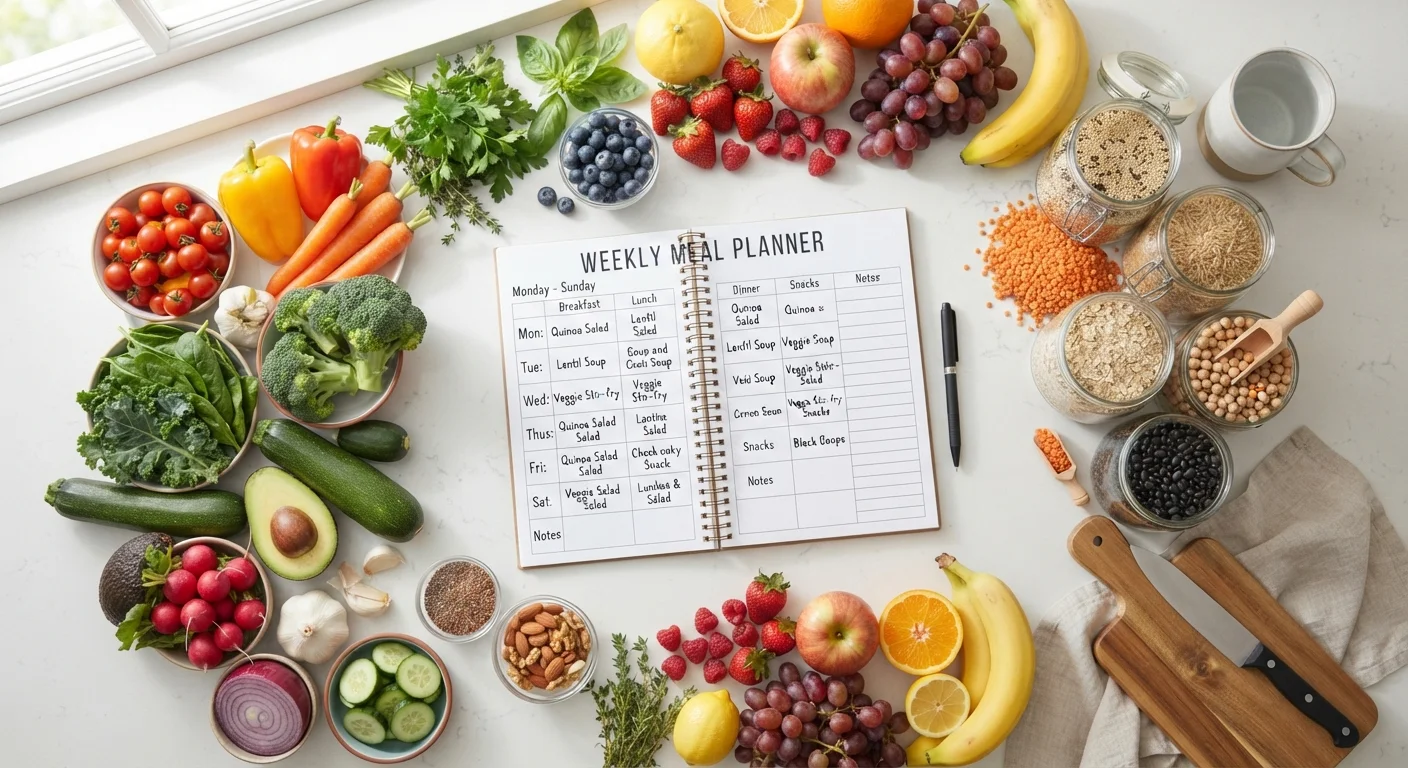
Weekly meal planning template (paper or digital)
Provides a visual grid to map out meals across seven days and identify food group gaps at a glance.
Grocery list or app
Translates the weekly meal plan into a shopping list, reducing impulse purchases and missed ingredients.
Food group reference guide (e.g., USDA MyPlate)
Serves as a reference for which foods belong to which groups and general balance guidance.
Meal prep containers
Enables batch cooking and portioning meals in advance to support the planned schedule.
With these basics in place, the six-step process below gives you a practical framework to follow each week. The goal is a repeatable habit, not a one-time exercise.
Identify your weekly eating structure
Before building a plan, take stock of how your week actually runs. How many meals do you realistically cook at home? When do you typically eat out or rely on convenience options? Mapping this out gives you an honest baseline - and prevents you from building an overly ambitious plan you won't follow.
Aim to plan only the meals where you have genuine control over ingredients. Even planning three to four dinners per week is a meaningful starting point.
Map out your food group coverage for the week
Nutritional balance isn't about achieving perfection in every single meal - it's about covering all major food groups across the week as a whole. The main categories to consider are: non-starchy vegetables, fruits, whole grains, lean or plant-based proteins, dairy or calcium-rich alternatives, and healthy unsaturated fats.
On your planning template, scan each day and ask: where are the vegetables? Where is a protein source? Is there variety across the week, or am I eating the same three foods repeatedly? Variety within each food group - for example, rotating between leafy greens, cruciferous vegetables, and root vegetables - helps capture a broader range of vitamins and minerals.
Apply a simple plate-proportions model
Rather than tracking every gram, a proportion-based approach gives most adults a workable mental model. A commonly referenced framework suggests that roughly half of a meal's volume comes from vegetables and fruit, about a quarter from whole grains or starchy carbohydrates, and about a quarter from a protein source - with small amounts of healthy fat incorporated.
This is a general starting point, not a rigid prescription. Portion needs vary by individual, activity level, age, and health status. Use this model as an orientation tool, not a strict rule.
Build a rotating bank of meals
Choice overload is one of the biggest barriers to consistent meal planning. Reduce friction by building a personal list of 10-15 meals your household already enjoys and knows how to prepare. Organize these loosely by food group coverage and cooking time.
From this bank, assigning meals to the weekly template becomes a matter of selection rather than invention. Rotate meals in and out to maintain variety without requiring you to find new recipes constantly.
Write your grocery list from the plan
Once meals are mapped out, convert the plan into a consolidated grocery list organized by store section (produce, proteins, pantry staples, etc.). Check what you already have on hand before writing to avoid unnecessary purchases.
Shopping from a list tied to a plan significantly reduces food waste and the temptation of less nutritious impulse purchases - both practical benefits beyond the nutritional ones.
Review and adjust after each week
At the end of each week, spend five minutes reflecting: Which meals did you actually prepare? Where did the plan break down? Were there food groups consistently missing? These small reviews compound over time into a meal planning approach that is genuinely fitted to your life rather than borrowed from someone else's.
This habit of iterative adjustment is the same underlying principle that makes structured planning effective in any domain - similar to how building any sustainable routine, whether a daily mental wellness practice or a weekly exercise framework, relies on small, honest adjustments rather than wholesale reinvention.
Build the Habit Before Perfecting the Plan
Nutritional balance is a long-term pattern, not a weekly achievement test. Starting with just two or three planned dinners per week is enough to build momentum. Once planning feels routine, gradually expand to cover more meals. Consistency over time matters far more than a perfect plan on day one.
Avoid Overly Restrictive Frameworks
Meal plans that eliminate entire food groups without a clinical reason can lead to nutrient gaps over time. If you are considering a highly restrictive approach - such as eliminating all grains, dairy, or fats - seek guidance from a registered dietitian who can help you maintain adequate intake across all essential nutrients.
This article is for general informational and educational purposes only and does not constitute medical or dietary advice. Nutritional needs vary by individual. Consult a qualified healthcare professional or registered dietitian for personalized guidance before making significant changes to your diet.