
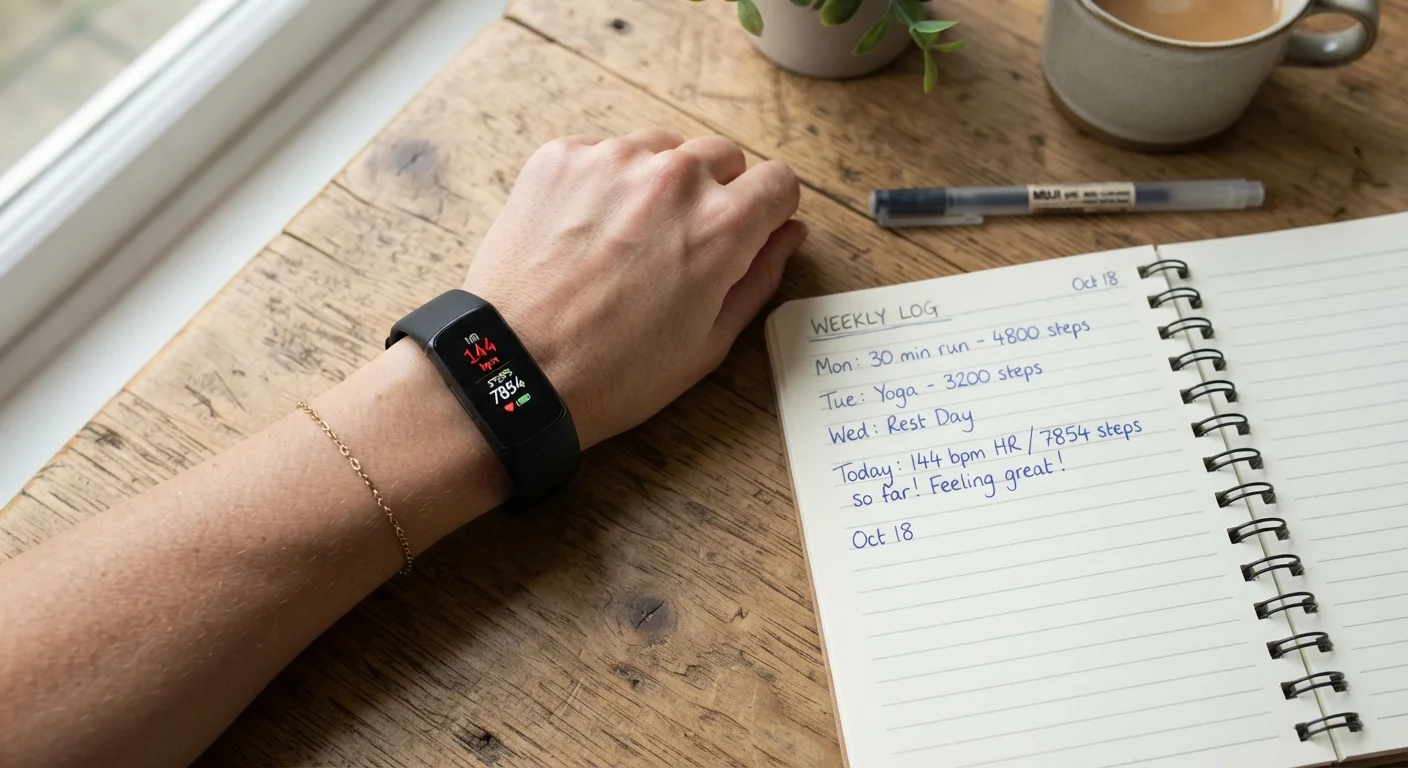
Why Fitness Metrics Matter - and Where They Fall Short
Fitness tracking has moved from specialty labs into everyday life. Wearables, apps, and gym equipment now generate a steady stream of numbers - steps, heart rate zones, estimated calories, sleep scores. These metrics can be genuinely useful for building awareness and guiding decisions, but they are measurements, not verdicts. Understanding what each number actually reflects - and what it doesn't - helps you use data as a tool rather than a source of anxiety.
For a broader foundation in fitness vocabulary, see our fitness terminology reference for plain-language definitions of common terms.
| Typical adult resting heart rate | 60-100 beats per minute (American Heart Association general reference range) |
| Common heart rate zone model | 5 zones based on % of max HR (Widely used in endurance training literature) |
| VO2 max measurement | Measured in mL/kg/min (Standard laboratory and estimated consumer unit) |
| Step count research threshold | Benefits observed below 10,000 steps (Multiple population studies; benefits begin at lower thresholds) |
| HRV usefulness | Most meaningful as a personal trend (Individual baselines vary widely across populations) |
Key Metrics Explained
Resting Heart Rate
Resting heart rate (RHR) is the number of times your heart beats per minute while your body is at rest. For most adults, a typical range falls between 60 and 100 beats per minute, though conditioned individuals often fall below that range. A gradually declining RHR over weeks of consistent training is a reasonable indicator of improving cardiovascular efficiency - but a single reading tells you little on its own. Illness, dehydration, stress, and poor sleep all cause temporary spikes, so trends over time are more informative than any isolated measurement.
Heart Rate Zones
Heart rate zones divide exercise intensity into percentage bands of your estimated maximum heart rate. Training across different zones can support different physiological goals - lower zones tend to be associated with aerobic base building, while higher zones are more demanding and typically sustained for shorter periods. Zone-based training is a reasonable framework, but most consumer devices estimate your maximum heart rate using a generic age-based formula (commonly 220 minus your age), which can vary significantly from your actual physiological maximum. Treat zone guidance as a useful approximation, not a precise prescription.
VO2 Max Estimates
VO2 max represents the maximum rate at which your body can consume oxygen during intense exercise - a recognized marker of cardiorespiratory fitness. Laboratory measurement requires specialized equipment and controlled conditions. Consumer devices estimate VO2 max using heart rate and pace data, which produces a useful directional number but carries meaningful margin of error. Research generally supports VO2 max as a meaningful health indicator, but wearable estimates should be interpreted as relative benchmarks, not clinical values. If your estimated VO2 max trends upward over months of consistent aerobic training, that's a positive signal. For context on how cardiovascular and strength work differ in what they improve, see our cardio vs. strength training overview.
Step Count
Step counting is one of the most accessible and well-studied metrics. Research consistently associates higher daily step counts with health benefits, though the commonly cited target of 10,000 steps originated from a marketing campaign rather than a clinical threshold. Evidence suggests benefits begin accumulating well before that number, particularly for sedentary individuals. Steps are a reasonable proxy for overall movement volume but don't capture exercise intensity or quality.
Heart Rate Variability
Heart rate variability (HRV) measures the variation in time intervals between consecutive heartbeats. Higher HRV is generally associated with good recovery and autonomic nervous system balance; lower HRV can reflect accumulated fatigue or stress. HRV is highly individual - your personal baseline matters far more than population comparisons. It's most useful as a day-to-day recovery signal when tracked consistently over time. See our guide to rest and recovery for how recovery integrates with overall training.
Resting Heart Rate (RHR)
The number of heartbeats per minute recorded when the body is fully at rest. It is a commonly used indicator of baseline cardiovascular function and can shift over time with changes in fitness level.
VO2 Max
The maximum volume of oxygen the body can utilize during sustained, intense exercise. It is widely regarded as a meaningful measure of cardiorespiratory fitness, though consumer device estimates carry significant margins of error.
Heart Rate Variability (HRV)
The fluctuation in time between successive heartbeats. Higher variability is generally associated with good autonomic nervous system balance and recovery status; trends over time are more meaningful than single readings.
Heart Rate Zones
Defined intensity bands expressed as percentages of an individual's estimated maximum heart rate. They are used to structure exercise intensity, though the underlying maximum heart rate estimates are approximations.
Cardiorespiratory Fitness
The capacity of the cardiovascular and respiratory systems to supply oxygen to working muscles during sustained physical activity. It is influenced by both aerobic training and overall lifestyle factors.
Autonomic Nervous System
The part of the nervous system that regulates involuntary functions such as heart rate, digestion, and respiratory rate. Its balance between 'rest and digest' and 'fight or flight' modes is reflected in metrics like HRV.
Using Metrics Effectively Without Over-Relying on Them
Metrics work best when they inform behavior rather than drive it. Obsessing over a single day's numbers - or optimizing metrics at the expense of enjoyment and sustainability - can undermine the habits that actually produce long-term results. Research on exercise adherence consistently points to consistency and intrinsic motivation as the strongest predictors of lasting fitness improvement. Our movement habits article explores the behavioral science behind sustainable exercise in more depth.
A few practical principles for interpreting fitness data:
- Look at trends, not snapshots. A single elevated resting heart rate or low HRV reading is rarely meaningful. Patterns across weeks and months are more instructive.
- Compare yourself to yourself. Population averages and leaderboard comparisons are less useful than tracking how your own numbers shift over time.
- Account for confounding factors. Sleep quality, hydration, stress, caffeine, illness, and even time of measurement all affect most fitness metrics.
- Recognize device limitations. Consumer-grade sensors vary in accuracy across populations, activity types, and body compositions.
Fitness metrics are tools for self-awareness, not diagnostic instruments. If you have questions about specific readings in the context of your health - particularly if you have existing cardiovascular or other medical conditions - consult a qualified healthcare professional rather than relying on wearable data alone.
This article is for general informational and educational purposes only and does not constitute medical advice. Always consult a qualified healthcare professional with questions about your individual health or fitness.