What Shoulder Season Actually Means for Prices
The travel industry uses the term "shoulder season" loosely, which makes it frustrating to pin down actual savings without doing destination-specific research. At its core, shoulder season pricing reflects a simple dynamic: when fewer travelers are competing for the same flights and rooms, suppliers lower prices to fill capacity. But the size of that gap between peak and shoulder rates is not uniform.
For well-established leisure destinations - think European capitals, Caribbean islands, or major US beach markets - the spread between peak and shoulder rates can be substantial. Hotel rates in Barcelona, for example, are generally measurably lower in late October than in July or August. For business-travel-heavy cities like Chicago or Washington D.C., seasonal pricing swings are often less dramatic because demand from business travelers provides a floor year-round.
Understanding what drives destination costs is essential context before assuming shoulder season will make a specific trip affordable.
15-35%
Typical hotel rate reduction in shoulder vs. peak season
General industry estimates vary by destination type; leisure-heavy beach and resort markets tend toward the higher end of this range.
10-30%
Common airfare savings for shoulder season travel
Savings are most pronounced on routes with strong leisure seasonality; business-travel-heavy routes show smaller fluctuations.
2-6 weeks
Typical shoulder season window on either side of peak
The exact width varies widely by destination; some markets have only a brief shoulder period before transitioning to off-season closures.
Where the Savings Show Up - and Where They Don't
Airfare and accommodation are where shoulder season savings are most consistently visible. Airlines adjust fares dynamically based on demand forecasts, so routes with strong leisure-travel seasonality - transatlantic flights to Europe, flights to Caribbean resort airports, domestic routes to ski towns - tend to show more pronounced fare differences between peak and shoulder windows. Hotel rates follow a similar pattern, particularly for independent and boutique properties that adjust pricing more fluidly than large branded chains.
Where savings are less reliable:
- Tours and experiences: Many popular guided tours and activities price by the season, but operators in shoulder season sometimes reduce availability rather than prices, meaning you may have fewer options rather than cheaper ones.
- Dining: Restaurant prices almost never change based on travel season. Your food costs in peak and shoulder season at the same destination will be essentially identical.
- Transportation within the destination: Local transit, taxis, and car rentals respond less to tourist seasonality and more to local supply conditions.
For a fuller picture of what costs don't move with the season, see the hidden costs most travelers overlook when budgeting.
The Real Trade-Offs Travelers Should Weigh
Lower prices in shoulder season often come with real trade-offs that aren't always highlighted in travel guides. Weather is the most obvious: shoulder season by definition sits adjacent to periods when conditions are less favorable. In some destinations - fall in New England, spring in Paris - the trade-off is minor. In others - early June in Southeast Asia, late April in parts of the American Southwest - weather can meaningfully affect what you're able to do.
Crowd levels cut both ways. Fewer tourists can make a trip more enjoyable, particularly at popular sites. But in resort towns that operate on a tight seasonal calendar, shoulder season may mean that the restaurant you researched is closed, the tour operator you wanted has suspended operations, or the hotel pool is drained for maintenance.
Check Attraction Hours Before Finalizing Dates
Some seasonal attractions, guided tours, and resort amenities operate on reduced schedules - or close entirely - during shoulder and off-peak periods. Before locking in travel dates, verify operating hours directly with key attractions or accommodations at your destination. This is especially important for smaller, seasonally dependent towns where services scale sharply with tourist volume.
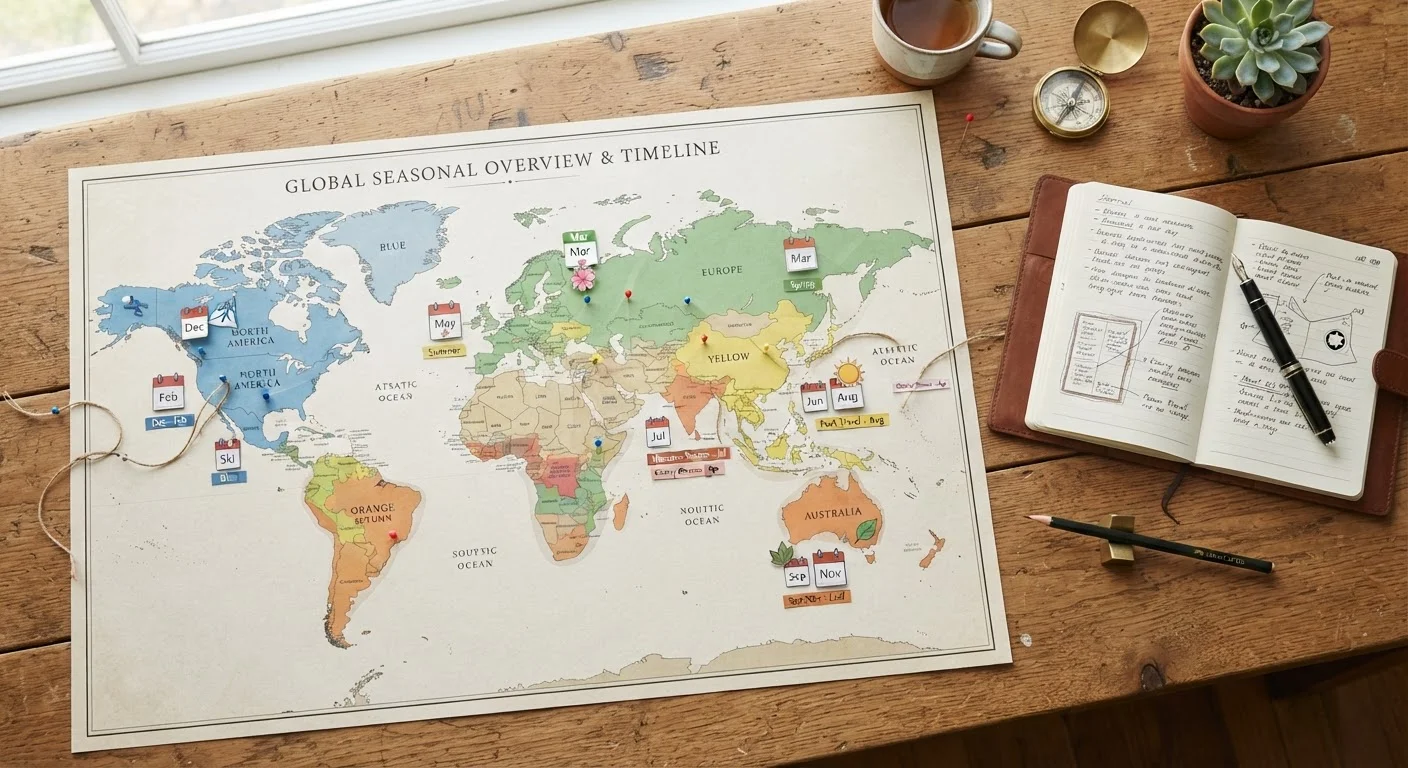
Timing decisions also intersect with climate data in ways worth researching carefully. The article on climate calendars and shoulder season timing provides a useful framework for understanding how seasonal patterns should factor into destination planning before you ever look at prices.
How to Actually Compare Costs Before Booking
The most reliable way to understand shoulder season savings for a specific trip is to do direct date comparisons using real booking data, not averages or industry generalizations. A practical approach:
- Identify your destination's peak window - research when crowds and prices are highest, which is typically driven by climate, school holidays, and local events.
- Map out the shoulder windows on either side and check whether weather, attraction hours, and logistics are still workable for your travel goals.
- Run actual date comparisons for your specific route and accommodation type, comparing peak dates to shoulder dates on the same booking platforms.
- Add up total trip costs - not just the headline flight and hotel numbers - including transportation, activities, and meals, to understand how much the season actually moves your overall budget.
Group travelers have additional complexity to factor in. Splitting costs fairly in group travel becomes especially important when shoulder season savings are unevenly distributed across individual travelers' preferences for accommodation or activities.
For trips outside the US, currency, entry fees, and travel insurance add another layer of variables. International travel budgeting differs meaningfully from domestic planning, and those differences don't disappear in shoulder season.
“Price is what you pay; value is what you get. In travel, the two are rarely the same number - and shoulder season is where that gap becomes most visible to the careful planner.”
— Travel Planning Editorial Team, Editorial collective covering destination research and travel budgeting