What Debt Consolidation Actually Means
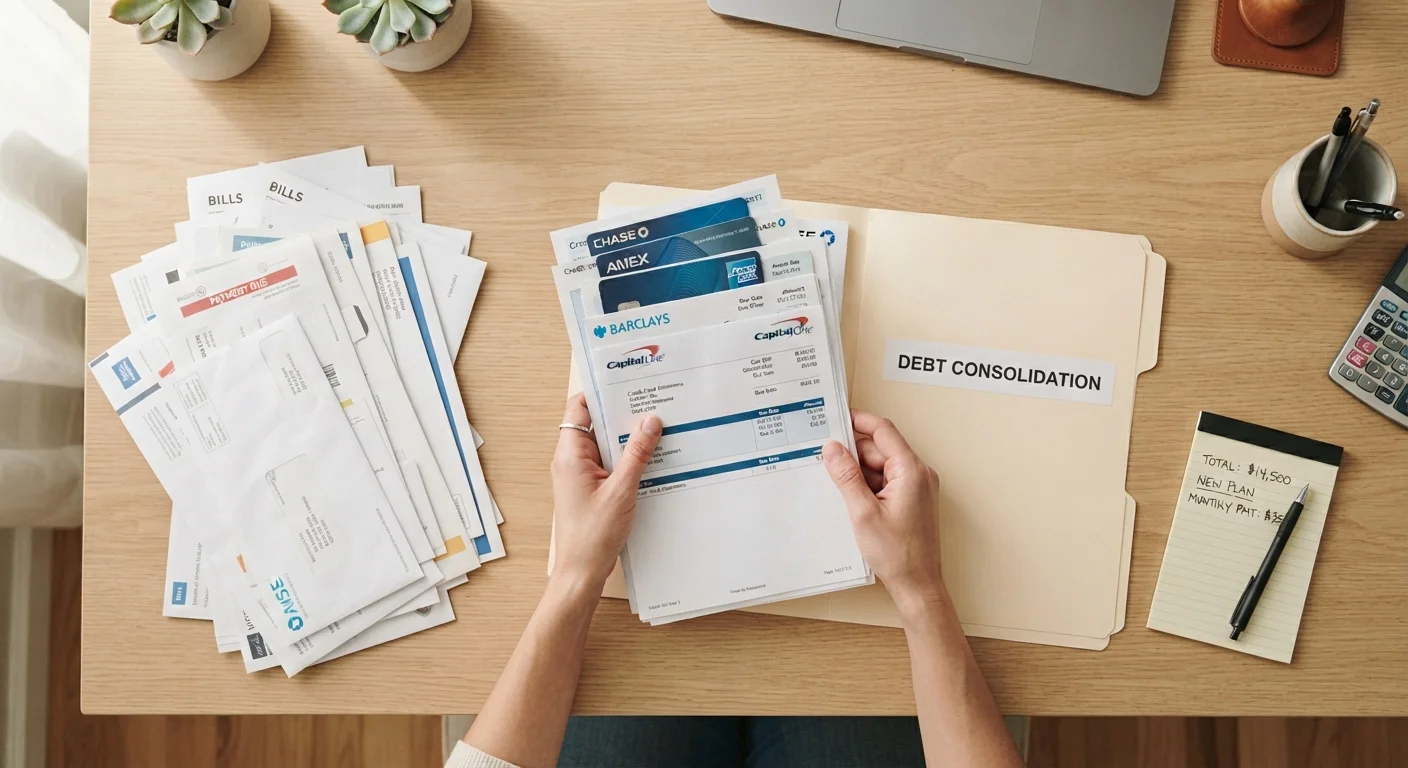
Debt consolidation is the process of combining multiple debts - often credit cards, medical bills, or other unsecured loans - into a single new loan or credit line. The goal is straightforward: replace several monthly payments with one, ideally at a lower interest rate than you were paying across the original accounts.
The most common methods include personal installment loans (often called debt consolidation loans), balance transfer credit cards with a promotional low or zero-percent APR, and home equity loans or lines of credit. Each carries different eligibility requirements, costs, and risks. For a closer look at personal loan mechanics, see how personal loans work and what they cost.
Critically, consolidation does not eliminate what you owe. It restructures it. The balance moves - the debt does not disappear.
Consolidation vs. Debt Settlement: Not the Same
Debt consolidation and debt settlement are often confused but are fundamentally different. Consolidation keeps you current on your obligations and rolls them into a new loan. Debt settlement involves negotiating with creditors to accept less than the full amount owed - a process that typically causes significant credit score damage and may have tax implications on forgiven amounts. This article addresses consolidation only; settlement carries its own separate risk profile.
The Real Advantages
When the numbers work in your favor, consolidation can deliver meaningful benefits:
Simplifies repayment into one monthly payment
Managing a single due date and lender reduces the mental load and lowers the chance of a missed payment triggering a penalty rate or credit score drop.
Can reduce total interest paid over time
If the consolidation rate is meaningfully lower than the weighted average of your existing debts, more of each payment goes toward principal - accelerating payoff.
Fixed repayment timeline creates clarity
Unlike revolving credit card balances that can stretch indefinitely, most consolidation loans have a set term, giving you a defined end date for repayment.
May lower the monthly payment amount
A lower rate, longer term, or both can reduce the required monthly outlay - freeing up cash flow for savings or other obligations.
Could improve credit utilization ratio
Paying off credit card balances with a consolidation loan reduces your revolving utilization rate, which is a significant factor in most credit scoring models.
One area worth noting: if high-interest credit card debt is driving the problem, understanding how compounding interest compounds your balance makes clear why securing a lower rate matters so much.
The Honest Drawbacks
The risks of consolidation are just as real as the benefits, and lenders rarely emphasize them upfront:
Extending the term can increase total cost
A lower monthly payment often comes with a longer repayment period, which may mean paying more in total interest over the life of the loan - even at a lower rate.
Origination fees and closing costs add up
Many personal loans carry origination fees of 1-8% of the loan amount. Balance transfer cards often charge 3-5% of transferred balances. These upfront costs must be weighed against projected savings.
Requires good credit to access the best rates
Borrowers with lower credit scores may only qualify for consolidation loans with rates comparable to - or higher than - their existing debts, eliminating the primary benefit.
Secured options put assets at risk
Home equity loans and HELOCs convert unsecured debt into debt backed by your home. Missing payments on those instruments can ultimately lead to foreclosure.
Does not address underlying spending habits
Without behavioral change, freed-up credit on paid-off cards often gets used again, leaving borrowers with both the consolidation loan and new revolving balances.
Hard credit inquiry can temporarily lower your score
Applying for a new loan or balance transfer card triggers a hard inquiry, which typically causes a small, temporary dip in your credit score - a factor to time carefully.
20%+
Average credit card interest rate in recent years
Federal Reserve data has shown average credit card rates exceeding 20% APR, underscoring why the rate differential in consolidation matters so much.
1-8%
Typical personal loan origination fee range
Consumer Financial Protection Bureau resources note that origination fees vary widely and should be factored into any total-cost comparison.
What Consolidation Cannot Fix
The most common misconception about debt consolidation is that it solves a debt problem. In reality, it only reorganizes it. If the spending patterns, income gaps, or financial habits that created the debt remain unchanged, consolidation often becomes a prelude to more debt - not less.
Borrowers who consolidate credit card balances and then gradually rebuild those balances on the now-empty cards are a well-documented pattern in consumer finance. The result is a consolidation loan plus new credit card debt - a worse position than before.
Consolidation also cannot protect you from job loss, medical emergencies, or other income disruptions that make any fixed payment difficult to maintain. Before consolidating, it is worth asking whether your emergency fund is stable enough to keep payments on track. The article on knowing when to shore up savings before aggressively paying debt explores this tension directly.
For those ready to move forward, building a structured repayment plan is the logical next step after consolidation - or instead of it.
This article is for general informational and educational purposes only and does not constitute personalized financial, legal, or tax advice. Consult a qualified financial professional before making decisions about your specific situation.