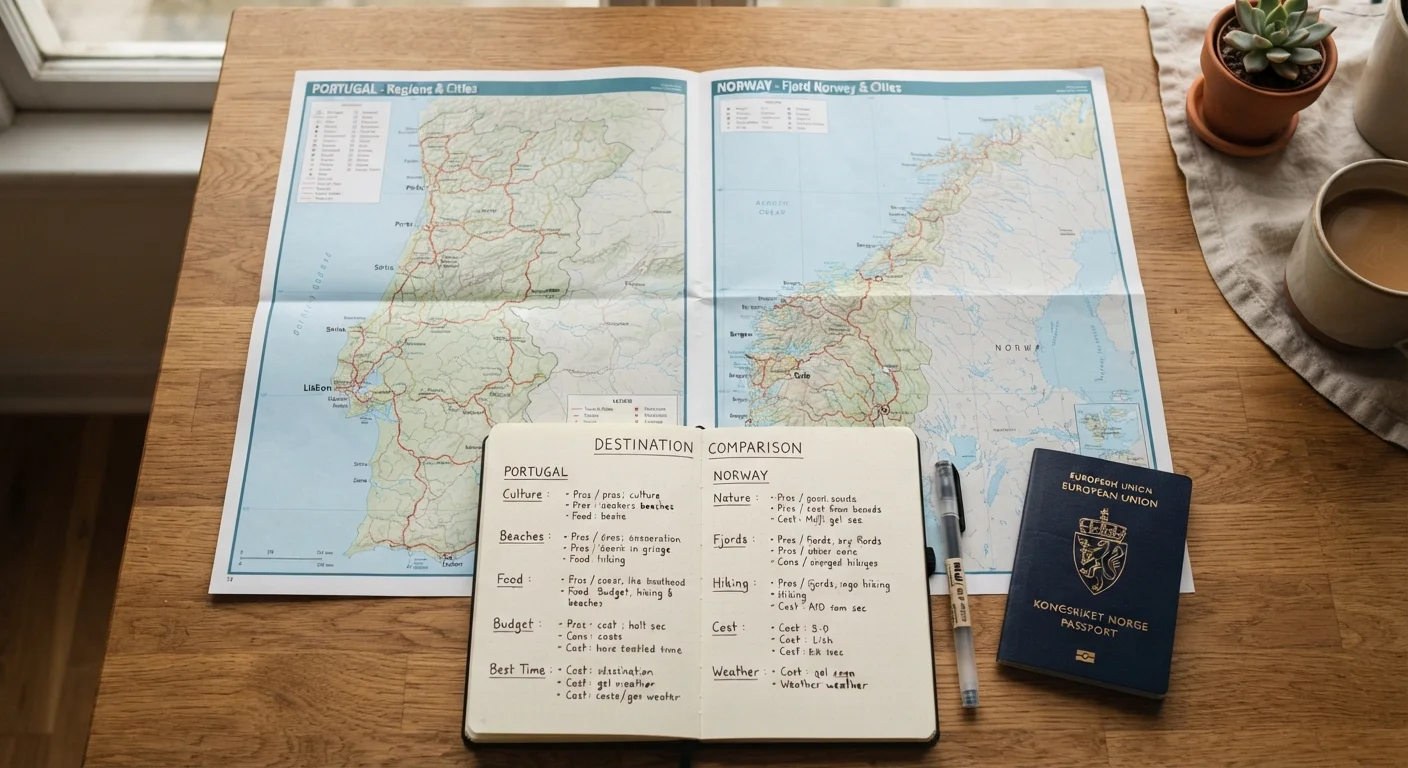
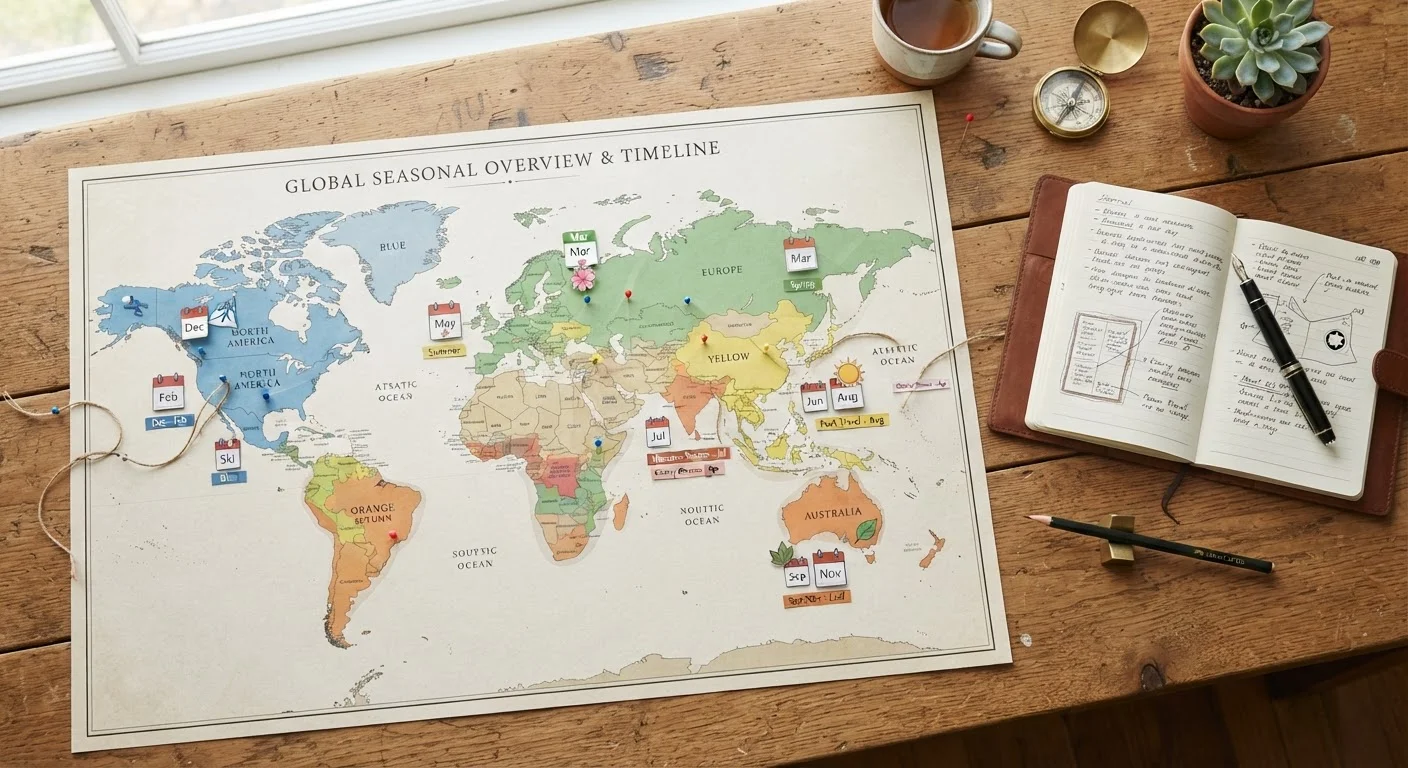
A practical checklist covering safety, visa rules, climate, health requirements, accessibility, and local logistics—verify these before committing to a destination.
Key Takeaways
Entry requirements-including passport validity rules-vary by destination and change without notice; always verify with official government sources.
Travel advisories from the U.S. Department of State provide tiered safety ratings that should factor into every destination decision.
Climate research should account for shoulder seasons and monsoon cycles, not just average temperatures.
Health requirements such as vaccinations or medication precautions vary by region and traveler profile.
Accessibility, local infrastructure, and payment logistics are often overlooked until they create problems on the ground.
Completing this checklist before booking-not after-gives you the information needed to compare destinations fairly.
Why a Structured Checklist Beats Casual Research
Most travelers research destinations the same way: they read a few blog posts, scroll social media, and check flight prices. That approach surfaces highlights but routinely misses the details that determine whether a trip actually works-entry restrictions, health requirements, seasonal conditions, or infrastructure gaps that only become apparent after booking.
A structured checklist forces you to evaluate every category before you commit. It also creates a consistent framework for comparing multiple destinations side by side. Our destination evaluation guide breaks down the full range of factors that shape a travel experience; this checklist puts those factors into an actionable sequence you can run through in a single sitting.
Work through each group below for every destination you're seriously considering. If a destination fails multiple checks, that's useful data-not a reason to abandon the trip, but a signal to dig deeper or recalibrate expectations. For readers still narrowing their options, building a destination shortlist first will make this checklist more focused and efficient.
Entry Requirements
Confirm your U.S. passport is valid for at least six months beyond your intended return date, as many countries enforce this rule at the border.Must
Check whether your destination requires a visa, visa-on-arrival, or electronic travel authorization (ETA) for U.S. passport holders, and verify current processing times.Must
Review the U.S. Department of State's country information page to identify any passport or entry restrictions specific to your destination.Must
Verify whether proof of onward travel or sufficient funds is required for entry, as immigration officers in some countries request these documents.Should
Safety and Travel Advisories
Check the U.S. Department of State travel advisory level (1-4) for your destination and read the specific reasons behind any elevated rating.Must
Identify which regions or neighborhoods within the destination have distinct safety profiles, since country-level advisories may not reflect local variation.Must
Enroll in the Smart Traveler Enrollment Program (STEP) so the nearest U.S. embassy can contact you in an emergency.Should
Research common scams, petty crime patterns, or high-risk situations specific to your destination type (e.g., tourist-heavy city centers, remote trekking areas).Should
Health and Vaccination Requirements
Check the CDC's destination page and consult a healthcare provider about recommended or required vaccinations well in advance of your travel date.Must
Verify whether your destination requires proof of specific vaccinations (such as yellow fever) as a condition of entry.Must
Research whether prescription medications you take are legal in your destination country, as some common drugs are controlled or prohibited abroad.Must
Assess whether travel health insurance or medical evacuation coverage is advisable given the destination's healthcare infrastructure.Should
Identify the nearest medical facilities to your planned accommodation and how medical payment typically works for foreign visitors.Nice to have
Climate and Timing
Review the destination's historical climate data for your travel window, including average temperature, precipitation, and humidity.Must
Check whether your travel dates fall within a monsoon, hurricane, or cyclone season that could disrupt transportation or access to key areas.Must
Determine whether peak or shoulder season conditions align with your priorities for crowd levels, pricing, and activity availability.Should
Verify that specific attractions, trails, or seasonal events you plan to visit are open and accessible during your travel window.Should
Local Logistics and Infrastructure
Research primary transportation options within the destination-public transit, rideshare availability, rental vehicles-and whether an international driving permit is required.Must
Confirm whether your credit and debit cards are widely accepted or whether cash is the primary transaction method, and identify reliable ATM access.Must
Check mobile network compatibility and data roaming options, or identify local SIM card availability for your destination.Should
Research electrical outlet types and voltage standards so you can bring appropriate adapters or converters.Nice to have
Cultural and Legal Considerations
Review local laws that differ meaningfully from U.S. norms-including rules around photography, dress codes in religious sites, or alcohol consumption in public.Must
Identify cultural customs around tipping, bargaining, or greeting practices so you can engage respectfully and avoid unintentional offense.Should
Check whether any planned activities-such as drone use, certain wildlife interactions, or off-road driving-require permits or are restricted.Should
Tools and Sources to Run This Checklist Effectively
The checklist is only as reliable as the sources behind it. Official government portals are the authoritative starting point for entry requirements, advisories, and health guidance-third-party travel sites can lag behind rule changes by days or weeks.
Required
U.S. Department of State - Travel.state.gov
Primary source for travel advisories, country entry requirements, visa information, and passport validity guidance for U.S. travelers.
Required
CDC Travelers' Health - wwwnc.cdc.gov/travel
Authoritative source for destination-specific vaccination recommendations, disease risks, and health precautions for international travel.
Required
Smart Traveler Enrollment Program (STEP)
Free U.S. government service that registers your trip with the nearest embassy so you can receive emergency alerts and assistance abroad.
Required
Destination country's official embassy or consulate website
Confirms visa requirements, entry documentation, and any bilateral agreements or restrictions specific to U.S. passport holders.
Optional
Research notebook or digital checklist app
Documents findings for each destination so you can compare options side by side rather than relying on memory.
Once you've verified the factual requirements, broaden your research to cover practical logistics: payment infrastructure, transportation options within the destination, and whether your planned activities align with local conditions during your travel window. The climate and shoulder season guide is a useful companion for the timing dimension. After completing destination research, move to financial preparation using the pre-trip budget checklist to confirm you've accounted for all cost categories.
Entry Rules Change-Always Verify at the Source
Visa policies, health documentation requirements, and travel advisories can change with little public notice. Information found on travel blogs or booking platforms may be outdated by weeks or months. Before finalizing any booking, check official government sources directly-both the U.S. State Department and the destination country's official immigration or embassy website. Common misconceptions about passport and visa rules are covered in depth in our passport and visa misconceptions guide.
This checklist is for general informational and planning purposes only. Entry requirements, health regulations, travel advisories, and local conditions change frequently. Always verify critical details-including visa rules, vaccination requirements, and safety advisories-directly with official government sources and your healthcare provider before making travel commitments.
Travel Planning Editorial Team is the collective byline for our editorial team and contributor network. Articles published under this byline or an editorial pen name are researched, written, and reviewed according to our editorial standards for clarity, consistency, and independence before publication.
The content provided on our blog site traverses numerous categories, offering readers valuable and practical information. Readers can use the editorial team’s research and data to gain more insights into their topics of interest. However, they are requested not to treat the articles as conclusive. The website team cannot be held responsible for differences in data or inaccuracies found across other platforms. Please also note that the site might also miss out on various schemes and offers available that the readers may find more beneficial than the ones we cover.