
What Mental Wellness Apps Actually Are
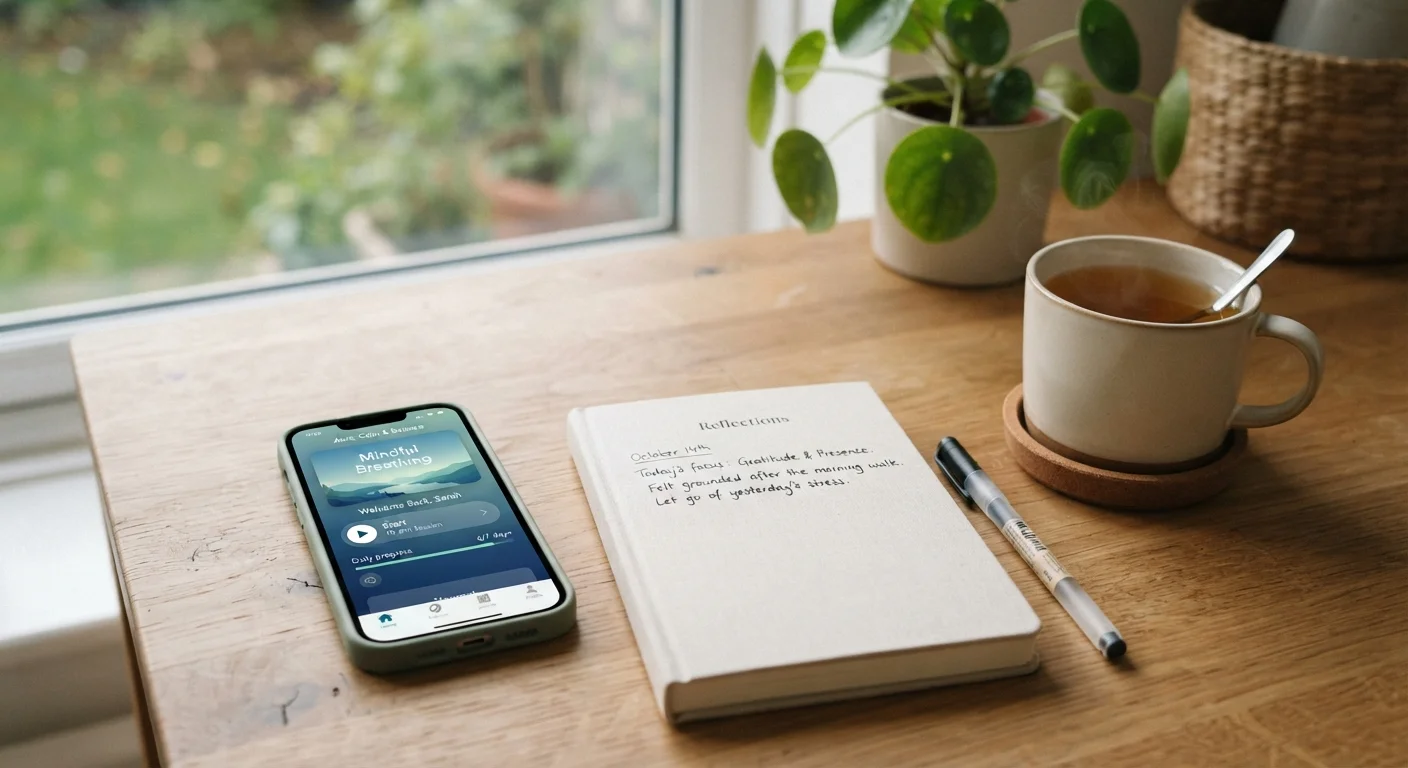
Mental wellness apps are software tools - typically for smartphones - designed to support emotional wellbeing through features like guided meditation, mood journaling, breathing exercises, cognitive behavioral technique (CBT)-based prompts, and sleep support. They are not clinical applications, and the vast majority are not regulated as medical devices.
If you're new to thinking about mental health intentionally, our practical introduction to mental wellness covers useful foundational concepts before diving into any specific tool or technique.
These apps sit in a distinct category: consumer wellness products. That distinction shapes both what they can reasonably offer and where their limits begin.
The Real Advantages These Tools Offer
For many users, the appeal of mental wellness apps is straightforward - they lower the barriers that often prevent people from engaging with self-care at all.
Available anytime, anywhere without scheduling
Apps remove logistical friction - a guided breathing exercise or mood check-in is accessible during a lunch break, on a commute, or late at night when other resources aren't available.
Low or no cost compared to therapy
Many apps offer free tiers with substantial features, making foundational wellness practices more financially accessible for people who cannot afford regular therapy sessions.
Useful for building consistent daily habits
Reminders, streaks, and structured programs can help users establish routines around mindfulness or journaling - consistency being one of the most important factors in behavioral change.
Reduces stigma around engaging with mental health
For some users, a private, low-stakes app interaction is a more comfortable first step toward mental wellness than seeking professional help, lowering the threshold for engagement.
Provides psychoeducation and self-awareness tools
Mood tracking and CBT-informed content can help users recognize patterns in their emotional states, building self-awareness that is genuinely useful even outside of the app context.
Used consistently, apps can contribute meaningfully to a structured daily routine. Our guide on building a daily mental wellness routine explores how small, repeated behaviors accumulate into lasting habits - and apps can serve as one practical layer of that structure.
The Meaningful Limitations You Should Know
The same convenience that makes these apps appealing also comes with important trade-offs. Understanding these limitations helps set realistic expectations.
Cannot diagnose or treat mental health conditions
Apps are not licensed clinical tools. They cannot assess, diagnose, or provide treatment for conditions such as depression, anxiety disorders, or PTSD - tasks that require qualified professional evaluation.
Evidence base varies widely across platforms
While some features like mindfulness exercises have established research support, many specific apps have limited or no independent clinical validation. Marketing claims often outpace the evidence.
Privacy and data practices are inconsistent
Mental health-related data is sensitive, and app privacy policies vary significantly. Some platforms share or sell user data; it is worth reading privacy disclosures carefully before use.
May delay appropriate professional care
Relying on an app when symptoms are serious risks delaying proper diagnosis and treatment. This can be particularly harmful for conditions that worsen without timely clinical intervention.
Engagement tends to drop off quickly
Research on digital health tools consistently finds that user engagement decreases sharply after initial weeks. Without sustained use, the potential benefits diminish significantly.
Lacks the human therapeutic relationship
The therapeutic alliance - the relationship between a client and a qualified therapist - is itself a significant factor in effective mental health treatment, something no app can replicate.
When to Seek Professional Support Instead
Apps are not appropriate as a primary intervention for clinical mental health conditions. If you are experiencing persistent low mood, significant anxiety, thoughts of self-harm, or symptoms that interfere with daily functioning, please speak with a licensed mental health professional. Your primary care provider can be a good starting point for a referral. In an emergency, contact a crisis line or emergency services.
It's also worth noting that apps are not a replacement for human connection, which research consistently links to mental wellbeing. See what the research shows about social connection and mental health for a broader picture of why relationships matter alongside any digital tool.
How to Use Apps as Part of a Broader Approach
The most grounded way to think about mental wellness apps is as one component of a wider toolkit - not the whole solution. Many features found in these apps, such as mindfulness and meditation practices, have standalone merit independent of any platform. Understanding the underlying concepts can help you evaluate whether a given app is actually teaching those concepts well.
10,000+
Mental health apps currently available
Estimates from health technology researchers suggest there are over 10,000 mental health-related apps available across major app stores, with quality and evidence base varying widely.
~50%
Users who stop engaging within weeks
Studies on digital health tool engagement generally find that roughly half of users disengage within the first few weeks of downloading a wellness app.
If you're navigating unfamiliar terminology while exploring these tools, the mental wellness glossary defines common terms - from cognitive distortions to nervous system regulation - in plain language.
This article is for general informational and educational purposes only and does not constitute medical or mental health advice. If you are experiencing significant emotional distress, symptoms of a mental health condition, or a crisis, please consult a qualified mental health professional or contact an appropriate support service.