
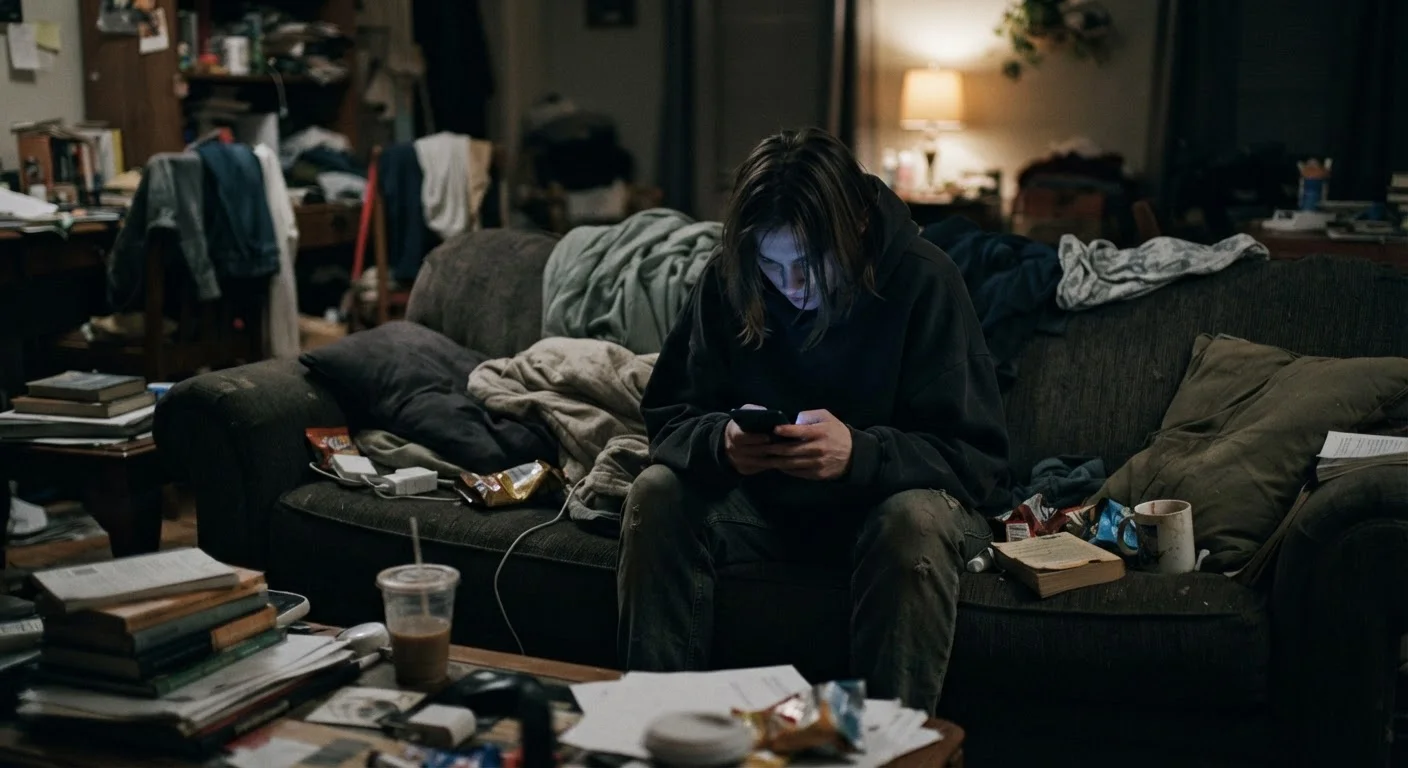
When Coping Becomes a Problem
Not every habit people reach for during stressful times is genuinely helpful. Coping strategies exist on a wide spectrum - some build long-term resilience, others offer temporary relief while quietly reinforcing the very difficulties they're meant to ease. Understanding the difference matters, because many counterproductive patterns feel entirely reasonable in the moment.
This isn't about judgment. Most maladaptive coping habits develop for understandable reasons and often worked at some earlier point in life. The concern arises when these patterns become automatic defaults that prevent emotional processing, erode relationships, or interfere with daily functioning. For a broader look at how everyday routines can chip away at emotional strength, see our article on everyday habits that quietly undermine emotional resilience.
This article is for general informational purposes only and is not a substitute for professional mental health advice. If you are experiencing significant emotional distress, please consult a qualified mental health professional.
Using avoidance to manage anxiety or discomfort, such as putting off difficult conversations, skipping situations that feel threatening, or staying busy to avoid thinking.
Why it happens: Avoidance provides immediate relief, which is powerfully reinforcing. The distress associated with a situation temporarily drops, so the brain learns that avoidance "works."
Suppressing or pushing away difficult emotions rather than acknowledging them, sometimes called emotional numbing or bottling feelings up.
Why it happens: Many people are taught, directly or indirectly, that expressing negative emotions is a weakness or a burden to others. Suppression feels like control.
Using excessive work or productivity as a way to escape emotional difficulty, to the point where rest and relationships are consistently sacrificed.
Why it happens: Overwork is socially rewarded and framed as virtue, making it one of the harder maladaptive patterns to recognize. It also provides genuine distraction and a sense of control.
Reassurance-seeking in ways that maintain rather than reduce anxiety, such as repeatedly checking in with others for confirmation that everything will be okay.
Why it happens: Reassurance offers short-term relief from uncertainty. However, it often prevents people from developing their own tolerance for ambiguity, keeping anxiety levels higher overall.
Withdrawing from social contact as a default response to stress, even when connection is something that would genuinely help.
Why it happens: Stress often reduces the perceived energy needed for social interaction. Isolation can feel restful but quickly reinforces low mood and a sense of disconnection.
Moving Toward Healthier Responses
Identifying a counterproductive coping pattern doesn't mean you need to overhaul your entire approach to stress overnight. Change tends to be more effective when it's gradual and built around understanding why a habit formed in the first place. Curiosity is a more useful starting point than self-criticism.
Some Patterns Can Escalate Over Time
Counterproductive coping strategies rarely stay static. What begins as occasional avoidance or emotional suppression can solidify into deeply ingrained habits that become harder to shift without support. If a coping pattern is affecting your relationships, work performance, or physical health, it's worth taking seriously. Please consult a qualified mental health professional if you're concerned.
Many people find it useful to keep a brief log of when and why they reach for certain coping behaviors. Patterns that become visible in writing are easier to examine objectively. From there, the goal is to experiment with alternative responses - not to achieve perfection, but to expand your options.
If you've noticed several of the patterns described here and they've persisted despite your efforts to change them, speaking with a therapist or counselor is a worthwhile next step. It's also worth challenging assumptions you might hold about seeking that kind of support. Our piece on widely held beliefs about therapy that don't hold up to scrutiny addresses many common hesitations grounded in myths rather than evidence.
Coping is a skill, and like any skill, it can be refined. Recognizing when a strategy has stopped serving you is not a failure - it's information.
~1 in 5
US adults experience a mental illness annually
According to the National Institute of Mental Health, approximately one in five US adults lives with a mental illness in any given year, underscoring how common emotional difficulty is.
57%
People who don't seek mental health treatment
The Substance Abuse and Mental Health Services Administration (SAMHSA) has consistently found that the majority of adults with mental health needs do not receive treatment in a given year.