
Why Desk-Bound Days Demand a Deliberate Strategy
For millions of US adults, a typical workday means six to nine hours seated in front of a screen. Public health research has consistently linked extended sedentary time to elevated risks of cardiovascular issues, metabolic disruption, and musculoskeletal discomfort - independent of whether a person exercises outside of work. In other words, an evening gym session does not fully cancel out eight unbroken hours of sitting.
The encouraging counterpoint is that breaking up sitting time - even with brief, low-intensity movement - appears to produce meaningful benefits. Research published in peer-reviewed exercise science journals suggests that interrupting sedentary periods every 30 to 60 minutes with short bouts of activity can support blood sugar regulation, circulation, and energy levels. The goal isn't to turn your office into a gym; it's to reduce the length of uninterrupted sedentary stretches.
If you're thinking about building longer-term movement habits beyond the workday, what research says about sustainable movement habits is a useful companion read.
Consistency Beats Intensity for Desk Workers
You don't need vigorous exercise to offset sedentary work time. Research in exercise science consistently shows that frequent, low-intensity movement distributed throughout the day produces measurable physiological benefits. A two-minute walk every hour is a realistic, evidence-informed target for most office workers.
What You'll Need Before You Start
Getting started requires very little equipment. The more important preparation is environmental and behavioral - setting up your workspace and schedule so movement becomes the path of least resistance.
What you will need
Step-by-Step: Building Movement Into Your Workday
The following steps are designed to layer on top of a standard office or remote-work schedule. Start with one or two and add others as they become habitual. Consistency over time matters more than doing every step perfectly from day one.
Audit your current sitting patterns
Before changing anything, spend one or two days noticing how long you typically sit without interruption. You don't need a wearable tracker - a simple note in your phone or a tally sheet on your desk works. Identify the longest unbroken stretches and any natural break points (meetings, lunch, calls) you could leverage.
Set a movement reminder every 45-60 minutes
Use your phone's alarm, a calendar app, or a free browser extension to create a repeating reminder every 45 to 60 minutes during your core work hours. When the reminder fires, the goal is simply to stand and move for two to five minutes - not to complete a workout. Walking to a water fountain, doing gentle shoulder rolls, or standing and shifting weight all count.
Habit-stack movement onto existing anchors
Identify three to five things you already do every workday without thinking: brewing coffee, starting a meeting, sending a daily report, eating lunch. Attach a small movement behavior to each. For example: walk a short loop of your floor or building before every meeting, or do ten standing calf raises while waiting for the coffee maker.
Habit-stacking works because it borrows the automaticity of an established behavior, reducing the decision-making load for the new one.
Use transitions actively
Commutes, lunch breaks, and the time between tasks are underused movement opportunities. Walking during a phone call, taking the stairs instead of the elevator, or walking a longer route to the restroom adds up across a full day without requiring dedicated time blocks. Even two-minute walks repeated five times accumulates ten minutes of movement you didn't previously have.
Adjust your workspace to lower movement barriers
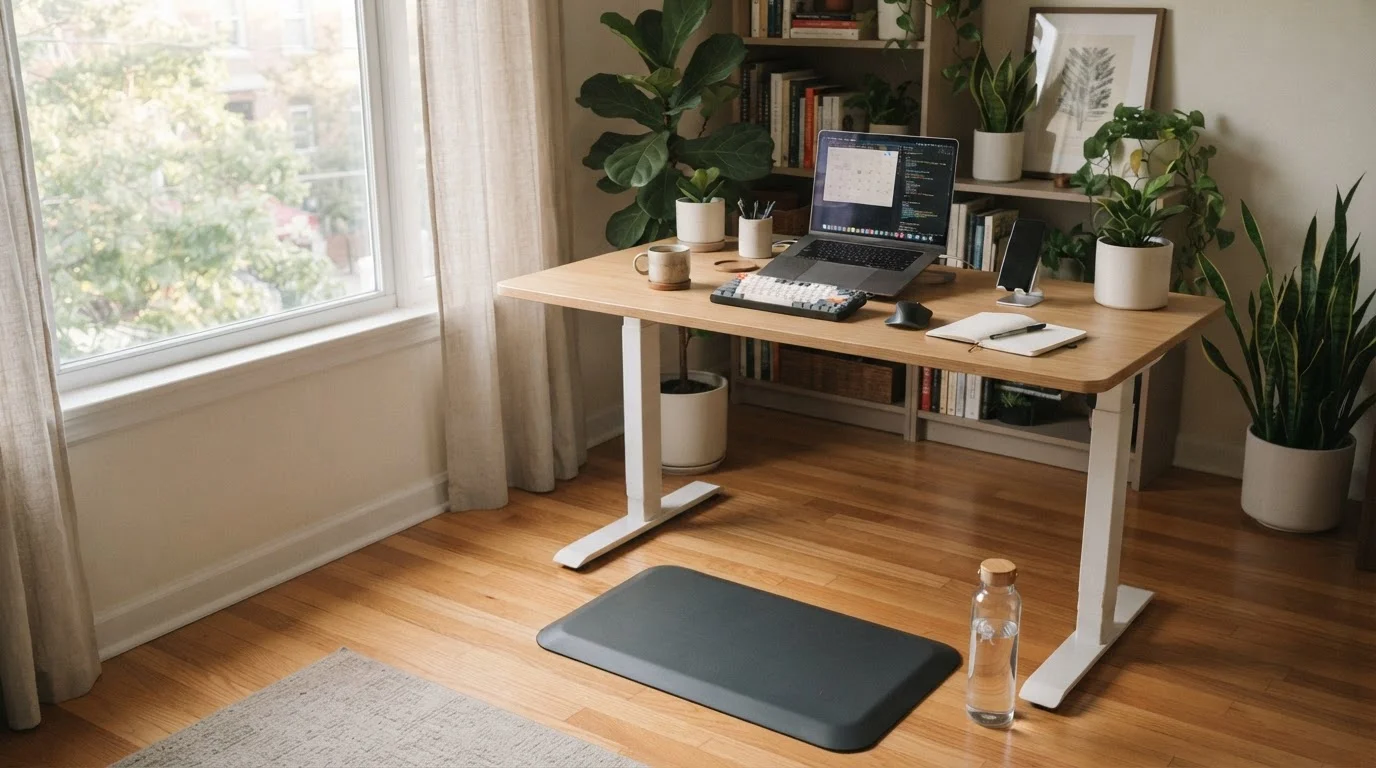
Small environmental changes make movement easier to initiate. Consider positioning a printer, water bottle refill station, or waste bin slightly further from your desk. If your workplace permits it, a standing mat near your workstation makes alternating between sitting and standing more comfortable. Position items you reach for frequently - a notebook, a charger - just far enough to require standing up.
These are not replacements for deliberate movement breaks, but they reduce the accumulated inertia of an unchanging seated position.
Track and adjust weekly
At the end of each week, take two minutes to assess what worked and what didn't. Which habit stacks held? Which reminders got dismissed? Adjust the timing, frequency, or type of movement based on what fits your actual schedule - not an idealized version of it. Small, sustainable adjustments compound over weeks and months into a substantially more active baseline.
Once you've established a workday movement routine, you may find it easier to extend that momentum into a more structured fitness plan. Building a weekly exercise routine from zero offers a practical framework for doing exactly that.
Common Pitfalls and How to Avoid Them
The most common reason desk workers abandon movement routines isn't lack of motivation - it's friction. When moving requires more effort than staying put, staying put wins. A few practical safeguards help:
- Don't rely on memory alone. Phone alarms, calendar reminders, or browser-based timer tools remove the cognitive burden of remembering to move.
- Avoid all-or-nothing thinking. Missing a break doesn't mean the day is lost. Resume your routine at the next natural opportunity.
- Start smaller than feels necessary. A two-minute walk feels almost trivially easy - which is exactly why it gets done. Gradually extend duration as the habit solidifies.
The same principle of habit-stacking that makes workday movement stick applies equally to other goals. If you're also trying to carve out time for learning or personal development, building a personal learning plan around a full-time schedule takes a similar approach to fitting new habits into a busy week.
Pain or Discomfort Warrants Professional Guidance
If you experience pain, joint discomfort, or significant fatigue during or after brief movement breaks, do not push through it. These symptoms may indicate an underlying musculoskeletal issue that warrants assessment by a physiotherapist, occupational health professional, or physician. General movement guidance is not a substitute for individualized clinical care.
This article is for general informational purposes only and does not constitute medical advice. If you have a health condition that affects your ability to exercise or move, consult a qualified healthcare professional before making changes to your activity level.