
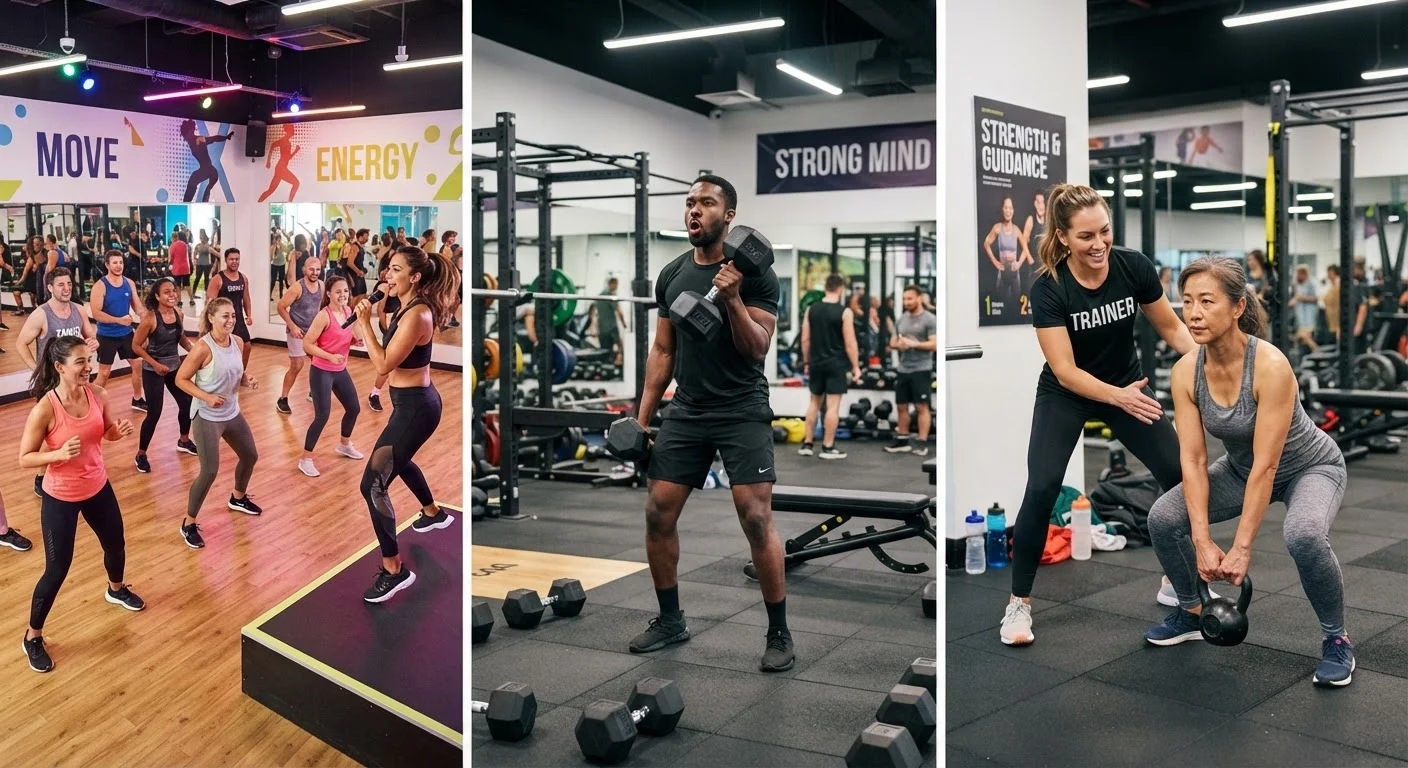
Why Format Matters as Much as the Workout Itself
When people struggle to stick with exercise, the reason is often not a lack of willpower - it is a mismatch between their chosen format and the way they actually live and learn. A highly structured person may thrive in a personal training program; a social exerciser may find solo sessions dull and easy to skip.
Choosing the right format is a practical decision that affects consistency, safety, and long-term progress. The comparison below examines three common approaches - group classes, solo workouts, and personal training - across criteria that matter most to everyday exercisers. Think of this as a decision-making framework, not a prescription. For any health-related decisions specific to your situation, consulting a qualified healthcare or fitness professional is always a sound step.
| Group Classes | Solo Workouts | Personal Training | |
|---|---|---|---|
| Cost | Low to moderate (membership or drop-in) | Low (gym membership or free outdoors) | High (per-session fee) |
| Flexibility of Schedule | Fixed class times | Fully flexible | Depends on trainer availability |
| Individualized Programming | None - same workout for all | Self-directed | Fully tailored to you |
| Form Feedback | General cues; limited individual correction | None unless self-recorded | Continuous, real-time correction |
| Motivation Support | High - group energy and instructor | Self-motivated required | High - structured accountability |
| Suitable for Beginners | Moderate - pace can be overwhelming | Low without guidance | High - safest starting point |
| Requires Prior Knowledge | Low - instructor leads | Moderate to high | Low - trainer designs everything |
Group Classes: Energy, Structure, and Community
Group fitness classes - whether in-person at a gym or streamed live online - deliver a pre-designed workout led by a certified instructor. The format provides built-in accountability: a scheduled time, a social environment, and an instructor cueing form and pacing throughout.
Where group classes shine: Research consistently links social support to exercise adherence. Showing up for others - or simply alongside them - can override the internal debate many people have before a solo session. The instructor selects exercises and manages rest periods, removing the cognitive burden of planning a workout from scratch.
Where they fall short: An instructor managing twelve to thirty participants cannot provide individualized form corrections or modify programming for a specific injury or goal. For beginners who are unsure of foundational movement patterns, a group setting can mean practicing imperfect form at pace - which carries some risk over time.
Mixing Formats Is a Legitimate Strategy
Many exercisers find that combining formats yields the best results. For example, attending two group classes per week for community and consistency, while fitting in one or two solo sessions for flexibility, addresses both social accountability and schedule demands. Personal training does not have to be ongoing - even a short block of sessions to learn technique can pay dividends across years of independent training.
Solo Workouts: Flexibility, Autonomy, and Self-Reliance
Training on your own - whether at a gym, at home, or outdoors - is the most flexible format available. You set the schedule, choose the exercises, manage intensity, and move at your own pace. Over time, this autonomy builds body awareness and the practical knowledge to sustain fitness independently.
Where solo training excels: It fits irregular schedules, requires no class registration, and can be adapted instantly to how you feel on a given day. For experienced exercisers with established technique, solo training is often highly efficient.
Where it demands more from you: Without external structure, motivation has to come from within - and programming knowledge matters. Beginners who train alone without any guidance may plateau quickly, avoid exercises they find difficult, or unknowingly repeat movement patterns that create imbalance. If you are building your first routine, a structured starting point helps enormously. See our guide to building a weekly exercise routine from zero for a practical framework.
Personal Training: Precision, Feedback, and Accelerated Learning
Working one-on-one with a certified personal trainer provides something neither of the other formats can fully replicate: real-time, individualized feedback on your specific movement, goals, and limitations. A qualified trainer assesses your starting point, designs a progressive program, and adjusts it session by session based on your response.
Where personal training has the clearest advantage: For those returning from injury, managing a chronic condition, or learning complex movements (such as Olympic lifts or rehabilitation exercises), expert eyes significantly reduce the risk of harm. It also suits people whose goals require precise progression - competitive athletes, those preparing for a physical event, or individuals with specific body composition targets.
The trade-off is cost and access. Personal training is the most expensive format on a per-session basis and requires scheduling around the trainer's availability. Some people find the accountability of a paid appointment motivating; others find it financially unsustainable long-term. Sessions are most impactful when the trainer holds a recognized certification and has experience relevant to your goals - always verify credentials before committing.
This article provides general fitness information for educational purposes and does not constitute medical advice. Always consult a qualified healthcare provider or certified fitness professional before beginning or substantially changing an exercise program, particularly if you have any existing health conditions or injuries.