What You're Actually Paying For
When adults consider online courses, the instinct is often to treat price as a quality signal - the more expensive, the better. That framing misses what you're actually purchasing. In online learning, cost typically reflects a bundle of specific features: graded assessments, instructor feedback, peer cohorts, and verifiable certificates. If you don't need those features, you may be paying a premium for things that won't advance your goal.
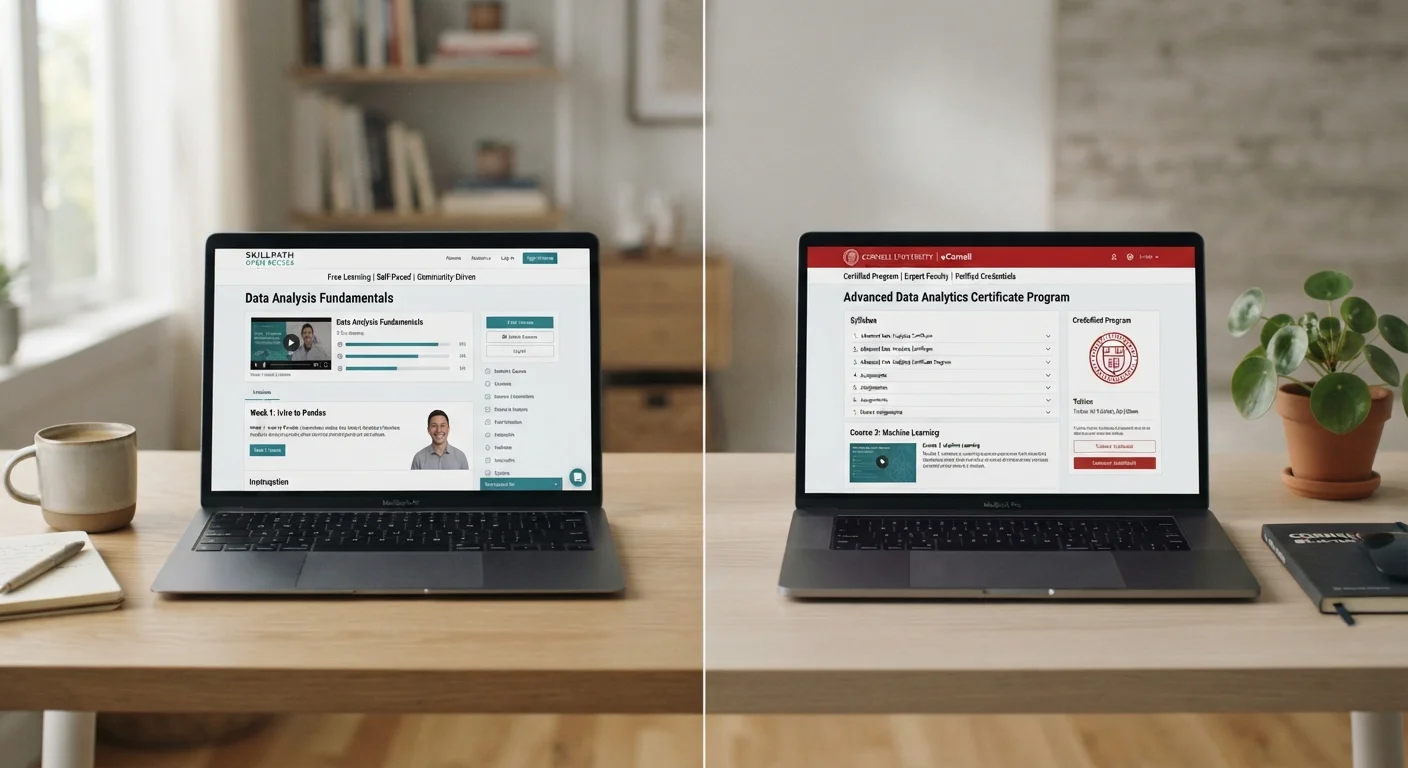
Free courses, particularly those offered through established platforms affiliated with universities or professional organizations, frequently draw on the same content as their paid equivalents. The meaningful difference is usually what surrounds the content - not the content itself. Before evaluating any course, it's worth asking: which of these add-ons do I actually need?
For a deeper look at how to evaluate course structure and instructor credentials before committing, see our pre-enrollment checklist.
Where Free Courses Hold Up Well
Free courses are genuinely strong in several situations:
- Exploration and orientation: If you're deciding whether a field interests you before investing hundreds of dollars, a free introductory course lets you test that before committing.
- Supplementing existing expertise: Professionals updating specific skills or learning adjacent tools often don't need certification - they need the knowledge itself.
- Self-directed learners with strong internal motivation: Without external deadlines or accountability structures, completion depends heavily on the learner. For those who are genuinely self-driven, the absence of paid scaffolding isn't a barrier.
The limitation is consistency - quality among free offerings varies significantly, and without curated review, it can be difficult to distinguish a rigorous course from one that's superficial. This is where applying a structured evaluation lens, as outlined in our skills-based vs. credential-focused comparison, becomes especially useful.
Audit Before You Buy
Many paid platforms allow you to audit course content for free before purchasing full access. Spending a week with the free audit lets you assess the instructor's teaching style, course pacing, and content depth before committing financially. If the platform doesn't offer auditing, look for a syllabus or sample lecture before enrolling.
When Paying Genuinely Changes the Outcome
Paid courses deliver clearer advantages in a narrower set of circumstances:
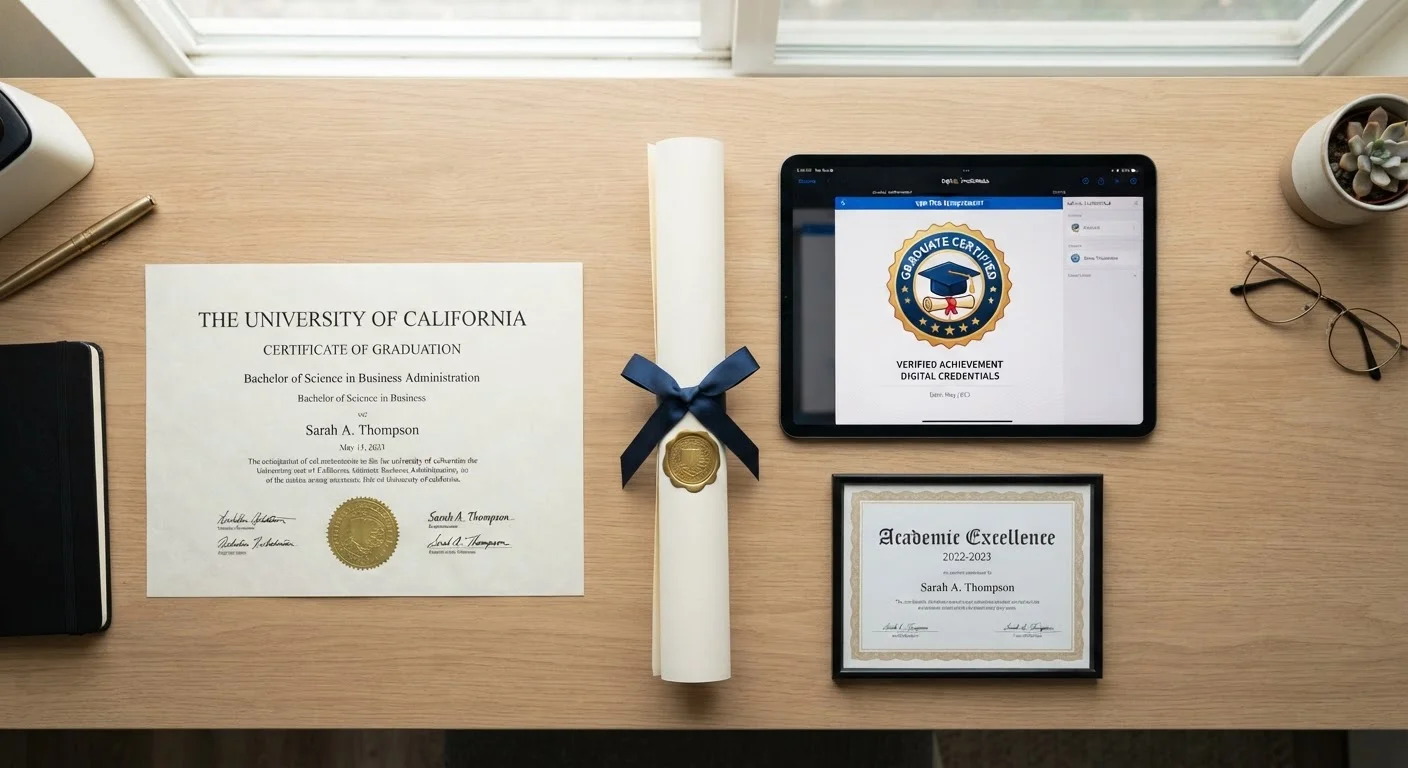
- Credential-dependent career moves: Some employers, hiring managers, and licensing bodies specifically look for completed, verifiable programs. In these cases, a certificate from a recognized provider carries weight that an audit completion does not.
- Structured accountability: Research on online learning consistently points to completion rates as a challenge. When a financial stake and cohort-based deadlines are present, learners are more likely to finish. For those who know they struggle with self-paced formats, the structure may be worth the cost.
- Access to instructor feedback: For complex skills - writing, data analysis, coding - being assessed by an expert, rather than auto-graded, can meaningfully accelerate progress.
It's also worth recognizing that paid doesn't always mean expensive. Many certificate programs on major platforms cost far less than a traditional course, and some employers reimburse professional development expenses. Before ruling out paid options, check whether your employer offers learning stipends. And before assuming paid is necessary, consider whether the credential itself is actually required - or just assumed to be.
| Free Courses | Paid Courses | |
|---|---|---|
| Cost | No financial outlay | Ranges from modest to substantial |
| Credential / Certificate | Usually audit-only or no credential | Verified certificate typically included |
| Instructor Feedback | Rarely available | Often included in structured programs |
| Accountability Structure | Self-paced, no external deadlines | Cohort schedules, graded milestones |
| Content Quality | Varies widely by provider | Varies; not guaranteed by price alone |
| Best use case | Exploration, supplemental learning | Career credentials, complex skill-building |
The Completion Problem Neither Price Point Solves
One honest caveat: research consistently shows that massive open online courses (MOOCs), whether free or paid, see completion rates well below those of in-person programs. A 2019 analysis published in npj Science of Learning noted that while MOOCs have expanded access significantly, completion remains a persistent challenge across platforms and price points.
Paying for a course does not guarantee you'll finish it - and not finishing still costs you the time invested. This is worth naming plainly before committing to any format. The more realistic question is: what conditions will actually help me complete this? Answering that question honestly often tells you more about which format to choose than the price does.
If you've already enrolled and want to make sure you extract lasting value, our guide to applying what you've learned after finishing covers concrete practices for retention and real-world use.
And if your goal extends beyond individual courses toward full degree programs, the trade-offs shift considerably - see our comparison of online vs. on-campus degree options for a fuller picture. It's also worth reviewing the full financial picture before re-enrolling, since tuition is rarely the only cost involved.